Category: Mindfulness

  • How to Deal with Anxiety and Stress?

    How to Deal with Anxiety and Stress?

    Anxiety and stress are two common experiences that everyone faces at some point in their lives. While for some people these experiences may be occasional, for others they can be ongoing and interfere with daily life. If you’re struggling with anxiety or stress, there is help available. In this post, we’ll discuss some strategies for managing anxiety and stress.

    For different people, anxiety and stress can manifest in a variety of ways. Some common signs of anxiety and stress include feeling tense or on edge, difficulty sleeping, feeling irritable or easily angered, racing thoughts, or a constant sense of worry. If you’re having one of these issues, it’s critical to seek expert help.

    There are many effective treatments for anxiety and stress. Some people find it helpful to talk to a therapist or counselor who can provide support and guidance. Others may benefit from medication, which can help to reduce symptoms of anxiety and stress. There are also lifestyle changes that can be helpful in managing anxiety and stress, such as exercise, relaxation techniques, and healthy eating.

    If you’re struggling with anxiety or stress, know that you are not alone and there is help available. Anxiety and stress are treatable conditions, and with the right help, you can start to feel better.

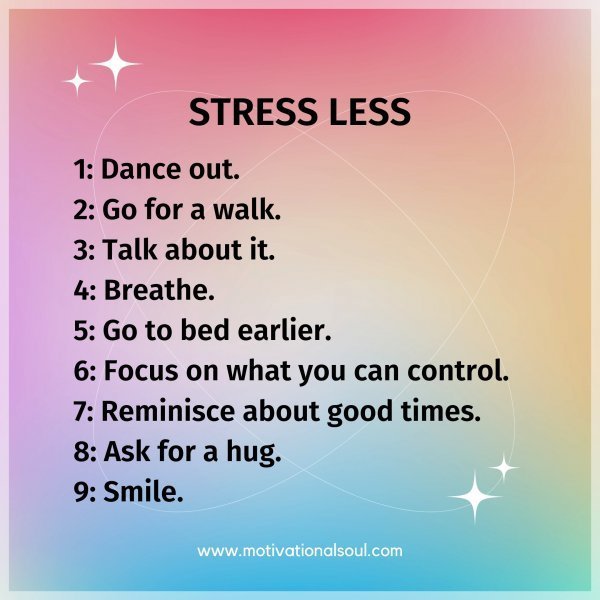
    Ways to de-stress and relax quickly

    Certain methods can help you reduce anxiety if you have it regularly or become anxious suddenly.

    Experiment with different breathing techniques.

    Hyperventilation can cause anxiety-related physical symptoms. This is when your breathing speed increases and your body absorbs too much oxygen, lowering the carbon dioxide level in your blood. Your body needs a specific amount of carbon dioxide to regulate its response to stress and panic.

    Take a four-second deep breath when you’re finished. Exhale for as long as you inhale. Take a four-second deep breath after that. Then exhale for six seconds before taking your next breath.

    Experiment with muscle relaxation techniques

    The ‘body scan’ technique helps you focus on your body and relax any tension you may be feeling.

    Exhale fully and tighten your facial muscles, closing your eyes tightly. For five seconds, clench your jaw and tensed up your face. Relax your muscles gradually over the time it takes to count to ten before taking a deep breath. Say relax as you work down your body beginning with your neck and shoulders and ending with your feet.’

    Concentrate on the present

    Anxiety and stress can often feel crippling, making it hard to focus on anything else. A big part of what makes anxiety so difficult is that it’s often accompanied by dwelling on past events or worrying about the future. If you can learn to focus your attention on the present moment, it can help you feel more relaxed. The present moment is the only time you have any control over, so worrying about things that have already happened or may never happen is a waste of time and energy. Learning to live in the present moment can be difficult, but it’s worth it if it means having a more peaceful and stress-free life.

    Take a breather

    When it comes to managing stress and anxiety, one of the best things you can do is take regular breaks. Just a few minutes of downtime can make a big difference in how you feel mentally and physically. If possible, schedule a break at regular intervals throughout the day. During your break, you can do some light stretching or deep breathing exercises to relax your body and mind. Getting some fresh air can also help to improve your mood and lower your stress levels. Taking a few minutes for yourself each day can go a long way in maintaining your mental health.

    Discuss your feelings with someone you trust

    Anxiety and stress can feel debilitating at times. It can be hard to see a way out when you’re in the throes of it. But one of the best things you can do is talk to someone about it. It may seem counterintuitive to open up about your anxieties and stresses, but it can actually be really helpful. When you vocalize your fears, they can start to feel less real and more manageable. And the act of talking through your problems with someone can help to put them into perspective. It’s important to choose someone you trust and feel comfortable confiding in. And it can be helpful to plan what you want to say beforehand. But once you take the plunge, you may be surprised at how much better you feel. Talking about your problems is a key step in managing them and taking back control of your life.

    Long-term stress and anxiety management strategies

    Anxiety is a common mental health condition that can have a profound impact on your daily life. If you suffer from anxiety, you may find it difficult to concentrate at work or school, socialize with friends, or even leave the house. While breathing techniques and other short-term solutions can occasionally offer some relief, it is essential that people who experience anxiety find a long-term solution that treats the root of the problem. Anxiety disorders often require treatment from a qualified professional. If you suffer from anxiety, consider speaking with your doctor or a mental health professional to devise an individualized plan. Treatment for anxiety can take many forms, but often includes talk therapy, medication, or a combination of both. With the help of a professional, you can develop healthy coping mechanisms and begin to live an anxiety-free life.

    Maintain a ‘thought journal,’ and challenge any negative thinking

    Anxiety and stress can feel like they’re taking over your life. Your heart races, your mind won’t stop racing, and you can’t focus on anything else. It’s impossible to relax. But what if there was a way to ease your mind and lower your stress, without having to take medication or see a therapist? Writing can do just that. The next time you’re feeling anxious, try pulling out a journal or opening a notes app on your phone and simply write down whatever is on your mind. It’s like unloading all of your worries into the page instead of letting them swirl around in your head. You may find that after you’ve finished writing, you feel calmer and more in control. It’s not a cure-all, but it can certainly help to take the edge off of anxiety and stress. So next time you’re feeling overwhelmed, pick up a pen and give it a try.

    Determine your triggers

    There are many ways to identify your triggers, with or without professional help. Just being aware of what sets off your anxiety can be helpful in and of itself. Some common triggers include:

    1. Caffeine, alcohol, or drugs
    2. A stressful work, home, or school environment driving or traveling medication withdrawal, or side effects.
    3. Health problems or concerns
    4. Erratic eating patterns – skipping a meal can cause your blood sugar to drop, making you feel jittery and anxious.

    Knowing your triggers does not imply avoiding them

    If the cause of your stress is time-sensitive, such as a job-related project, take steps to manage it accordingly. If you can’t change the source of your anxiety, try building resilience so that you’re better equipped to handle it. Lastly, some stressors are unavoidable – in these cases, find ways to cope that work best for you.

    Avoid using drugs, alcohol, or stimulants

    Stimulants are drugs that ‘excite’ your nervous system, making it work faster and harder. Unfortunately, stimulants can also make anxiety symptoms worse, so avoiding them is often a good idea for people with anxiety disorders. Some of the most common stimulants include:

    Caffeine (from coffee and tea), nicotine (found in cigarettes, chews, and vape pens), and drugs such as cocaine.

    When you’re nervous, alcohol and drugs in general should be avoided. If you use drugs or alcohol to alleviate stress or relax, you may become hooked on them and feel worse in the end.

    Include relaxation and self-care in your daily routine

    Many individuals would find themselves restless owing to a packed schedule. Make time each day to do something you like, whether it’s a hobby, watching a Netflix program, or catching up on old times with a friend. It may also be useful to plan the task for the future so that you are not aware of any opportunities lost.

    Move more, eat better, and sleep more

    Everyone knows that being physically active can help reduce stress and anxiety while promoting a better mood. Luckily, you don’t have to train for a triathlon to get these benefits–just 30 minutes of exercise each day will do the trick!

    Diet and sleep are also critical to your overall well-being

    A balanced diet will make you feel better, healthier, and more capable of dealing with stress while getting enough sleep will improve your mood and anxiety levels.

    Confront your fears

    Avoiding situations that make you anxious may result in you missing out on things you want or need to do. It may sound strange, but confronting your anxiety-provoking factors might help you feel less nervous.

    To slowly get a feel for the situation and to work on your fears, begin with small steps that you can consider “acts of bravery.”

    It’s best to do this with the assistance of a professional (such as a counselor or psychologist) so that it doesn’t become too intense for you.

    If you’re feeling overwhelmed by anxiety, talk to a professional. If your anxiety is making it difficult for you to function in day-to-day life, it’s important to seek professional help. A therapist can assist you in exploring the root of your anxiety and developing healthy coping mechanisms. medication may also be recommended in some cases.

    Anxiety and stress are treatable!

    Managing anxiety and stress can be a challenge, but it’s important to seek help if these experiences are impacting your daily life. If you’re looking for more information or want to talk to someone about managing anxiety and stress, please read our blog for more helpful tips.

  • What if nothing seems to be working?

    What if nothing seems to be working?

    Have you exhausted all of your options and nothing is working? It can be tiring to work hard in order to feel better and try everything that others have suggested, but nothing appears to be working. This is a typical occurrence when you suffer from anxiety, sadness, or another mental health issue, and it’s important to recognize that it isn’t your fault if you aren’t getting any better.

    When something is wrong with our mental health, it can be difficult to cope. If you are struggling and nothing seems to be working, don’t give up. There are many resources available to guide you. Seek help from a professional, join a support group, or read self-help books. You can get through this tough time and improve your mental health. Don’t give up – you deserve it!

    It can be difficult to find the right combination of treatments for our mental health. That’s why we should always keep an open mind and try new things! You might just discover that what works best with one person doesn’t work in another situation – which is why it is important not only to ask others about their experiences but also to experiment on yourself too ( after all; self-experimentation has been shown time after again as effective). What to do next? Here are some ideas to explore.

    What if nothing seems to be working?

    Common roadblocks to progress

    “I have tried many different strategies. But nothing is working for me.”

    If you have been struggling with mental health issues and feel like there is no light at the end of your tunnel, do not hesitate any longer. Seek medical care right away before it’s too late!

    There are many mental health issues that can’t be fixed only by using self-help methods and require professional help, such as seeing a doctor or taking medication. If you haven’t done so already it may now seem like the right time to seek medical assistance for your condition since there is no guarantee in this world of getting better without trying everything possible!

    Many mental health issues cannot be fixed by only using self-help methods and requiring professional help, such as seeing a doctor or taking medication. If you have not done so already, it is probably time to seek medical assistance.

    Psychology plays an important role in our mental health. It can help us understand our thoughts, feelings, and behavior. However, psychology is not always enough. Sometimes, we need medical help to manage our mental health. This is where doctors come in. Doctors can help us understand our mental health issues and develop a plan to treat them. They can also prescribe medication to help us cope with our symptoms. If you have not seen a doctor for your mental health issues, it may be time to seek medical assistance.

    ‘I sought out professional help, but it was to no avail.’

    The unfortunate reality is that many professionals in the medical and mental health field don’t understand what their patients are going through. It’s also important to remember, though—what works for one person may not work for another! So if you’re unhappy with your current situation know there’s always someone out there who could be better suited – I’m sure they’ll find somebody soon enough themselves (or at least breathe me). There are plenty of great options out there!

    ‘I’m sick and tired of trying, and I’m ready to give up,’

    You may believe you don’t have the energy to continue seeking assistance and attempting to improve, but don’t give up yet. A little patience and one more stride might be all it takes. You’ve already come quite a way; why not try again?

    Build a supportive network by finding someone to help you with your next steps in getting help. It can make a big difference to have someone who encourages you, reminds you to keep trying, and holds you accountable for doing your therapy homework, refilling prescriptions, and meditating regularly. Once you’ve found your support person, it’s time to build your dream team for success.

    Choosing the Best Approach for You

    Finding the right people

    Finding the appropriate doctor and therapist is critical to a successful recovery. It’s similar to dating; you may have to try a few doctors before finding one you trust and feel safe with. One of the most important factors in determining treatment success is the patient’s relationship with their mental health practitioner; therefore, you should feel comfortable discussing your problems with him or her.

    You may also want someone who has a similar background, sexual orientation, gender, or other life experiences to you. Alternatively, you might choose someone with a dramatically different experience from yours who can offer something new.

    The most effective therapy option is the one that is most suitable for you.

    Sometimes we need to try different forms of treatment until the right one works for us. If your psychologist is not giving you results, don’t be afraid to stop being honest and discuss trying a new type of approach with them! Sometimes it can seem hard talking about our needs but honesty will help in healing from long-term mental health difficulties so make sure that both yourself as well as your doctor know what’s best suited to helping those symptoms too.

    The ideal combination

    We understand that self-help methods are usually not enough, and this is also the case for therapy and medication. Therefore, it’s best to opt for a combination of psychological therapy, lifestyle changes, and medication to treat long-term mental health issues. This is why having a team effort is key so we can figure out what works specifically for you.

    Psychology plays an important role in our understanding of mental health and how to treat long-term mental health issues. Psychology teaches us about the importance of a team effort in order to figure out what works specifically for the individual. Medical help is essential in order to understand the underlying causes of mental health issues and to develop an effective treatment plan. However, medical help is not enough. Lifestyle changes, such as exercise, diet, and social support, are also important for treating mental health issues.

    Exercise has been shown to be beneficial for treating depression and anxiety. Your diet can also affect your mental health. For example, omega-3 fatty acids have been shown to help relieve symptoms of depression. Social support is another important factor in treating mental health issues. This social support can come from family, friends, or even a support group. Having a team effort is key to figuring out what works specifically for you and your needs.

    Eager to change things up? Try new approaches or various combinations of old techniques at different times!

    Sometimes you just got to
    Sometimes you just got to stay silent because no words can explain your pain.

    Give it some time

    Some medications and therapies can take weeks or even months to show any effects. For example, people usually have to wait 4-6 weeks after starting antidepressant medication before they begin feeling less depressed, and it may take up to 12 weeks for other mental health difficulties (such as OCD) to start improving.

    Most psychological therapy programs last anywhere from 8 to 20 sessions, though some may go on longer depending on the complexity of your condition. If you’re unsure how long treatment will take, ask your clinician for an estimate.

    If you’re working hard to improve yet don’t feel any better, remember that it’s not your fault. If you want to get well, you’ll need specialized therapy if you haven’t received it already. It may be time to try something new if what you’ve been doing hasn’t worked: seek a second viewpoint, pursue a different therapy approach, switch to a new therapist or GP, or request a medication change.

    Psychology is the branch of science that focuses on the study of human mental faculties and behaviors. It is a relatively young science, but it has already made a great impact on our understanding of ourselves and our societies. Psychology has helped us to understand the importance of mental health, and it has also shown us that mental health problems are very common.

    In fact, one in four people will have a mental illness at some point during their life. The field of psychology has also informed us that mental health issues are not always due to traumatic events or faulty genes. Sometimes, they can be caused by medical conditions. For example, depression can be caused by an imbalance of certain chemicals in the brain. Psychology has also helped us to understand that mental health problems are not always permanent. With the right treatment, many people with mental health problems can recover and live full and happy lives. So, if you are experiencing a mental health problem, remember that you are not alone. There is help available, and there is hope. Never give up!

    Remember that you are the expert on yourself. If something’s not working for you or you’d like to try a different approach, speak up! With the right support system and treatment plan, anyone can learn how to cope with mental health issues and feel better. Follow our blog for even more excellent mental health strategies.

    Never stop trying. Never stop believing. Never give up. Your day will come.

    You Might Also Like

  • 7 Ways to Aid Someone Who is Depressed

    7 Ways to Aid Someone Who is Depressed

    Depression is a very real and serious issue that many people face. If you know someone who is struggling with depression, it can be difficult to know how to help them. Here are seven ways to support someone who is dealing with depression.

    Depression is a grave and ordinary medical condition that influences your emotions, thoughts, and actions. The World Health Organization predicts that 5% of all adults will have depression by 2021. Depression is a frequent mental health disorder than can affect anyone- even people close to you. Recognizing how to talk about depression with somebody who has it can be useful. Depression is treatable, and with the support of family and friends, people who have depression can find hope and eventually lead fulfilling lives. Depression manifests itself differently in everyone, so it is important to be patient and understand that there is no single way to ‘fix’ someone’s depression. Be supportive, listen non-judgmentally, and encourage your loved one to seek professional help if they are struggling. Depression is a serious illness, but with the right support, people can and do recover.

    Science backs up what many of us know intuitively- being social creatures, we need others to thrive. When depressed it’s hard to remember this, but reminding a depressed friend or family member that they are not alone can help them enormously. According to various studies, good social connections reduce the likelihood of depression and anxiety and protect against these mental health conditions.

    So, what should you say to someone sad? Here are seven things you may say to show your concern.

    What to say to a depressed person?

    1. Let’s talk about it when you’re ready. I’m here for you.

    You can’t force someone to talk, but making them aware that you’re there for them might provide comfort. If they haven’t told you about their sadness, you might comment on how concerned you are about them and how available you are if they want to talk. Often, people are not okay when they say they are. Next time someone tells you they’re fine, remind them that they can always come to you if they need someone to talk to. They may appreciate your support and come to you during difficult times in the future.

    2. How can I help you today?

    Depression affects one’s energy level, difficulty sleeping, and motivation. It might be difficult to get out of bed at times. You may offer to cook dinner for them if they aren’t eating properly. Perhaps they would like a morning call or text to make sure they arrive on time at work. Offering to help is an expression of acceptance.

    All it takes is listening sometimes. It does not have to be a big deal to assist someone. Picking up the phone, feeding them, or taking them to an appointment might all be simple acts.

    3. How are you coping with your depression?

    This question can give you insights into their healing journey and if they need help getting professional care.

    It’s imperative to remember that depression is not a personal failure. If you have friends or family suffering from depression, it is vital to urge them to seek professional help. Doing so demonstrates bravery and resolve rather than weakness.

    Inquiring about the treatment’s development may help them stay on track with their treatment plan. You can also tell them when you notice positive changes. This might assist to show that it is effective, even if it does not always seem so.

    4. I may not know exactly how you feel, but I want you to know that you’re not alone.

    Depression is a medical condition that should not be taken lightly. If you have a friend or family member going through depression, it’s crucial to remind them of their strengths and not make them feel like they’re weak for asking for help. You can do this by simply checking in on their progress every once in a while and seeing how the treatment is going – letting them know that you support and believe in them.

    5. You matter to me.

    It’s always nice to be appreciated or desired. Unhappy people may feel the polar opposite of this. This is why telling someone they’re important to you, that you need them in your life, and that they matter can be so therapeutic. You may also go further with what you appreciate about them or how highly you respect something they do.

    6. That must be tough; how are you managing?

    The objective is to acknowledge that you understand how difficult it is for them. Recognizing how debilitating depression and its symptoms can be might assist them in feeling recognized. It serves as a constant reminder that you are listening, seeing them, and offering assistance.

    Oftentimes, people who are suffering from depression don’t feel heard or seen. By acknowledging how difficult it can be to live with this illness we’re able to show that they matter and have our full attention- which will make all the difference in your friend’s recovery!

    7. I am sorry that you’re going through this, and I’m here to assist you if needed.

    The misconception is that there is a perfect thing to say to someone who is depressed. Your words will not cure them. They can, however, help. Let them know that there is still hope exists. It’s possible that reminding someone you’re available whenever they need you — whether it’s for a small job or assistance in a crisis — could be beneficial to saving a life.

    The idea is that there is a “perfect thing” to say when someone who’s depressed has lost hope, or can’t seem to get out of their head. Your words won’t cure them — but they might help! Let the person know you’re available any time; whether it be for just small jobs around town…or if something bigger comes up then we will be able to assist each other through those tough times together.

    What Not to Say to a Depressed Person

    It’s critical to note that giving advice and requesting assistance is not the same thing. If someone asks for your opinion, accept it—but only if you want to. It’s perfectly all right to say no. Do not offer well-meaning solutions or statements disguised as helpful hints to appear sympathetic or knowledgeable; this will be seen as unsympathetic or ignorant.

    Never say any of the following to someone who is depressed:

    1. “Just think positive.”
    2. “I’m not sure what’s causing you so much pain.”
    3. “Everything will come to a positive resolution in the end.”
    4. “I stopped eating sugar and was able to heal myself! You should give it a try.”
    5. “There are a lot of people who are in considerably worse condition than you.”
    6. “It’s time to leave. All you have to do now is get out of there.”

    Knowing the warnings to suicide could save a life.

    The American Foundation for Suicide Prevention outlines three types of suicide warning signs to be aware of:

    Talk

    If someone you know expresses any of the following thoughts, they may be suicidal and in need of help: feeling hopeless, being a burden to others, having no reason to live, or feeling trapped.

    It’s important to take these statements seriously and get help for the person as soon as possible. Suicidal thoughts are often a sign that the person is experiencing tremendous pain and needs support.

    There are several resources accessible to people who are having suicidal thoughts. People can call the National Suicide Prevention Lifeline, which is available 24 hours a day, seven days a week. They may be reached at 1-800-273-8255.

    Behavior

    To spot someone at risk for suicide, pay attention to changes in behavior, especially those related to a traumatic event.

    There are several warning signs that someone might be thinking about suicide. They include:

    1. Increased substance use or misuse
    2. Searching for methods of self-harm online
    3. Withdrawing from friends and family
    4. Sudden drastic changes in behavior

    Mood

    The most frequent condition linked to suicidal ideas is depression. Depression, anxiety, lack of interest, and agitation are all moods that may signal suicidal ideation. They may experience one or more of these moods in varying degrees. If left untreated or unaddressed, depression can be quite dangerous.

    In conclusion

    Both social and professional assistance is required. Following up with family, especially if they have exhibited warning signals of sadness or suicidal ideation, is just one method in which we may all assist each other.

    Warning signs of suicide include talking about wanting to die, expressing feelings of hopelessness, and having a plan or means to carry out the act.

    Depression is a serious mental illness that should not be treated lightly. If you are worried about a loved one, please do not hesitate to reach out for help. Professional assistance is critical to provide the best possible care for those who suffer from this disease. Family and friends can also play an important role in the healing process by providing social support. We hope our blog has helped raise awareness about depression and suicide, and that you will continue to read our posts as we work together to fight this epidemic.

    Buddha was asked
  • The Power of Self Acceptance

    The Power of Self Acceptance

    Do you ever believe that you aren’t good enough? Like there’s something fundamentally wrong with you that makes you unlovable or unworthy? If so, you’re not alone. Many people struggle with self-acceptance, especially in today’s society where perfectionism is rampant. In this blog post, we will discuss the power of self-acceptance and 10 ways to accept yourself for who you are!

    Why is Self-Acceptance Necessary?

    Self-acceptance is necessary for a number of reasons.

    • First and foremost, it is essential for our mental health and well-being. When we do not accept ourselves, we are constantly living in a state of self-rejection which can lead to feelings of anxiety, depression, and low self-esteem.
    • Furthermore, self-acceptance is the foundation upon which we can build healthy relationships with others. If we do not accept ourselves, it is difficult to believe that anyone else could or would.
    • Finally, self-acceptance is key to leading a fulfilling and meaningful life. When we accept ourselves, we are more likely to pursue our dreams and goals and live a life that is in line with our values and beliefs.

    Why do some people don’t have self Acceptance?

    For some people, self-acceptance is elusive. No matter how hard they try, they cannot seem to come to terms with who they are. This can be due to a variety of factors, including low self-esteem, negative experiences in the past, or simply not being comfortable in one’s own skin. Whatever the cause, the lack of self-acceptance can lead to a host of problems, including anxiety, depression, and even addiction.

    Without self-acceptance, it is difficult to find peace and happiness.

    Fortunately, there are a variety of strategies to overcome this barrier.Counseling, therapy, and positive affirmations are just a few of the tools that can help someone learn to accept themselves for who they are. With time and effort, anyone can learn to love and appreciate themselves just as they are.

    What Are The Benefits Of Self-Acceptance?

    Self-acceptance has a number of benefits.

    • First, it allows us to live in a state of peace and happiness rather than self-rejection.
    • Second, it enables us to build healthy and fulfilling relationships with others.
    • Third, it allows us to pursue our dreams and goals without being held back by self-doubt.
    • Finally, self-acceptance is the key to leading a fulfilling and meaningful life.

    It might be difficult to accept yourself, but it is well worth the effort. Learning to accept yourself for who you are is an essential step in living a happy and healthy life. If you are struggling with self-acceptance, know that you are not alone. There are many people who have been in your shoes and have overcome this obstacle. With time, patience, and effort, you can learn to love and appreciate yourself just as you are.

    Tips on How to Start Practicing Self-Acceptance

    Don’t Strive For Perfection, It’s Unattainable.

    One important tip on how to start practicing self-acceptance is to not strive for perfection. Perfectionism is an unattainable goal, and the quest for it can be damaging to both your mental and physical health.

    Each day, make an effort to do something that will move you closer to your goals. Maybe you can start by taking a few minutes each day to meditate or journal. Or, perhaps you can commit to eating healthy meals or getting some exercise three times a week. Whatever you choose, the important thing is to focus on taking small steps forward. Over time, these small steps will add up to big changes, and you’ll start to see yourself in a whole new light.

    Authenticity is Key

    The most important tip on how to start practicing self-acceptance is authenticity. It is vital that we are honest with ourselves about who we are, what we believe in, and what we want out of life. Once we are able to truly know and accept ourselves, it becomes much easier to accept others. Furthermore, being authentic allows us to be our true selves in every situation, which can help to prevent stressful and emotionally draining experiences.

    When we live authentically, we also set an example for others that it is okay to be exactly who they are. As a result, authenticity is the key to self-acceptance and should be the foundation on which we build our lives.

    Stop Beating Yourself Up

    Self-acceptance is a major key to success and albeit difficult to achieve, it is worth the challenge. A great way to start practicing self-acceptance is by “stopping the negative self-talk.” This includes the little voice in your head that puts you down for making mistakes or not being good enough. It’s important to catch yourself whenever you start thinking negatively about yourself and make a conscious effort to turn those thoughts around. Instead of wallowing in self-pity, focus on what you can do to improve the situation.

    This doesn’t mean you should be hard on yourself, but rather accepting of the fact that everyone makes mistakes and that it’s how you learn and grow from them that counts. Making an effort to be more positive and understanding towards yourself will go a long way in helping you learn to accept yourself just as you are.

     Love Yourself 

    One important tip on how to start practicing self-acceptance is to love yourself.

    Ways to love yourself:

    • Spend time with yourself
    • Get to know yourself
    • Accept your flaws and mistakes
    • Be proud of your accomplishments
    • Forgive yourself
    • Treat yourself with kindness and respect

    All of these things are essential in learning to love and accept yourself. When you make an effort to do these things, you will start to see yourself in a whole new light. You will realize that you are worthy of love and respect and that you are capable of great things.

    Start Today

    The sooner you start practicing self-acceptance, the better. The longer you wait, the harder it will be to change your thinking and improve your self-esteem. So, don’t wait any longer, start today!

    Self-acceptance is a journey, not a destination. It’s something you have to work on every day, but it’s worth it. When you learn to accept yourself, you’ll be happier, healthier, and more successful in all areas of your life.

    Self Care

    Self-care is one of the most important things you can do for yourself.Taking good care of your physical, mental, and emotional health are all important.Eating healthy foods, getting regular exercise, and getting enough sleep are all important aspects of self-care.

    Additionally, it’s important to find ways to relax and destress. This could include yoga, meditation, or spending time in nature. When you look after yourself, you are sending the message that you are worth caring for.This is an important step in learning to love and accept yourself.

    Your Opinion Matters

    Your opinion matters, period. Even if you don’t yet fully love and accept yourself, know that your thoughts and feelings are valid. It’s okay to have days (or weeks, or months) where you don’t feel great about yourself – we all have them. But don’t let those negative thoughts take over your life. Make a deliberate decision to concentrate on the good.

    Distance yourself from individuals who don’t make you feel good about yourself, and bring people into your life that support you.Make sure to schedule in some ‘me time’ every day, doing things that make you happy and fulfilled.And most importantly, be patient with yourself. Self-acceptance is not something that happens overnight – it’s a journey that takes time and effort. But it’s worth it, and you are worth it. Keep going, and believe in yourself – you can do it!

    Chase Your Dreams

    One way to start practicing self-acceptance is to pursue your goals. Whatever your dreams or aspirations may be, go after them with everything you’ve got. Don’t let anyone else’s opinion of you hold you back – believe in yourself and your abilities, and don’t be afraid to take risks. Of course, this doesn’t mean that you should blindly charge towards your goals without any thought or planning.

    But it does mean that you shouldn’t let your own self-doubt stop you from going after what you want in life. Pursuing your goals is a great way to start building self-confidence and learn to accept yourself for who you are. It’s also a great way to show yourself that you’re capable of reaching your potential and accomplishing great things. So don’t be afraid to go after your dreams – start practicing self-acceptance today by pursuing your goals with everything you’ve got.

    Make Time for Reflection

    A large part of accepting ourselves comes from taking the time to reflect on who we are and who we want to be.

    Ways for reflection:

    • Keep a journal and write about your thoughts and feelings regularly.
    • A therapist or counselor can help you understand and process your thoughts and feelings.
    • Spend time alone in nature, and take the time to really think about your life and what’s important to you.
    • Talk to close friends or family members about your thoughts and feelings.
    • Pray or meditate regularly.

    All of these activities can help you to better understand yourself, your thoughts and feelings, and what’s important to you. When you take the time to reflect on your life, it’s easier to see the areas where you need to make changes. It’s also easier to see the things that you’re doing well, and to be proud of who you are. So make time for reflection, and give yourself the chance to really get to know yourself.

    Practice Forgiveness

    One of the most important aspects of self-acceptance is learning to forgive yourselfNo one is perfect, we all make mistakes.What matters is how you deal with those mistakes. If you’re constantly beating yourself up over your mistakes, you’ll never be able to move on and Accept Yourself.

    Instead, learn to forgive yourself. Talk to yourself the way you would talk to a friend – with kindness, understanding, and compassion. Take pride in yourself and know that you’re doing your best.Remember that everyone makes mistakes and that you’re not alone.Stop dwelling on the past, and move forward.

    Start Living in the Present Moment

    Another important aspect of self-acceptance is learning to live in the present moment. Worrying about the future or dwelling on the past won’t do you any good. All it will do is keep you from enjoying the present moment.

    Instead, focus on the here and now. Notice the sights, sounds, and smells around you. Pay attention to your thoughts and feelings, and accept them for what they are. Don’t try to fight or resist your thoughts and feelings – just let them be. And above all, enjoy the moment that you’re in.

    Conclusion

    All of these things are important aspects of self-acceptance. But ultimately, self-acceptance is a journey that’s unique to each individual. So don’t worry if you’re not doing everything perfectly – just focus on taking things one step at a time, and be patient with yourself. You’ll get there eventually. Self-improvement is a journey, not a destination. So keep moving forward, and never give up on yourself. You’re worth it! Remember, you’re worth it.

    Love yourself for what you are
  • 15 Amazing Benefits Of A Simple Meditation Practice

    15 Amazing Benefits Of A Simple Meditation Practice

    If you’re looking for a way to improve your mental health, boost your productivity, and increase your overall well-being, you should consider practicing meditation. Meditation is a simple technique that can be done anywhere, at any time. And best of all, it comes with a slew of amazing benefits! In this blog post, we will discuss seven benefits of meditation that may surprise you.

    Meditation has been shown to improve mental health, boost productivity, and increase overall well-being. Let’s take a look at seven benefits of meditation that may surprise you:

    1. You will learn to deal with the highs and lows.

    When you meditate, you are training your mind to become more resilient and adaptable. You will learn how to deal with the highs and lows of life with grace and ease.

    This is because meditation helps us become more aware of our thoughts and emotions. We can then manage them better, rather than being controlled by them.

    As we become more mindful, we realize that thoughts and emotions are just passing states of mind that don’t need to control us.

    When we are in control of our thoughts and emotions, we are better able to deal with the highs and lows of life. As a result, we become less reactive to the ups and downs of daily life and more resilient overall. Meditation supports our ability to pay attention, focus, and resist distractions.

    In other words, we become less reactive to the ups and downs of daily life and more resilient overall. This is one of the most surprising benefits of meditation!

    YOU WILL ALWAYS HAVE UPS AND

    2. You’ll discover that little efforts add up to tremendous success.

    You may not notice it at first, but if you stick with it, you will eventually discover that your meditation practice is paying off in big ways. The benefits of meditation accumulate over time, so the more you practice, the greater the rewards. This is because meditation supports our ability to pay attention, focus, and resist distractions.

    The more we practice these skills, the better we become at them. And as we become better at paying attention, focusing, and resisting distractions, every other area of our life improves as well. We become more productive, efficient, and successful as a result of being happier.

    So stick with it! The more frequently you meditate, the wider array of benefits you will experience.

    3. You’ll discover that reaching a goal isn’t always simple.

    The road to success is often bumpy, but meditation can help you journey it with poise.

    Most people think that reaching a goal is a straight line from point A to point B. But the truth is, the path to success is often winding. There are many detours, roadblocks, and dead ends along the way. Meditation can help you navigate this path with grace. When you meditate, you learn how to deal with difficult situations calmly and effectively. You also develop a greater sense of patience and perseverance.

    As a result, you are less likely to give up when things get tough.

    So if you’re working towards a goal, don’t- be discouraged if the path is winding. Meditation will help you stay the course and eventually reach your destination.

    4. You will develop flexibility.

    One of the benefits of meditation is that it helps us become more flexible in our thinking. We learn to see things from different perspectives and to let go of rigid beliefs. This flexibility allows us to adapt to change more easily and to find creative solutions to problems.

    In our fast-paced, ever-changing world, this is a valuable skill to have. When we are flexible in our thinking, we can more easily roll with the punches and find new ways to solve old problems.

    So if you’re looking for a way to become more flexible in your thinking, meditation is a good place to start.

    5. You will persevere through any circumstance.

    No matter what life throws your way, you will be able to handle it with grace and ease if you have ra egular meditation practice. Meditation helps us develop our inner strength and resilience. We learn to deal with difficult situations calmly and effectively. We also develop a greater sense of patience and perseverance. As a result, we are less likely to give up when things get tough.

    So if you’re looking for a way to persevere through any circumstance, meditation is a good place to start.

    6. You will learn to appreciate every beautiful, unique moment.

    When we meditate, we learn to appreciate the present moment for what it is. We become more aware of our thinking processes, emotions, and feelings. We become more attuned to the environment. This increased awareness allows us to savor the good moments and see the beauty in everyday life.

    So if you’re looking for a way to appreciate every beautiful, unique moment, meditation is a good place to start.

    Don't wait for the perfect moment. Take the moment and make it perfect.

    7. You will understand the significance of the journey.

    There is no destination to reach with meditation; it is only about the journey. The more you meditate, the better your chances of understanding the true meaning of life.You will come to realize that everything is connected and that there is no such thing as separation. This understanding can lead to a deep sense of peace and compassion for all beings.

    8. You will find true happiness.

    The goal of meditation is not to become happy, but many people find that it is a by-product of their practice. When you let go of your attachments and stop chasing after things that you think will make you happy, you will start to experience true happiness. This happiness is not based on external conditions; it is a deep inner contentment that comes from understanding the true nature of reality.

    Meditation can be a powerful tool for creating lasting happiness and inner peace. If you’re looking to improve your well-being, consider adding a meditation practice to your daily routine. You may be amazed at how much you can accomplish in such a short time!

    True happiness

    9. You will be more present.

    It’s easy to get caught up in the past or worry about the future, but meditation brings you back to the present moment. This is where true peace and happiness reside. When you are fully present, you can appreciate the beauty of life just as it is. This doesn’t mean that you will never experience negative emotions, but it does mean that you will be better able to handle them when they do arise.

    If you’re looking for a way to live more at the moment, meditation is worth trying. The benefits of regular practice can be life-changing!

    10. You will be less reactive.

    Meditation helps you to become more aware of your thoughts and emotions. As a result, you’re less likely to react to them in negative ways. This can be extremely helpful in difficult situations, such as when you’re dealing with a challenging problem at work or an upsetting situation in your personal life. When you’re less reactive, you’re better able to think clearly and make wise decisions.

    If you tend to react to things without thinking, meditation may be a good way to help you gain more control over your actions. The benefits of regular practice can lead to a calmer and more peaceful life.

    11. You will have more energy.

    “A rich and full life requires boundless energy.”

    When you meditate, you are tapping into a deep well of energy that lies within you. This can help to improve your physical health and give you the strength and stamina to get through your day-to-day activities. Stress and anxiety can be detrimental to your health in many different ways, but meditation may help. It can also aid in boosting your mental clarity and focus, allowing you to be more productive across the board.

    If you’re looking for a way to boost your energy levels, meditation may be just what you need. The benefits of regular practice can lead to a more vibrant and energetic life!

    12. You will feel more connected.

    “Meditation is a way of opening up to our essential nature, which is one of love, compassion, and interconnectedness.”

    When you meditate, you connect with something much larger than yourself. This can help you to feel more connected to the world around you and foster a sense of compassion for all beings. You may also find that your relationships with others improve, as you become more patient and understanding.

    If you’re looking for a way to feel more connected to the world, meditation is worth trying. The benefits of regular practice can lead to a deeper sense of connection and compassion.

    13. You will be more kind.

    “Meditation is a way of softening the heart and opening to our pain and the pain of others.”

    When you meditate, you become more aware of your thoughts and emotions. As a result, you’re less likely to react to them in negative ways. This can be extremely helpful in difficult situations, such as when you’re dealing with a challenging problem at work or an upsetting situation in your personal life. When you’re less reactive, you’re better able to think clearly and make wise decisions.

    If you tend to react to things without thinking, meditation may be a good way to help you gain more control over your actions. The benefits of regular practice can lead to a calmer and more peaceful life.

    14. You will be more forgiving.

    “Meditation is a way of training the mind to let go of grudges and resentments.”

    When you meditate, you learn to let go of the negative thoughts and emotions that can hold you back in life. This can be extremely helpful if you tend to hold onto grudges or resentments. When you let go of these negative feelings, you’ll find it easier to forgive others and move on with your life.

    If you want to find a way to let go of the past and move forward with your life, meditation may be just what you need. Regular practice may lead to a more forgiving and peaceful existence.

    15. You will have more self-compassion

    Through meditation, you become more conscious of your feelings and emotions. As a result, you’re better able to understand and accept yourself. This can be extremely helpful if you tend to be self-critical or have difficulty managing difficult emotions. When you have more self-compassion, you’ll find it easier to be kind to yourself and make wise choices.

    Conclusion

    The benefits of meditation are vast and varied. The above are just a few of the many reasons why you should consider incorporating this simple practice into your life. If you have never tried meditation before, there is no time like the present to start!

    It’s also worth noting that there is no “correct” technique for meditation. Make sure you’re in a comfortable position and can focus on your breath, then close your eyes. Allow yourself to be present at the moment, and let go of all thoughts and worries. The more you practice, the deeper you will journey into the amazing world of meditation. Namaste!

    Meditation... because some questions can't be answered by Google.

    Meditation Guidance

    How To Avoid These Meditation Mistakes And Get The Most Out Of Your Practice

  • Unlock Your Potential: Become Limitless with an “I Can Do Anything” Attitude

    Unlock Your Potential: Become Limitless with an “I Can Do Anything” Attitude

    Unlock Your Potential: Become Limitless with an “I Can Do Anything” Attitude

    When it comes to achieving success in life, you need to have the right mindset. One of the most important mindsets to adopt is the “I can do anything” mindset. With this mentality, you believe that you can achieve anything you set your mind to. You are not limited by your abilities or your circumstances. When you really want something, you’ll always find a solution.

    This mindset is essential for anyone who wants to achieve great things in life.

    The “I can do anything” mindset is not about being cocky or overconfident. Part of success is having confidence in yourself and your skills. It’s all about knowing that you have what it takes to surmount any challenge and accomplish any objective. This mindset is the key to unlocking your full potential.

    you can

    How Does an ‘I Can Do Anything Mindset’ Appear?

    An “I can do anything mindset” is often characterized by a sense of confidence and possibility. People with this mindset believe that they have the ability to achieve their goals, and they are willing to take risks to make their dreams a reality. This positive outlook can be contagious, inspiring others to pursue their own ambitions.

    People with an “I can do anything mindset” often approach life with a growth mindset, believing that they can improve their skills and abilities through effort and practice. This attitude allows them to persevere in the face of challenges and setbacks, as they know that success is within their reach.

    Individuals with an “I can do anything mindset” tend to be creative and resourceful, always searching for new ways to accomplish their objectives. They are open to change and willing to experiment, which helps them to adapt quickly and efficiently to new situations. This flexible approach allows them to seize opportunities as they arise, leading to even greater success.

    you can

    What are the advantages of adopting an ‘I Can Do Anything Mindset’?

    The advantages of developing an “I can do anything attitude” are innumerable.

    The following are some of the most prominent advantages to your overall health and well-being:

    Higher self-esteem

    One of the most important benefits of having an “I can do anything mindset” is that it leads to increased self-esteem. When we believe in ourselves and our abilities, we are more inclined to take chances and put ourselves out there when we feel secure. Setbacks only make us stronger. This increased sense of self-worth can lead to all sorts of positive outcomes, both in our personal and professional lives.

    In fact, studies have shown that people with high self-esteem are more likely to be successful in their careers, be physically healthier, and have happier relationships. So if you’re looking for ways to boost your self-esteem, adopting an “I can do anything mindset” is a great place to start.
    Increased levels of Self-Assurance

    An ‘I Can Do Anything Mindset’ is incredibly beneficial because it leads to increased levels of self-assurance. When we believe in ourselves, we are much more likely to take risks and challenge ourselves. This can lead to personal growth and greater success in life. Furthermore, a positive mindset also attracts other people to us.

    They are drawn to our confidence and optimistic attitude, which creates opportunities for both professional and personal relationships. Finally, our belief in ourselves also inspires those around us. When we show others that anything is possible, they are more likely to believe it themselves. As a result, an ‘I Can Do Anything Mindset’ has the power to transform our lives and the lives of those around us.



    When you believe in yourself
    Believe in yourself

    Increased Motivation

    When we believe in ourselves and our abilities, we are more likely to put forth the effort required to succeed. Whether it is taking on a new project at work or committing to a fitness goal, self-confidence gives us the drive to take action.

    When we doubt ourselves, we are more likely to procrastinate and make excuses. with a fixed mindset, we tend to shy away from challenges, fearing that we will not be able to meet them. On the other hand, having a growth mindset helps us to see obstacles as opportunities for learning and development. As a result, we are more likely to stay motivated and persistent in the face of difficulties.

    MOTIVATION BEGINS WHEN
    MOTIVATION BEGINS WHEN

    Higher Levels of Achievement

    People who have an “I can do anything” mindset set themselves up for success in multiple ways. For one, they tend to achieve more. Why? Because they believe in their ability to do whatever it takes to get the job done – even if it means going above and beyond what is expected. They also foster positive relationships with others, as their can-do attitude is contagious. People are drawn to those who see the glass as half full and who are confident in their own abilities.

    Finally, people with an “I can do anything” mindset tend to be resilient in the face of setbacks. They know that failure is simply a stepping stone on the path to success. So, if you want to achieve more and attract positive relationships, adopt an “I can do anything” mindset. This could be the key to unlocking your full potential.

    Dream high
    Dream high

    A Longer Life Expectancy

    As the saying goes, we become what we believe. If we believe we can do something, we are more likely to be successful in achieving it. On the other hand, if we believe something is beyond our abilities, we are likely to give up before we even try. This is why having a “I can do anything” attitude is so crucial. Believing that we can achieve our goals gives us the motivation to take action and persevere when challenges arise.

    This positive mindset has been linked with increased life satisfaction and happiness, better physical health, and even a longer lifespan. So if you want to live a happy and fulfilling life, remember to think “I can do anything!”

    If You’re a Natural Pessimist, What Then?

    This all sounds great in theory, but what if you’re a natural pessimist? Is it possible to change your mindset? The good news is, it is! It may take some effort and time, but with a little bit of practice, you can train your brain to think more positively. For a head start, here are some tips:

    • Start each day with a positive affirmation

    Something along those lines, such as “I can do anything I set my mind to,” or “I am capable of being happy and successful.”

    Keep track of all your accomplishments, no matter their size. This will help remind you of your capabilities when you’re feeling down.

    • Focus on the present moment

    When you find yourself dwelling on negative thoughts, take a step back and focus on what is happening in the present moment. This will help you to see that your negative thoughts are not accurate reflections of reality.

    Are there any areas in your life where you tend to have a fixed mindset? For example, do you believe that you’re not good at math or that you’re not athletic? Challenge these beliefs by taking on new challenges and pushing yourself out of your comfort zone.

    • Practice gratitude

    Every day, focus on the things you’re grateful for. Eventually, it will become a habit. Your health, family, and friends are all important aspects of your life. Gratitude will help to shift your focus from negative to positive thoughts.

    Developing an “I Can Do Anything” Attitude

    No matter what your natural inclination may be, it is possible to develop an “I can do anything” attitude. It takes time and effort, but it is definitely worth it. When you have this mindset, you open yourself up to limitless possibilities and a world of success. So start today by believing in yourself and your ability to achieve great things!

    Consider the People Around You

    One final thought on this subject is to consider the people around you. Do the people you spend the most time with have a fixed or growth mindset? If they have a fixed mindset, they may be holding you back without even realizing it. Surround yourself with positive, supportive people who believe in your ability to grow and achieve your goals. These people will help to foster a healthy and positive mindset.

    Remember Your Objectives

    One of the best ways to develop a “can-do” attitude is to clearly identify your goals. What is your objective? Once you know what you’re working towards, it becomes much easier to stay motivated and push yourself to achieve it. In addition, it’s important to Surround Yourself With Positive People Who Believe In You. These people will provide encouragement and support when you need it most. Finally, don’t be afraid to Fail. Every successful person has failed at some point; it’s how they learn and grow. Embrace your mistakes and use them as an opportunity to become even better.

    Other Ways to Encourage Yourself

    Here are some other ways that you can encourage yourself:

    Review your accomplishments to date in achieving your goal

    This will help to remind you of your capabilities and give you a confidence boost.

    Create a vision board

    This is a visual representation of your goals and what you want to achieve. Seeing your goals every day will help to keep them at the forefront of your mind and encourage you to take action.

    Make a list of positive affirmations

    Write down a list of positive statements about yourself and your ability to achieve your goals. Read these affirmations aloud to yourself every day.

    Set small, achievable goals

    When you’re feeling overwhelmed, it can be helpful to break your goal down into smaller, more manageable pieces. This will help you to feel more confident and motivated as you accomplish each task.

    Celebrate your success

    Be sure to celebrate each and every accomplishment, no matter how small. This might help you stay motivated and focused on your objective.

    In conclusion, here are some suggestions for fostering an “I can accomplish anything” or positive mentality. This includes ideas previously discussed as well as new ways to incorporate into your daily routine right now:

    • Identify areas of your life where you have a fixed mindset
    • Challenge those beliefs by taking on new tasks or learning opportunities
    • Practice gratitude regularly
    • Surround yourself with positive people
    • Use cognitive reframing to give yourself a new perspective.
    • Plan for the future
    • Visualization is a crucial skill that you should practice.
    CELEBRATE WHAT YOU'VE
    CELEBRATE WHAT YOU’VE

    Conclusion

    Developing an “I can do anything” attitude is a process that takes time and effort.The amount of work may be tough, but it’ll all pay off in the end. When you have this mindset, you open yourself up to limitless possibilities and a world of success. So start today by believing in yourself and your ability to achieve great things!

    Believe you can and you're halfway there.
  • What to Do When You’re Feeling Incompetent

    What to Do When You’re Feeling Incompetent

    Do you ever feel as if you’re always making mistakes? That you’re just not good at anything? This is a common feeling, especially when we’re struggling with something new. It’s easy to feel incompetent and like a failure when we don’t know how to do something. The fact is, everyone has felt this way at some point in their life. The key is learning how to deal with these feelings in a healthy way so that they don’t hold us back from reaching our goals. In this blog post, we will discuss some tips for dealing with feelings of incompetence, and how to get past them so that you can start achieving your goals!

    Do you often feel like no matter what you do, it’s wrong??

    You’re not crazy if you think everything you do is wrong – it’s a common feeling, and here are some of the reasons why.

    Stress

    Have you ever felt like no matter what you do, you can’t seem to do anything right? If so, you’re not alone. This feeling is often caused by stress. Cortisol is a hormone produced by our bodies when we’re anxious. Cortisol helps us to deal with situations that are stressful by giving us an energy boost. However, if cortisol levels stay high for too long, it can have the opposite effect. We may feel tired and unable to concentrate, and our memories may suffer. In addition, stress can cause us to make more mistakes.

    This is because cortisol interferes with the part of the brain that controls logic and reasoning. As a result, we may find it harder to solve problems and make decisions. So if you’ve been feeling like you can’t do anything right, it may be time to take a step back and assess your stress levels.

    Overwhelm

    You’ve been told your whole life that you need to focus on one thing at a time. And for the most part, that’s true. However, there are times when you just can’t seem to get anything done. It feels like everything you try ends in failure and you can’t help but wonder what’s wrong with you. The truth is, there’s nothing wrong with you. You’re just feeling overwhelmed. When you have too much going on, it’s natural to feel scattered and like you can’t do anything right.

    Self-Esteem

    We’ve all had moments where we feel like our best isn’t good enough.Maybe you’ve been passed over for a promotion at work, or your friends seem to be doing better than you. It can be frustrating and even overwhelming to feel like you can’t do anything right.

    One reason this may be happening is because of your self-esteem. If you don’t believe in yourself, it’s going to be hard to accomplish your goals. When you doubt your abilities, you’re more likely to give up when things get tough. Low self-esteem can also lead to anxiety and depression, which can further sabotage your efforts.

    You’re Not Giving Yourself Enough Credit

    One of the reasons you may feel like you can’t do anything right is that you’re not giving yourself enough credit. It’s easy to focus on your mistakes and dwell on them, but it’s important to remember that everyone makes mistakes. Instead of beating yourself up over your faults, consider how you may utilize them to your advantage in the future.

    You’re Comparing Yourself to Others

    Another reason you may feel like you can’t do anything right is that you’re comparing yourself to others. It’s important to remember that everyone is different and that everyone has their own unique strengths and weaknesses. Comparing yourself to others will only make you feel worse about yourself and is not an effective way to gauge your own progress.

    You’re Setting the Bar Too High

    If you’re constantly setting the bar too high for yourself, it’s no wonder you feel like you can’t do anything right. It’s important to set realistic goals for yourself and to celebrate your accomplishments, no matter how small they may be. If you’re always striving for perfection, you’ll never be satisfied with your accomplishments and will always feel like you could have done better.

    You’re Too Hard on Yourself

    Finally, one of the main reasons you may feel like you can’t do anything right is because you’re too hard on yourself. We all make mistakes and none of us are perfect.. If you’re constantly berating yourself for your mistakes, it’s only going to make it harder for you to move on from them. Instead of being hard on yourself, try to be understanding and forgiving.

    Consequences of Feeling Incompetent

    If you’ve been feeling like you can’t do anything right, it’s important to understand the consequences of this mindset. When you feel incompetent, you’re more likely to give up when things get tough. You may also start to doubt your abilities and believe that you’re not good enough. This can lead to anxiety, depression, and a general feeling of dissatisfaction.

    It’s important to understand that everyone makes mistakes and that no one is perfect. If you’re too hard on yourself, you’ll never be able to move on from your mistakes. Instead, try to be understanding and forgiving. Remember that everyone has their own unique strengths and weaknesses, so don’t compare yourself to others.

    How to Deal With Feelings of Incompetence

    Now that we’ve discussed some of the reasons why you may be feeling incompetent, let’s talk about how to deal with these feelings.

    Allow Yourself To Feel This Way

    Whatever the case may be, feelings of incompetence can be tough to shake. However, it’s important to remember that everyone experiences these feelings from time to time. Rather than trying to fight them, allow yourself to feel them. Recognize that they are normal and that they will eventually pass. Once you’ve given yourself permission to feel these feelings, you can start to take steps to move past them.

    For instance, you might reach out to a trusted friend or family member for support, or you might try to reframe your thinking about the situation. Whatever you do, don’t try to bottle up your feelings or pretend they don’t exist. The first step to moving on is to accept them.

    What You’ve Done Right Should be Reviewed to Prove Yourself Wrong

    One way to deal with feelings of incompetence is to focus on your strengths and accomplishments. Make a list of everything you’re proud of, no matter how insignificant it may seem. This can help remind you that you are capable and competent. It’s also important to seek out feedback from others. Ask trusted friends or relatives for their honest assessment. If they believe in you, it can help you start to believe in yourself.

    Revealing that you require assistance demonstrates fortitude rather than fragility. By following these tips, you can start to overcome your feelings of incompetence and reach your full potential.

    Speak to Yourself in the Same Way as You Would to Others

    One of the most difficult things about feeling incompetent is that it can be hard to shake off. Once you start to doubt your abilities, it can be tough to see yourself in a more positive light. However, it is important to remember that everyone feels like this at times.

    The key is to not get too caught up in these feelings. Instead of beating yourself up, try to speak to yourself in the same way as you would to someone else. Be compassionate and understanding. Remember that you are just a person, who is capable of making mistakes. But you are also capable of learning and growing. So don’t be too hard on yourself. Give yourself some grace and space to make mistakes – and to learn from them.

    Exercise

    When you’re feeling incompetent, it’s easy to become overwhelmed and stressed. This can often result in feeling anxious or depressed. To help combat these feelings, it’s important to get some exercise. Exercise releases endorphins, which have mood-boosting effects. So go for a walk or a run – whatever makes you feel good.

    Getting some fresh air and moving your body can help you start to feel better. The greatest thing you can do is go for a walk. Walking has been shown to be an effective way to reduce stress and improve mood. Getting some fresh air and moving your body can help to clear your mind and give you a new perspective.

    Get Support

    When you’re feeling down, it’s important to reach out to your support system. Talk to a friend or family member who makes you feel good about yourself. They can help remind you of your strengths and why they believe in you. Just knowing that someone has your back can make a world of difference. So don’t be afraid to reach out when you need a shoulder to cry on.

    It’s also important to talk to someone who is impartial – someone who can give you an honest opinion. Sometimes, it’s helpful to get a second opinion from someone who knows you well. They can help you see the situation in a different light and offer some helpful advice.

    Practice Self-Care

    When you’re sad, it’s critical to take care of yourself. This means getting enough sleep, eating healthy foods, and spending time on activities that make you happy. It is vital to find methods to relax and de-stress. This might include reading, listening to music, or spending time in nature. Taking care of yourself can help you feel better and start to see the situation in a more positive light.

    Do Something Good for Someone Else

    One of the best ways to feel better about yourself is to do something good for someone else. This can help you see that you are capable of making a difference. It can also make you feel good about yourself, which can boost your confidence. So next time you’re feeling down, try to do something nice for someone else.

    It could be something as simple as smiling at a stranger or holding the door open for someone. Or you could do something more significant, like volunteering your time to a worthy cause. Whatever you do, remember to make a difference.

    Take a Break

    If you’re feeling overwhelmed and like you can’t do anything right, it’s important to take a step back. This doesn’t mean giving up. When things are getting tough, sometimes the best solution is to take a break. Stepping away from a difficult situation can help you clear your head and come back with a fresh perspective. This will give you some time to clear your head and come back with a fresh perspective. Sometimes when we’re feeling overwhelmed, the best thing to do is take a break.. Go for a walk, take a nap, or just step away from the situation for a while. This will help you to come back refreshed and ready to tackle the problem.

    Conclusion

    You may not be able to shake off your feelings of incompetence overnight. But by following these tips, you can start to move past them. Allow yourself to feel what you’re feeling, focus on your strengths, and be gentle with yourself. With time and effort, you will start to feel better about yourself and your abilities.

    Confidence has
  • How Clutter Negatively Impacts Your Mental Health

    How Clutter Negatively Impacts Your Mental Health

    You might not know this, but having a lot of clutter around can actually impact your mental health in a negative way. It’s true! In fact, studies have shown that clutter can lead to anxiety, depression, and other mental health issues. If you’re feeling overwhelmed by the amount of stuff in your life, it’s time to take action. In this blog post, we will discuss the negative effects of clutter and how to get rid of it once and for all!

    What is Clutter?

    Clutter is defined as a collection of things that are in disarray or disorder. In other words, it’s the stuff that you have lying around your house that you don’t need or use. This could be old clothes, books, magazines, toys, electronics, etc. Basically, anything that is taking up space and causing you to feel stressed out can be considered clutter.

    The following questions will help you determine whether or not your home has excessive clutter:

    • Do you have more stuff than you have storage space for?
    • Do you feel like you’re constantly swimming in a sea of stuff?
    • Is your home so cluttered that it’s difficult to move around or even find things?
    • Do you feel embarrassed or ashamed when people come over because of the state of your home?

    If you answered yes to any of these questions, then it’s likely that your home has too much clutter.

    Impact of Clutter on Mental Health

    Now that we’ve defined clutter and discussed how to identify it, let’s talk about the impact it can have on your mental health. As mentioned earlier, studies have shown that clutter can lead to anxiety, depression, and other mental health issues. Here are some of the ways that clutter can negatively impact your mental health:

    Anxiety

    For many people, clutter is a source of anxiety and stress. The thought of having to sort through a pile of paperwork or clothes can be overwhelming, and the constant visual reminder of the mess can trigger feelings of guilt and inadequacy. In extreme cases, people with severe hoarding disorder may be unable to use certain areas of their homes due to the amount of clutter. This can lead to social isolation and further deterioration of mental health. While decluttering may not be a cure-all for mental health issues, it can help to reduce anxiety and create a sense of calm. When our surroundings are orderly, we feel more in control of our lives and our minds.

    Depression

    It’s no secret that mental health and physical clutter are closely linked. A cluttered space can cause feelings of anxiety, frustration, and even depression. And it’s not just the physical act of cleaning up that can be overwhelming; the thought of decluttering can be just as daunting. But there are ways to overcome the negative impact of clutter on your mental health. One way is to take it one step at a time.

    Don’t try to tackle everything at once; instead, focus on one area or one task at a time. Another way to combat the negative effects of clutter is to create a system that works for you. This might mean investing in some storage containers or baskets, or it might mean coming up with a creative way to organize your space. Whatever system you choose, make sure it’s one that you can maintain over time.

    Increased Stress Levels

    The impact of clutter on mental health is often underestimated. A cluttered environment can be a source of increased stress levels, anxiety, and feelings of defeat. For many people, the thought of decluttering their space can feel overwhelming and daunting. This is because they are unsure of where to start and what to keep.

    • The initial step is to recognize the regions of your home that are causing you the most pressure.
    • Once you have identified these areas, set a goal to declutter one area at a time.
    • Start with the easiest area first and work your way up to the more challenging tasks.
    • As you declutter your space, you will likely find that your stress levels decrease, and your overall outlook on life improves.

    Difficulty Focusing

    Studies have shown that clutter can actually have a negative impact on mental health, making it difficult to focus and causing feelings of anxiety and depression. In one study, participants were asked to complete a task in a room that was either cluttered or tidy. Those in the tidy room were able to complete the task more quickly and with less stress than those in the cluttered room. This suggests that clutter not only makes it difficult to focus but also increases levels of stress and anxiety.

    In another study, participants were asked to rate their mood after decluttering their living space. The majority of participants reported feeling happier and less anxious after decluttering, suggesting that getting rid of excess clutter can improve mental well-being.

    Focus on your goals sweetheart
    Focus on your goals sweetheart

    Procrastination

    A messy desk, a cluttered countertop, or a pile of clothes on the floor – we’ve all been there. But what you may not realize is that the physical clutter in your life can also have a serious impact on your mental health. Studies have shown that people who live in cluttered spaces are more likely to feel stressed and anxious.

    The constant mess can also lead to feelings of shame and guilt, as well as a sense of overwhelmingness. And all of these emotions can contribute to procrastination. When you’re faced with a daunting task, it’s easy to put it off when your surroundings are already so chaotic.

    Difficulty With Relationships

    Clutter can have a significant impact on our mental health and well-being. Not only can it make our living spaces feel smaller and more cramped, but it can also lead to feelings of anxiety and stress. In fact, research has shown that clutter can actually affect our ability to form and maintain relationships.

    One study found that couples who had cluttered homes were more likely to report lower levels of satisfaction with their relationship than those who had tidy homes. Furthermore, the same study found that participants who rated their homes as messy were more likely to experience negative emotions such as sadness and anger. These findings suggest that the state of our home can have a direct impact on our personal relationships.

    Difficulty Curbing Spontaneity

    Furthermore, clutter can make it difficult to curb spontaneity, as it can be hard to find things when they are buried under a mess. This can lead to feelings of frustration and agitation. In extreme cases, clutter can even trigger hoarding behaviors. Therefore, it is important to keep your surroundings tidy and organized in order to maintain good mental health.

    Why Do People Have Clutter?

    There are many reasons why people have clutter in their lives:

    • Objects remind them of important things: Clutter can be a way of holding on to memories and sentimental items. For some people, it is difficult to get rid of things that remind them of happy times or loved ones.
    • They have a hard time making decisions: Some people find it difficult to make decisions about what to keep and what to get rid of. This can lead to an accumulation of clutter over time.
    • They are disorganized: Some people are simply more disorganized than others and have a hard time keeping their living space tidy. This can be due to a number of factors, including a busy lifestyle or ADHD.
    • They don’t have enough storage space: A lack of storage space can lead to clutter, as people are forced to keep things out in the open. This is often the case in small homes or apartments.
    • They have a lot of stuff: Some people simply have more stuff than others. This can be due to a number of factors, such as compulsive shopping behaviors or collecting hobbies.
    • They feel safe in their belongings: For some people, their belongings provide a sense of safety and security. This is often the case for people who have experienced trauma or loss.

    What Is Hoarding?

    Hoarding is a serious mental health condition that is characterized by the accumulation of large amounts of clutter. People who hoard often have a difficult time getting rid of things, even if they are no longer useful. This can lead to severe problems in their home, such as fire hazards and rodent infestations. Hoarding can also have a negative impact on the hoarder’s mental health, as it can cause feelings of anxiety and shame.

    Someone with hoarding disorder usually demonstrates some or all of the following behaviors:

    • They have a difficult time getting rid of things, even if they are no longer useful.
    • They feel a need to keep everything they acquire.
    • They have a lot of clutter in their home and it is interfering with their daily life.
    • They are reluctant to let others into their home because of the mess.
    • They feel embarrassed or ashamed about their home.

    Tidying Up: How to Declutter Your Life

    Clutter can have a serious impact on our mental health, but it’s important to remember that we are not powerless against it. If you find yourself struggling with clutter, there are steps you can take to get it under control.

    Dedicate the Time

    If your home is cluttered, it can be difficult to relax and feel at ease. The first step to decluttering your life is to dedicate some time to the task. Set aside an hour or two each week to declutter your living space. As you begin to declutter, you may find that it takes less time than you initially thought. Start with one room at a time and focus on decluttering surfaces first. Once you have cleared off counters, tabletops, and other flat surfaces, move on to decluttering storage spaces such as cabinets, drawers, and closets. Donate or recycle items that you no longer need and put away items that you want to keep but don’t use on a regular basis. A tidy home will help you to feel more relaxed and organized.

    Decrease Items

    It might be tough to let go of things. We often hold on to items because they have sentimental value, or because we think we might need them in the future. However, an overload of stuff can weigh us down both physically and emotionally. If you’re feeling bogged down by clutter, it might be time to declutter your life.

    Make a list of all the things you need to get rid of and categorize them by type. Once you know what you’re dealing with, you can start the process of letting go. For items with sentimental value, try taking pictures instead of keeping the physical object. This way, you can still keep the memories without hanging on to material possessions. For items you think you might need in the future, ask yourself if you’ve used them in the past year. If not, chances are you won’t need them going forward.

    Organize What’s Left

    Once you’ve decluttered your living space, it’s important to maintain a new level of order. To do so, you’ll need to establish some ground rules.

    • First, create a designated place for everything in your home. This will help you to know where things belong and make it easier to put them away when you’re finished using them.
    • Second, make a habit of decluttering on a regular basis. Set aside sometime each week to tidy up your living space and get rid of any clutter that has accumulated.
    • Finally, be aware of the items you allow into your home. When you’re tempted to buy something new, consider if you truly need it. If not, fight the urge to make a purchase.

    Be Kind to Yourself

    Letting go can be hard, but it’s always worth it in the end. If your home is cluttered and you’re feeling overwhelmed, it’s time to declutter.

    • The first step is to figure out what matters most to you. What brings you joy?
    • Once you’ve determined what’s worth keeping, it’s time to let go of the rest. If an object holds no value to you or doesn’t serve a purpose, get rid of it. This can be a difficult process, but it’s important to be gentle with yourself.
    • Remember that decluttering is about making your life simpler and happier, not about getting rid of everything you own. So take your time, be patient, and enjoy the process of creating a more serene and peaceful home.

    Seek Professional Help

    Clutter. It’s everywhere. In our homes, in our lives, on our minds. For some of us, it seems like an insurmountable task to declutter our lives. But it doesn’t have to be. There are professional organizers who can help you declutter your home and your life. They will work with you to create a plan that fits your unique needs and situation. And they will help you to implement that plan, step by step. Professional organizers can make a huge difference in your life, helping you to reduce stress, increase productivity, and create more peace and harmony in your world. If you’re feeling overwhelmed by clutter, seek out the help of a professional organizer today.

    Conclusion

    Clutter can have a serious impact on our mental health, but by taking some simple steps, we can declutter our lives and feel happier and more relaxed. So what are you waiting for? Start decluttering today!

    You Might Also Like

  • Stress-Busting Tips to Help You Handle Any Difficult Situation

    Stress-Busting Tips to Help You Handle Any Difficult Situation

    We all know that feeling – the one where we’re so stressed out that we can’t think straight. We feel overwhelmed and like we’re about to burst. This is not a good place to be in, both mentally and physically. Stress can cause all sorts of health problems, including heart disease, high blood pressure, and even cancer. In this blog post, we will discuss stress-busting tips that will help you handle any difficult situation!

    Determine the Cause of Your Stress

    One of the most important steps in managing stress is identifying its source. What is causing you to feel so stressed out? Is it your job, your family life, or something else entirely? Once you know what is causing your stress, you can begin to work on finding a way to cope with it. For some people, the source of their stress is obvious.

    If you’re constantly worrying about money or your job security, then it’s clear that these are major sources of stress in your life. Other people’s stress may be more subtle. If you find yourself feeling stressed and anxious but you can’t pinpoint the cause, it might be helpful to keep a journal. Write down what you did each day and how you felt afterward. After a week or two, you might start to see patterns emerge. Once you know what is causing your stress, you can begin to work on finding a way to cope with it.

    Learn How to Keep a Stress Journal

    For many people, stress is a daily constant. Chronic stress can lead to a variety of health problems, including high blood pressure, anxiety, and depression. It can also make it difficult to focus or sleep properly. One way to help manage stress is to keep a stress journal. Writing down your thoughts and feelings can help to identify patterns and triggers for stress. It can also be a helpful way to release pent-up emotions.

    When you’re feeling stressed, take a few minutes to write in your journal. Include what happened, how you felt, and what you did in response. Eventually, you will begin to see resemblances.

    Below are some situations which may trigger anxiety, stress, or a feeling of being overwhelmed. Consider how you would feel in each situation:

    • What can I do to avoid or change this situation?
    • What are my options?
    • What is the worst that could happen?
    • How likely is it that the worst-case scenario will actually happen?
    • What are the potential consequences of this scenario?
    • What is the best case scenario?

    Some people find it helpful to make a list of possible solutions and then choose the one that seems the best fit.

    Have the Appropriate Attitude

    One of the best stress-busting tips is to have the right attitude. Of course, it’s easier said than done to remain calm when you’re facing a deadline at work or dealing with a difficult situation at home. However, it’s important to remember that your attitude is a choice. You have the option to concentrate on the bad or good aspects of your life.

    If you find yourself getting overwhelmed by stress, take a step back and try to see the situation from a different perspective. Instead of dwelling on what’s going wrong, focus on what you can do to fix the problem. By changing your attitude, you’ll be better equipped to handle stress in a healthy way.

    Recognize the Importance of Attitude

    A positive attitude is one of the most important things you can bring to any situation, especially when it comes to dealing with stress. It may not seem like much, but your outlook on life can have a surprisingly powerful impact on your stress levels.

    Studies have shown that people who maintain a positive outlook are better able to cope with stress, both in the short-term and the long-term. So next time you’re feeling overwhelmed, take a step back and try to see the situation in a more positive light. It may not make the stress go away completely, but it can help you to feel more capable of dealing with it. And that’s an essential part of maintaining your mental health and well-being.

    Examine Your Thinking Processes

    There’s no doubt about it, stress can be debilitating. It can impact our physical health, our mental well-being, and our overall quality of life. But the good news is that there are things we can do to manage stress and avoid being overwhelmed by it. One of the most effective stress-busting techniques is to examine our thinking processes.

    All too often, we allow our thoughts to run away with us, making us feel anxious and stressed. We ruminate on past events or worry about things that haven’t even happened yet. This only serves to make us feel more stressed and doesn’t do anything to help solve the problem at hand.

    Instead, try to focus on the present moment and what you can do right now to address the situation. Don’t get bogged down in negative thoughts or “what if” scenarios. And most importantly, don’t be too hard on yourself. Be mindful of your thoughts and try to catch yourself when you’re starting to spiral down the rabbit hole of anxiety and stress. By taking a step back and examining your thinking processes, you can help bust stress before it takes over your life.

    Positive Self-Talk

    One of the most effective ways to cope with stress is to practice positive self-talk. When we’re feeling overwhelmed, it’s easy to fall into a negative mindset and focus on all the things that are going wrong. However, research has shown that positive self-talk can help to reduce stress and increase resilience. Instead of dwelling on your problems, try to focus on your strengths and achievements.

    Remind yourself that you have coped with difficult situations in the past and that you have the ability to overcome this challenge. Positive self-talk can help to reframe your thinking, boost your confidence, and give you the motivation you need to face stressful situations.

    Make a Change In your Life

    We all experience stress from time to time, and it can take a toll on our physical and mental health. If you’re looking for a way to reduce stress, one thing you can do is make a change in your life. It doesn’t have to be a big change, but even small steps can make a big difference. Maybe you’ve been wanting to start exercising but haven’t had the time. Or maybe you’ve been meaning to eat healthier but find it hard to stick to a diet.

    Whatever the change may be, making it will help you to feel more in control of your life and less stressed. So if you’re ready to ditch the anxiety and live a happier, healthier life, start by making a change today.

    Solutions-Focused Coping

    For years, scientists have been studying the link between stress and health. They’ve found that chronic stress can take a toll on your body, increasing your risk for a host of ills, from heart disease and depression to sleep problems and memory decline. But it’s not all bad news. Research also shows that there are steps you can take to counter the effects of stress. One particularly effective strategy is known as solution-focused coping.

    When you’re feeling stressed, it’s easy to get caught up in all the things that are going wrong. Solution-focused coping helps you take a different tack. Instead of dwelling on the problem, you focus on finding a solution. Not only does this help you feel better in the moment, but it also empowers you to take control of the situation and make positive changes.

    Here are some examples of how to deal with stress in a solution-focused manner:

    • Identifying your goals and taking steps to achieve them
    • Making a plan of action
    • Setting realistic expectations
    • Breaking down big tasks into smaller, more manageable pieces
    • Source of emotional support.

    Get Rid Of The Things You’re Putting Up With

    You wake up feeling groggy, shower in a rush, gulp down some coffee, and head to a job you’re not particularly thrilled about. Or maybe you’re dealing with a toxic friend or family member. Whatever the case may be, we’ve all found ourselves in situations that cause stress. And while it might seem impossible to eliminate all the sources of stress in our lives, there are some things we can do to make things easier.

    One stress-busting tip is to get rid of the things you’re putting up with. If your job is making you miserable, start looking for a new one. If you have a friend who is always bringing you down, consider distancing yourself or ending the friendship altogether. Sometimes, getting rid of stressful situations is the best solution. But if that’s not possible, try to adopt a more positive outlook or establish better coping mechanisms. With a little effort, you can start reducing the amount of stress in your life.

    Make a New Life Plan

    Everybody knows that stress can be harmful to our physical and mental well-being. If you’re feeling overwhelmed, it may be time to take a step back and reassess your priorities. One of the best ways to do this is to create a New Life Plan.

    This involves taking a close look at your current situation and setting some goals for what you want to achieve in the future. Once you have a plan in place, you’ll be able to take action steps towards reaching your goals. This can help reduce stress by giving you a sense of control over your life. Additionally, setting realistic goals will help you avoid putting unnecessary pressure on yourself. So, if you’re looking for ways to bust stress, try creating a New Life Plan today.

    Build Resilience

    Resilience is the capacity to bounce back after adversity. It’s a key ingredient in stress management because it helps you cope with difficult situations and emerge unscathed. People who are resilient have a few things in common. They’re able to keep things in perspective, maintain a positive outlook, and draw on their inner strength when times get tough. They also have a good support system in place and know how to take care of themselves. If you want to build resilience try this out:

    Self Care

    Every day we are bombarded with demands and deadlines. It is no wonder that so many of us feel stressed out and overwhelmed. The good news is that there are some simple things you can do to help reduce stress and build resilience. One of the best ways to manage stress is to take care of yourself. To stay healthy and function at your best, make sure to get enough sleep, exercise regularly, and eat a nutritious diet.It is also important to take time for your hobbies and interests.

    Doing things you enjoy can help reduce stress and increase your sense of well-being. If you find yourself struggling to cope with stress, it may be helpful to talk to a therapist or counselor. They can provide support and guidance on how to manage your stress in a healthy way. By taking care of yourself and building resilience, you can help reduce the amount of stress in your life.

    DON'T STRESS.

    Exercise

    Exercise is a great way to reduce stress. It gets your endorphins going, which can help to improve your mood and give you more energy. It also helps to relieve tension in your muscles, and it can give you a chance to clear your mind and focus on something other than your stresses. Plus, it’s good for your overall health! So if you’re feeling stressed out, go for a run, take a yoga class, or just get outside and move your body. You’ll feel better in no time.

    Meditation

    For most of us, stress is an unavoidable reality juggling work, family, and social obligations can leave us feeling frazzled and exhausted. However, there are some simple things we can do to help reduce our stress levels. One of the most effective is meditation.

    Meditation helps to clear our minds and focus our thoughts, making it easier to cope with stressful situations. It can also help to improve our sleep quality and increase our energy levels. Best of all, it’s free and easy to do anywhere. So next time you’re feeling overwhelmed, try taking a few minutes to sit quietly and meditate. You might just find that it makes all the difference.

    Wrapping Up

    Stress is a normal part of life, but it does not have to rule your existence.By using these stress-busting tips, you can help reduce your stress levels and improve your overall well-being. So don’t wait – start busting stress today!

    STRESS LESS
  • Stay Calm With These  Anger Management Strategies

    Stay Calm With These Anger Management Strategies

    Do you ever feel on edge? Are your stress levels through the roof? If so, you’re not alone. Millions of people around the world struggle with anger management issues. Thankfully, there are many strategies that can help you stay calm and in control. In this blog post, we will discuss anger management techniques that have been proven to be effective.

    Why is Managing Anger Important?

    Anger is a normal human emotion, but it can become a problem if it’s not managed in a healthy way. When anger isn’t expressed in an appropriate way, it can lead to problems at home, at work, and in relationships. It can also lead to health problems like high blood pressure, heart disease, and stroke.

    Managing anger doesn’t mean you have to suppress your emotions or hide your anger from others. It means learning how to express your anger in a way that is constructive and doesn’t hurt yourself or other people.

    A moment of patience in a moment of anger saves you a hundred moments of regret.
    A moment of patience in a moment of anger saves you a hundred moments of regret.

    Why is it that I tend to get angry so easily?

    There are many different factors that can contribute to anger problems. Some people have a difficult time managing their emotions because of how they were raised. Others may have experienced trauma or stress in their lives that have made them more reactive. There are also some medical conditions that can make it difficult to control anger. If you find yourself getting angry frequently, it’s important to talk to a doctor or therapist to find out if there is an underlying cause.

    What are some effective anger management strategies?

    There are many different techniques that can help you manage your anger. Some people find that Cognitive Behavioral Therapy (CBT) is helpful in teaching them how to change their thought patterns and reactions. Others find relief through relaxation techniques like yoga or meditation. Some people find it helpful to talk to a friend or counselor about their anger. And for some people, medication may be necessary to help them control their emotions.

    The following are the techniques to employ in your anger management control strategy:

    Identify Triggers

    One of the most effective anger management strategies is to identify your triggers. Everyone has different things that set them off, and it’s important to be aware of what those triggers are. Once you know what sets you off, you can start to develop a plan for how to deal with those triggers. For some people, deep breathing or walking away from the situation may be enough to diffuse their anger. For others, more intensive therapy may be necessary. But the first step is always identifying the triggers so that you can begin to address them.

    There is no enemy outside our soul. The real enemies live inside us. Anger
    There is no enemy outside our soul. The real enemies live inside us. Anger

    Analyze Your Rage

    Managing anger is not easy, but it is important to try. After all, anger is a normal emotion that everyone experiences at one time or another. But when anger isn’t managed effectively, it can lead to problems like relationship conflict, health problems, and legal issues. That’s why it’s so important to find an effective anger management strategy that works for you.

    One effective anger management strategy is to take a step back and analyze your rage. Why are you angry? Is it because of something that happened at work, or is it because of a personal issue? Once you identify the source of your anger, you can start to develop a plan to deal with it. For example, if you’re angry because of a situation at work, you might need to have a conversation with your boss about your concerns. On the other hand, if you’re angry because of a personal issue, you might need to seek counseling to help you deal with the issue. By taking the time to analyze your anger, you can develop an effective strategy for managing it.

    Identify Potential Threats

    Anger is a perfectly natural emotion, but it can easily spiral out of control if we’re not careful. That’s why it’s important to have some effective anger management strategies in place. One key strategy is to identify potential threats. If we know that something is likely to make us angry, we can be on the lookout for it and be prepared to deal with it in a constructive way.

    This might mean avoiding triggers altogether, or it might mean preparing ourselves mentally and emotionally to deal with the situation calmly. Either way, identifying potential threats is a vital part of keeping our anger in check.

    Sometimes
    Sometimes

    Step Away

    When you feel yourself getting angry, it can be helpful to step away from the situation for a moment. This will allow you to settle down and gather your thoughts before making a decision. If possible, go for a walk or take a few deep breaths. If you can’t physically remove yourself from the situation, try to distract yourself by focusing on something else. Once you’ve calmed down, you’ll be better able to deal with the situation in a constructive way.

    Get Advice from a Friend

    When it comes to anger management, it can be helpful to talk to a friend who is levelheaded and understanding. This person can serve as a sounding board, helping you to process your feelings and figure out a constructive way to deal with them. The angrier you become, the more difficult it will be to think clearly and make rational decisions.

    By talking to a friend, you can help keep your emotions in check and prevent yourself from doing or saying something you might regret later. In addition, this person can offer impartial advice and perspective on the situation, which can be invaluable when trying to resolve a conflict. So if you’re struggling to manage your anger, reach out to a friend for support.

    All the advice
    All the advice

    Get Moving

    One effective anger management strategy is to get moving. When you’re feeling angry, your body produces adrenaline, which can lead to a feeling of being amped up. Exercise can help to burn off that excess energy and release endorphins, which can improve your mood. Even a brief walk or a few minutes of jumping on a trampoline can help to diffuse anger. So next time you’re feeling angry, try taking a lap around the block or doing some squats. You may just find that you feel better afterward.

    Control Your Thinking

    It’s impossible to eliminate anger from your life entirely. However, it is possible to manage your anger in a healthy way. One effective anger management strategy is to control your thinking. When you’re feeling angry, take a step back and examine your thoughts. Are you saying things like, “This is unjust” or “I can’t live through this”?

    If so, try to re-frame your thinking. Instead of focusing on the negative, try to find the silver lining. For example, you might tell yourself “this is an opportunity to practice patience” or “this will help me build character.”You can help to diffuse anger before it gets out of control by taking control of your thoughts.

    CONTROL YOUR “ANGER"
    CONTROL YOUR “ANGER”

    Switch Your Focus

    One effective anger management strategy is to change the channel. When you feel yourself getting angry, try to switch your focus to something else. You can do this by focusing on your breathing, listening to music, or thinking about something that makes you happy. This technique can help to redirect your thoughts and prevent you from dwelling on whatever is making you angry. Additionally, it can help to lower your heart rate and calm your nerves.

    If you find yourself getting angry often, experiment with different techniques until you find one that works for you. With a little effort, you can learn to control your anger and maintain a more positive outlook on life.

    The secret of change is to focus all your energy
    The secret of change is to focus all your energy

    Focus on Relaxation

    It’s been said that anger is only one letter away from danger. When we get angry, we can make poor decisions that we later regret. We may say or do things that damage our relationships. We may even act out physically, causing harm to ourselves or others. That’s why it’s so important to have an effective anger management strategy in place. For many people, relaxation is key.

    When we’re feeling angry, our body becomes tense and our heart rate increases. Deep breathing and other relaxation techniques can help to reverse these physical effects and help us to feel calmer and in control. By taking a few minutes to relax, we can avoid making a situation worse and help to prevent future episodes of anger.

    Don't chase
    Don’t chase

    Explore Your Emotions

    Among the most useful anger management strategies is to simply explore your emotions. What are you feeling? What might be causing these feelings? Are they valid? Once you have a better understanding of what you’re feeling, it can be easier to manage your anger in a constructive way. For example, if you’re feeling angry because someone has wronged you, it may help to talk to that person directly about the issue. On the other hand, if you’re feeling angry because of something that’s outside of your control, like traffic or the weather, it may help to take some deep breaths and focus on relaxing your body. In any case, exploring your emotions is a good first step in learning how to manage anger effectively.

    NEVER LET YOUR EMOTIONS
    NEVER LET YOUR EMOTIONS

    Avoid Suppressing Your Anger

    If you’ve been taught to suppress your anger, you may not even be aware of how much anger you actually feel. As a result, you may find yourself exploding over minor Issues. Or, you may find yourself bottling up your anger until it turns into resentment. Learning to express your anger in a healthy way is an important part of anger management.

    One effective anger management strategy is to allow yourself to experience your anger fully and then let it go. When you’re angry, take some time to really feel the emotion. Notice where you feel it in your body and what thoughts are going through your head. Once you’ve given yourself permission to really feel the anger, let it go. Imagine the anger dissipating and flowing out of your body. This technique can help you to release the anger without acting on it in a destructive way.

    Choices made in anger cannot be undone.
    Choices made in anger cannot be undone.

    Create a “Calm Down” Kit

    One effective anger management strategy is to create a “Calm Down” Kit. This can be a physical container, such as a box or a bag, that is filled with items that help you to relax and de-stress. It can be helpful to include both physical and mental items in the kit. For example, you might include a favorite book, a stress ball, and a picture of a loved one.

    The goal is to have a go-to spot for calming down when you start to feel angry. This will help you to avoid making impulsive decisions or acting out in anger. With a little planning, you can set up your own Calm Down Kit and be on your way to better managing your anger.

    Keep calm and be crazy
    Keep calm and be crazy

    Getting Help

    If you find that you’re struggling to control your anger, it may be time to seek out professional help. A therapist can help you to understand the root causes of your anger and develop an effective treatment plan. If you’re not ready to see a therapist, there are also many helpful books and online resources available on anger management. By taking the time to learn more about anger and how to manage it, you can make positive changes in your life and improve your relationships.

    Conclusion

    When it comes to managing anger, there is no one-size-fits-all solution. That is not to say that what works for one person may not work for another. What matters most is that you find a method that works for you and remain consistent with it.

    The above are some of the most effective anger management strategies that can help you to stress less and stay calm. By taking the time to understand your emotions and learn how to manage them effectively, you can make positive changes in your life. If you’re struggling to control your anger, don’t hesitate to seek out professional help. With a little effort, you can learn to manage your anger in a constructive way.

    A moment of patience in a moment of anger saves you a hundred moments of regret.  Type "Yes" if you agree.

    You Might Also Like