Tag: Self Love

  • 11 Quick Ways to Improve Your Relationship

    11 Quick Ways to Improve Your Relationship

    A strong relationship is built on a foundation of love and trust. However, even the strongest relationships can benefit from a little extra effort. If you’re looking for some quick ways to boost your relationship, here are four easy tips that you can start using today.

    First, make a point to show your partner how much you love and appreciate them. A simple gesture like cooking dinner or giving a heartfelt compliment can go a long way. Secondly, be more attentive to your partner’s needs and feelings. Listen when they’re talking and try to be understanding when they’re upset. Thirdly, show your partner that you’re committed to the relationship by making an effort to resolve conflicts in a constructive way. Finally, don’t forget to express your gratitude for your partner—let them know how lucky you feel to be with them.

    By following these simple tips, you can quickly boost the strength and happiness of your relationship.

    1. Try something new

    Why not shake things up with your spouse and try something new together? It could be a fun way to reconnect and add some spice to your relationship.

    Communication is more important than any other element in a successful relationship. Yes, asking your partner how his or her day was is nice, but asking the same old question may become tiresome over time. Try asking inquisitive questions that dig deeper to keep things interesting.

    If you’re striving to have more engaging conversations, try asking different questions that will stimulate new thinking (such as “How did that make you feel?” or “What would be your ideal job?”).

    2. Quality time together

    The first and most important thing to remember about your relationship is that you both have a lot of work ahead of you. Whether or not you believe in reiki, the idea of giving gifts on valentine’s day has the ability to create memories with your partner. Having quality time together will make those days when everything goes wrong melt away far more quickly!

    Set aside a night each month to avoid distractions in your relationship. This will help restore the romance in your relationship. You don’t have to go all out; simply spend some time together doing something new (such as going for ice cream). Even a single date night can make progress.

    3. Express your appreciation

    We may become so reliant on long-term relationships and customs that we expect our partners to fulfill all of our desires, whether it’s how they treat us or the daily duties they perform. Thanking someone for cleaning the dishes after dinner or complimenting you both praise their good behavior while reminding you of why you love them.

    It’s crucial to express not only your appreciation for what they do in your life but also how deeply you value their presence and how grateful you are.

    4. Schedule a check-in

    Scheduling time for your partner may not sound romantic, but it’s essential for keeping your relationship strong. Checking in with each other regularly will help you communicate better and avoid arguments. Remember, a relationship is just two people trying to meet each other’s needs.

    Use a check-in to talk about any recent reminders, issues, or even all of the wonderful things that should be recognized. Make this a recurring event on your calendar so you don’t forget or skip it.

    5. Make sure to pay attention to the small details!

    Another technique to make your discussion more useful is to really pay attention to what your partner has to say and then bring it up again later.

    For example, if your partner mention wanting a new pair of shoes, make birthdays and anniversaries easier by taking note and gifting them the desired item. If they also want to try a restaurant you haven’t been to yet, go together on date night or get takeout from there as a cute surprise.

    Remembering the small details that your partner shares with you shows them how much you care about them and want them to feel loved.

    6. Stop dwelling on the past.

    The past has a way of creeping into the present and causing arguments or being the source of future disagreements.

    However, it’s tough to move forward in a relationship when you can’t stop dwelling on past fights or problems that you thought you had already resolved. If this sounds like you, it may be time to take a step back and figure out why.

    If you find that you’re less forgiving than usual or have a grudge that won’t disappear, it might be worth taking some time to examine the root of these emotions. By focusing on what’s really causing this sense of unforgivingness, you can work through any relationship issues with your partner more effectively.

    7. Be honest about how you’re feeling

    Your partner should be able to feel how you feel about them, from grabbing their hand in a restaurant to going to bed together at the end of the night.

    To keep the spice and love alive in long-term relationships, researchers suggest being physically affectionate with your partner outside of sex. This could be something as simple as a peck goodbye or hug when you see them.

    Closeness doesn’t just come from emotional intimacy, but physical closeness as well. In addition to your greetings and goodbyes, try showing affection through touches like hugs, holding hands, or simply patting them on the arm.

    8. Understand your partner’s limits

    Is your partner angry and wants you to leave them alone? Do they like it if you text all day or would they prefer that you call them at night when you’re apart? Is there a certain way they want to argue or a topic on which they aren’t yet comfortable speaking with you? These are straightforward questions, but the answers may help you understand your partner’s limits (and prevent you from violating them).

    In the end, your partner’s needs are likely to differ from yours, so learning about their boundaries is the best approach to respecting them. Talk about your own limits with each other while also remaining attentive and asking questions to better comprehend them.

    9. Share a good joke

    A relationship is just a connection between two or more people. It’s critical for couples to adore and like one another. While the life-partner issues (such as dividing chores) and romantic activities (such as holding hands) may be top priorities in terms of enhancing your relationship, don’t forget about the friendship aspects.

    Laugh together at least once a day, whether it’s sharing a funny grocery store story, bringing up an inside joke, or watching a show that makes you both laugh out loud. Laughter not only strengthens our bonds but also reminds us that the point of being in a relationship is to enjoy the person we love.

    10. Take some time for yourself every day!

    We act in accordance with how we feel about ourselves in a relationship. If you don’t have confidence in yourself, for example, you will seek assurance from your relationship, or if you despise being alone with yourself, you’ll want to be near your partner.

    11. Avoid toxic behaviors

    Invest in a new pastime, plan a night out with your pals, and start exploring who you are as a person. If you fall in love with yourself, you will automatically become the greatest version of yourself for the individual falling in love with you.

    Extra effort!

    If you want to have a strong and healthy relationship, it’s important to put in the effort. These 11 tips should help get you started, but if you want to learn more or need some extra help, be sure to check out our blog. We have tons of great content that can help strengthen your relationship and keep it healthy and happy. Thanks for reading!


    STRONG COUPLES WILL
  • Ways to deal with Panic Attack

    Ways to deal with Panic Attack

    When people hear the word “attack,” they often think of a physical assault. But there is another kind of attack that can be just as frightening and overwhelming: a panic attack. What is a panic attack, and how can someone get rid of it? This post will answer those questions and more.

    Panic attacks are sudden, intense bouts of worry and dread. These attacks can cause physical symptoms, such as a racing heart, shortness of breath, and dizziness. Panic attacks can be debilitating, making it difficult to go about your normal activities. Fortunately, there are several ways to get rid of panic attacks.

    This can help you if:

    1. You think you’ve had a panic attack.
    2. Want to know more about panic attack symptoms?
    3. Are looking for ways to control panic attacks.
    4. Or want to learn more about panic disorder.

    Symptoms of a panic attack

    Panic attacks are summary bouts of intense anxiety and fear. Panic disorder is diagnosed when a person experiences repeated panic attacks and become scared of having them.

    Some physical symptoms of a panic attack include:

    1. Heart palpitations,
    2. Chest pain,
    3. Shortness of breath,
    4. Dizziness,
    5. Sweating and nausea.

    Panic disorder sufferers often have panic attacks more frequently and for a longer duration. If you think you might be experiencing panic attacks, talk to your doctor and they can help determine if you suffer from panic disorder. If so, medication and therapy can provide treatment options.

    Panic disorder is a natural, yet treatable condition that is often characterized by panic attacks. panic attacks are periods of intense fear or discomfort that come on suddenly and peak within minutes. Palpitations and chest discomfort are among the symptoms. While panic attacks can be extremely distressing, it is important to remember that they are not dangerous and that panic disorder is a treatable condition. If you think you may have a panic disorder, talk to your doctor. There are many things you can do to manage Panic Attacks and decrease their frequency. Breath exercises, relaxation techniques, and cognitive behavioral therapy are all effective treatments for panic disorder. Don’t suffer in silence – talk to your doctor today about panic disorder and how it can be treated.

    Intense, paralyzing fear of multiple fears

    The repeated occurrence of panic attacks can be highly distressing for the individual experiencing them. A panic episode may be only one occasion, but many people suffer from recurrent attacks. They can strike without notice and are highly distressing when the individual is unaware that his or her symptoms are due to anxiety.

    When an individual has a panic attack, they may feel like there is no way out. It can be hard to know that it’s just because of your anxiety and not something more serious like a heart problem or stroke- so these individuals often go without treatment which leads to only worse symptoms in due course!

    One of the most common symptoms of a panic attack is feeling trapped. This can lead to more severe issues, so it’s important not only to try escape routes but also to talk about how you’re doing with someone who understands what you are going through!

    What is panic disorder, exactly?

    1. A panic attack does not always signal that you have a panic disorder.
    2. A panic disorder is characterized by frequent and unexpected panic episodes that severely disrupt a person’s life.
    3. If you have a panic disorder, you may worry about future panic attacks and change your behavior as a result.

    Long-term consequences of panic attacks

    If you frequently have unexpected panic attacks that come out of nowhere, are worried about having another one, and change your behavior because of the attacks (such as avoiding places where you had a panic attack before), then you may be suffering from the panic disorder.

    Recurring panic attacks can be extremely distressing if you have a panic disorder. The recollection of the terrifying experience you went through during the episodes may have a detrimental influence on your self-esteem and cause disruptions in your daily routine. You might eventually develop one or more of the following symptoms.

    1. Anticipatory anxiety

    Even if you don’t have a panic attack, you may feel anxious and tense. Fear of fear is at the heart of this anxiety. The majority of the time, this “fear of fear” is there, which can be quite draining.

    Sometimes we can’t help but feel anxious and tensed up in our bodies. Fear of fear is at the heart here, which often leads to a draining feeling for those that experience it on an everyday basis.

    Anxiety is a feeling most people experience at some point in their lives. Most often, this “fear of fear” comes without warning and can be quite draining on you emotionally as well as physically because it takes up so much energy just trying not to let that anxiety take control!

    2. Phobic avoidance

    When you avoid certain areas or situations because you believe they caused a previous panic episode, this is known as “panic avoidance.” This might also happen if you avoid scenarios in which you would be unable to escape should you have a panic attack.

    Avoiding certain places or situations can be a crucial step in fighting off panic attacks. If you have had previous negative experiences with these locations, it may trigger an episode and prevent one from happening again by simply not going there – this is known as “panic avoidance.” It could also happen if escape wasn’t possible due to physical limitations such as being too weak when experiencing debilitating nausea caused by elevation sickness while climbing mountains for example.

    How to Get Through a Panic Attack?

    If you are experiencing panic attacks, you may benefit from professional assistance. A certified therapist can help you understand and manage your anxiety. Taking this step can help you feel better and improve your quality of life. Learn more about panic attacks, panic disorders, and anxiety treatments here.

    If you aren’t ready to see a professional, there are a few general anxiety-management strategies you can try. If you have an attack, there are things you can do right away to help calm yourself down.

    Try out these strategies:

    1. Slow breathing can help reduce hyperventilation, which causes lightheadedness and chest tightness during a panic attack.
    2. Relaxation or progressive muscle relaxation exercises can help you reduce your overall anxiety and make you less susceptible to panic attacks.

    Medication can help to reduce the frequency and severity of attacks. Therapy can teach you how to manage your anxiety and cope with panic disorder. Breathing exercises can also help to calm your body and mind during an attack. You can learn to control your panic attacks and live a healthy, happy life with the right treatment plan.

    There are many ways to manage panic attacks. Medication and therapy can teach you how not only to cope with this mental illness but also live a healthy life full of happiness! exercises such as deep breathing will help bring your body back under control during an attack so that it doesn’t trigger future ones by causing excessive tension in muscles throughout one’s entire system.

    The key takeaway here: when experiencing strong feelings like anxiety or stress (or any other difficult emotion) take time out for self-care because our physical health matters just as much if not more than it.

    The Conclusion

    It’s easy to forget that our physical health matters just as much, if not more than, our mental health. But when we’re feeling overwhelmed by difficult emotions like anxiety or stress, it’s crucial to take some time for self-care. Whether that means going for a walk outside, reading your favorite book, taking a hot bath, or spending time with friends and family, make sure you find something that helps you relax and recharge. Thanks for reading!

  • 7 Ways to Aid Someone Who is Depressed

    7 Ways to Aid Someone Who is Depressed

    Depression is a very real and serious issue that many people face. If you know someone who is struggling with depression, it can be difficult to know how to help them. Here are seven ways to support someone who is dealing with depression.

    Depression is a grave and ordinary medical condition that influences your emotions, thoughts, and actions. The World Health Organization predicts that 5% of all adults will have depression by 2021. Depression is a frequent mental health disorder than can affect anyone- even people close to you. Recognizing how to talk about depression with somebody who has it can be useful. Depression is treatable, and with the support of family and friends, people who have depression can find hope and eventually lead fulfilling lives. Depression manifests itself differently in everyone, so it is important to be patient and understand that there is no single way to ‘fix’ someone’s depression. Be supportive, listen non-judgmentally, and encourage your loved one to seek professional help if they are struggling. Depression is a serious illness, but with the right support, people can and do recover.

    Science backs up what many of us know intuitively- being social creatures, we need others to thrive. When depressed it’s hard to remember this, but reminding a depressed friend or family member that they are not alone can help them enormously. According to various studies, good social connections reduce the likelihood of depression and anxiety and protect against these mental health conditions.

    So, what should you say to someone sad? Here are seven things you may say to show your concern.

    What to say to a depressed person?

    1. Let’s talk about it when you’re ready. I’m here for you.

    You can’t force someone to talk, but making them aware that you’re there for them might provide comfort. If they haven’t told you about their sadness, you might comment on how concerned you are about them and how available you are if they want to talk. Often, people are not okay when they say they are. Next time someone tells you they’re fine, remind them that they can always come to you if they need someone to talk to. They may appreciate your support and come to you during difficult times in the future.

    2. How can I help you today?

    Depression affects one’s energy level, difficulty sleeping, and motivation. It might be difficult to get out of bed at times. You may offer to cook dinner for them if they aren’t eating properly. Perhaps they would like a morning call or text to make sure they arrive on time at work. Offering to help is an expression of acceptance.

    All it takes is listening sometimes. It does not have to be a big deal to assist someone. Picking up the phone, feeding them, or taking them to an appointment might all be simple acts.

    3. How are you coping with your depression?

    This question can give you insights into their healing journey and if they need help getting professional care.

    It’s imperative to remember that depression is not a personal failure. If you have friends or family suffering from depression, it is vital to urge them to seek professional help. Doing so demonstrates bravery and resolve rather than weakness.

    Inquiring about the treatment’s development may help them stay on track with their treatment plan. You can also tell them when you notice positive changes. This might assist to show that it is effective, even if it does not always seem so.

    4. I may not know exactly how you feel, but I want you to know that you’re not alone.

    Depression is a medical condition that should not be taken lightly. If you have a friend or family member going through depression, it’s crucial to remind them of their strengths and not make them feel like they’re weak for asking for help. You can do this by simply checking in on their progress every once in a while and seeing how the treatment is going – letting them know that you support and believe in them.

    5. You matter to me.

    It’s always nice to be appreciated or desired. Unhappy people may feel the polar opposite of this. This is why telling someone they’re important to you, that you need them in your life, and that they matter can be so therapeutic. You may also go further with what you appreciate about them or how highly you respect something they do.

    6. That must be tough; how are you managing?

    The objective is to acknowledge that you understand how difficult it is for them. Recognizing how debilitating depression and its symptoms can be might assist them in feeling recognized. It serves as a constant reminder that you are listening, seeing them, and offering assistance.

    Oftentimes, people who are suffering from depression don’t feel heard or seen. By acknowledging how difficult it can be to live with this illness we’re able to show that they matter and have our full attention- which will make all the difference in your friend’s recovery!

    7. I am sorry that you’re going through this, and I’m here to assist you if needed.

    The misconception is that there is a perfect thing to say to someone who is depressed. Your words will not cure them. They can, however, help. Let them know that there is still hope exists. It’s possible that reminding someone you’re available whenever they need you — whether it’s for a small job or assistance in a crisis — could be beneficial to saving a life.

    The idea is that there is a “perfect thing” to say when someone who’s depressed has lost hope, or can’t seem to get out of their head. Your words won’t cure them — but they might help! Let the person know you’re available any time; whether it be for just small jobs around town…or if something bigger comes up then we will be able to assist each other through those tough times together.

    What Not to Say to a Depressed Person

    It’s critical to note that giving advice and requesting assistance is not the same thing. If someone asks for your opinion, accept it—but only if you want to. It’s perfectly all right to say no. Do not offer well-meaning solutions or statements disguised as helpful hints to appear sympathetic or knowledgeable; this will be seen as unsympathetic or ignorant.

    Never say any of the following to someone who is depressed:

    1. “Just think positive.”
    2. “I’m not sure what’s causing you so much pain.”
    3. “Everything will come to a positive resolution in the end.”
    4. “I stopped eating sugar and was able to heal myself! You should give it a try.”
    5. “There are a lot of people who are in considerably worse condition than you.”
    6. “It’s time to leave. All you have to do now is get out of there.”

    Knowing the warnings to suicide could save a life.

    The American Foundation for Suicide Prevention outlines three types of suicide warning signs to be aware of:

    Talk

    If someone you know expresses any of the following thoughts, they may be suicidal and in need of help: feeling hopeless, being a burden to others, having no reason to live, or feeling trapped.

    It’s important to take these statements seriously and get help for the person as soon as possible. Suicidal thoughts are often a sign that the person is experiencing tremendous pain and needs support.

    There are several resources accessible to people who are having suicidal thoughts. People can call the National Suicide Prevention Lifeline, which is available 24 hours a day, seven days a week. They may be reached at 1-800-273-8255.

    Behavior

    To spot someone at risk for suicide, pay attention to changes in behavior, especially those related to a traumatic event.

    There are several warning signs that someone might be thinking about suicide. They include:

    1. Increased substance use or misuse
    2. Searching for methods of self-harm online
    3. Withdrawing from friends and family
    4. Sudden drastic changes in behavior

    Mood

    The most frequent condition linked to suicidal ideas is depression. Depression, anxiety, lack of interest, and agitation are all moods that may signal suicidal ideation. They may experience one or more of these moods in varying degrees. If left untreated or unaddressed, depression can be quite dangerous.

    In conclusion

    Both social and professional assistance is required. Following up with family, especially if they have exhibited warning signals of sadness or suicidal ideation, is just one method in which we may all assist each other.

    Warning signs of suicide include talking about wanting to die, expressing feelings of hopelessness, and having a plan or means to carry out the act.

    Depression is a serious mental illness that should not be treated lightly. If you are worried about a loved one, please do not hesitate to reach out for help. Professional assistance is critical to provide the best possible care for those who suffer from this disease. Family and friends can also play an important role in the healing process by providing social support. We hope our blog has helped raise awareness about depression and suicide, and that you will continue to read our posts as we work together to fight this epidemic.

    Buddha was asked
  • 15 Amazing Benefits Of A Simple Meditation Practice

    15 Amazing Benefits Of A Simple Meditation Practice

    If you’re looking for a way to improve your mental health, boost your productivity, and increase your overall well-being, you should consider practicing meditation. Meditation is a simple technique that can be done anywhere, at any time. And best of all, it comes with a slew of amazing benefits! In this blog post, we will discuss seven benefits of meditation that may surprise you.

    Meditation has been shown to improve mental health, boost productivity, and increase overall well-being. Let’s take a look at seven benefits of meditation that may surprise you:

    1. You will learn to deal with the highs and lows.

    When you meditate, you are training your mind to become more resilient and adaptable. You will learn how to deal with the highs and lows of life with grace and ease.

    This is because meditation helps us become more aware of our thoughts and emotions. We can then manage them better, rather than being controlled by them.

    As we become more mindful, we realize that thoughts and emotions are just passing states of mind that don’t need to control us.

    When we are in control of our thoughts and emotions, we are better able to deal with the highs and lows of life. As a result, we become less reactive to the ups and downs of daily life and more resilient overall. Meditation supports our ability to pay attention, focus, and resist distractions.

    In other words, we become less reactive to the ups and downs of daily life and more resilient overall. This is one of the most surprising benefits of meditation!

    YOU WILL ALWAYS HAVE UPS AND

    2. You’ll discover that little efforts add up to tremendous success.

    You may not notice it at first, but if you stick with it, you will eventually discover that your meditation practice is paying off in big ways. The benefits of meditation accumulate over time, so the more you practice, the greater the rewards. This is because meditation supports our ability to pay attention, focus, and resist distractions.

    The more we practice these skills, the better we become at them. And as we become better at paying attention, focusing, and resisting distractions, every other area of our life improves as well. We become more productive, efficient, and successful as a result of being happier.

    So stick with it! The more frequently you meditate, the wider array of benefits you will experience.

    3. You’ll discover that reaching a goal isn’t always simple.

    The road to success is often bumpy, but meditation can help you journey it with poise.

    Most people think that reaching a goal is a straight line from point A to point B. But the truth is, the path to success is often winding. There are many detours, roadblocks, and dead ends along the way. Meditation can help you navigate this path with grace. When you meditate, you learn how to deal with difficult situations calmly and effectively. You also develop a greater sense of patience and perseverance.

    As a result, you are less likely to give up when things get tough.

    So if you’re working towards a goal, don’t- be discouraged if the path is winding. Meditation will help you stay the course and eventually reach your destination.

    4. You will develop flexibility.

    One of the benefits of meditation is that it helps us become more flexible in our thinking. We learn to see things from different perspectives and to let go of rigid beliefs. This flexibility allows us to adapt to change more easily and to find creative solutions to problems.

    In our fast-paced, ever-changing world, this is a valuable skill to have. When we are flexible in our thinking, we can more easily roll with the punches and find new ways to solve old problems.

    So if you’re looking for a way to become more flexible in your thinking, meditation is a good place to start.

    5. You will persevere through any circumstance.

    No matter what life throws your way, you will be able to handle it with grace and ease if you have ra egular meditation practice. Meditation helps us develop our inner strength and resilience. We learn to deal with difficult situations calmly and effectively. We also develop a greater sense of patience and perseverance. As a result, we are less likely to give up when things get tough.

    So if you’re looking for a way to persevere through any circumstance, meditation is a good place to start.

    6. You will learn to appreciate every beautiful, unique moment.

    When we meditate, we learn to appreciate the present moment for what it is. We become more aware of our thinking processes, emotions, and feelings. We become more attuned to the environment. This increased awareness allows us to savor the good moments and see the beauty in everyday life.

    So if you’re looking for a way to appreciate every beautiful, unique moment, meditation is a good place to start.

    Don't wait for the perfect moment. Take the moment and make it perfect.

    7. You will understand the significance of the journey.

    There is no destination to reach with meditation; it is only about the journey. The more you meditate, the better your chances of understanding the true meaning of life.You will come to realize that everything is connected and that there is no such thing as separation. This understanding can lead to a deep sense of peace and compassion for all beings.

    8. You will find true happiness.

    The goal of meditation is not to become happy, but many people find that it is a by-product of their practice. When you let go of your attachments and stop chasing after things that you think will make you happy, you will start to experience true happiness. This happiness is not based on external conditions; it is a deep inner contentment that comes from understanding the true nature of reality.

    Meditation can be a powerful tool for creating lasting happiness and inner peace. If you’re looking to improve your well-being, consider adding a meditation practice to your daily routine. You may be amazed at how much you can accomplish in such a short time!

    True happiness

    9. You will be more present.

    It’s easy to get caught up in the past or worry about the future, but meditation brings you back to the present moment. This is where true peace and happiness reside. When you are fully present, you can appreciate the beauty of life just as it is. This doesn’t mean that you will never experience negative emotions, but it does mean that you will be better able to handle them when they do arise.

    If you’re looking for a way to live more at the moment, meditation is worth trying. The benefits of regular practice can be life-changing!

    10. You will be less reactive.

    Meditation helps you to become more aware of your thoughts and emotions. As a result, you’re less likely to react to them in negative ways. This can be extremely helpful in difficult situations, such as when you’re dealing with a challenging problem at work or an upsetting situation in your personal life. When you’re less reactive, you’re better able to think clearly and make wise decisions.

    If you tend to react to things without thinking, meditation may be a good way to help you gain more control over your actions. The benefits of regular practice can lead to a calmer and more peaceful life.

    11. You will have more energy.

    “A rich and full life requires boundless energy.”

    When you meditate, you are tapping into a deep well of energy that lies within you. This can help to improve your physical health and give you the strength and stamina to get through your day-to-day activities. Stress and anxiety can be detrimental to your health in many different ways, but meditation may help. It can also aid in boosting your mental clarity and focus, allowing you to be more productive across the board.

    If you’re looking for a way to boost your energy levels, meditation may be just what you need. The benefits of regular practice can lead to a more vibrant and energetic life!

    12. You will feel more connected.

    “Meditation is a way of opening up to our essential nature, which is one of love, compassion, and interconnectedness.”

    When you meditate, you connect with something much larger than yourself. This can help you to feel more connected to the world around you and foster a sense of compassion for all beings. You may also find that your relationships with others improve, as you become more patient and understanding.

    If you’re looking for a way to feel more connected to the world, meditation is worth trying. The benefits of regular practice can lead to a deeper sense of connection and compassion.

    13. You will be more kind.

    “Meditation is a way of softening the heart and opening to our pain and the pain of others.”

    When you meditate, you become more aware of your thoughts and emotions. As a result, you’re less likely to react to them in negative ways. This can be extremely helpful in difficult situations, such as when you’re dealing with a challenging problem at work or an upsetting situation in your personal life. When you’re less reactive, you’re better able to think clearly and make wise decisions.

    If you tend to react to things without thinking, meditation may be a good way to help you gain more control over your actions. The benefits of regular practice can lead to a calmer and more peaceful life.

    14. You will be more forgiving.

    “Meditation is a way of training the mind to let go of grudges and resentments.”

    When you meditate, you learn to let go of the negative thoughts and emotions that can hold you back in life. This can be extremely helpful if you tend to hold onto grudges or resentments. When you let go of these negative feelings, you’ll find it easier to forgive others and move on with your life.

    If you want to find a way to let go of the past and move forward with your life, meditation may be just what you need. Regular practice may lead to a more forgiving and peaceful existence.

    15. You will have more self-compassion

    Through meditation, you become more conscious of your feelings and emotions. As a result, you’re better able to understand and accept yourself. This can be extremely helpful if you tend to be self-critical or have difficulty managing difficult emotions. When you have more self-compassion, you’ll find it easier to be kind to yourself and make wise choices.

    Conclusion

    The benefits of meditation are vast and varied. The above are just a few of the many reasons why you should consider incorporating this simple practice into your life. If you have never tried meditation before, there is no time like the present to start!

    It’s also worth noting that there is no “correct” technique for meditation. Make sure you’re in a comfortable position and can focus on your breath, then close your eyes. Allow yourself to be present at the moment, and let go of all thoughts and worries. The more you practice, the deeper you will journey into the amazing world of meditation. Namaste!

    Meditation... because some questions can't be answered by Google.

    Meditation Guidance

    How To Avoid These Meditation Mistakes And Get The Most Out Of Your Practice

  • Unlock Your Potential: Become Limitless with an “I Can Do Anything” Attitude

    Unlock Your Potential: Become Limitless with an “I Can Do Anything” Attitude

    Unlock Your Potential: Become Limitless with an “I Can Do Anything” Attitude

    When it comes to achieving success in life, you need to have the right mindset. One of the most important mindsets to adopt is the “I can do anything” mindset. With this mentality, you believe that you can achieve anything you set your mind to. You are not limited by your abilities or your circumstances. When you really want something, you’ll always find a solution.

    This mindset is essential for anyone who wants to achieve great things in life.

    The “I can do anything” mindset is not about being cocky or overconfident. Part of success is having confidence in yourself and your skills. It’s all about knowing that you have what it takes to surmount any challenge and accomplish any objective. This mindset is the key to unlocking your full potential.

    you can

    How Does an ‘I Can Do Anything Mindset’ Appear?

    An “I can do anything mindset” is often characterized by a sense of confidence and possibility. People with this mindset believe that they have the ability to achieve their goals, and they are willing to take risks to make their dreams a reality. This positive outlook can be contagious, inspiring others to pursue their own ambitions.

    People with an “I can do anything mindset” often approach life with a growth mindset, believing that they can improve their skills and abilities through effort and practice. This attitude allows them to persevere in the face of challenges and setbacks, as they know that success is within their reach.

    Individuals with an “I can do anything mindset” tend to be creative and resourceful, always searching for new ways to accomplish their objectives. They are open to change and willing to experiment, which helps them to adapt quickly and efficiently to new situations. This flexible approach allows them to seize opportunities as they arise, leading to even greater success.

    you can

    What are the advantages of adopting an ‘I Can Do Anything Mindset’?

    The advantages of developing an “I can do anything attitude” are innumerable.

    The following are some of the most prominent advantages to your overall health and well-being:

    Higher self-esteem

    One of the most important benefits of having an “I can do anything mindset” is that it leads to increased self-esteem. When we believe in ourselves and our abilities, we are more inclined to take chances and put ourselves out there when we feel secure. Setbacks only make us stronger. This increased sense of self-worth can lead to all sorts of positive outcomes, both in our personal and professional lives.

    In fact, studies have shown that people with high self-esteem are more likely to be successful in their careers, be physically healthier, and have happier relationships. So if you’re looking for ways to boost your self-esteem, adopting an “I can do anything mindset” is a great place to start.

    Increased levels of Self-Assurance

    An ‘I Can Do Anything Mindset’ is incredibly beneficial because it leads to increased levels of self-assurance. When we believe in ourselves, we are much more likely to take risks and challenge ourselves. This can lead to personal growth and greater success in life. Furthermore, a positive mindset also attracts other people to us.

    They are drawn to our confidence and optimistic attitude, which creates opportunities for both professional and personal relationships. Finally, our belief in ourselves also inspires those around us. When we show others that anything is possible, they are more likely to believe it themselves. As a result, an ‘I Can Do Anything Mindset’ has the power to transform our lives and the lives of those around us.

    When you believe in yourself
    Believe in yourself

    Increased Motivation

    When we believe in ourselves and our abilities, we are more likely to put forth the effort required to succeed. Whether it is taking on a new project at work or committing to a fitness goal, self-confidence gives us the drive to take action.

    When we doubt ourselves, we are more likely to procrastinate and make excuses. with a fixed mindset, we tend to shy away from challenges, fearing that we will not be able to meet them. On the other hand, having a growth mindset helps us to see obstacles as opportunities for learning and development. As a result, we are more likely to stay motivated and persistent in the face of difficulties.

    MOTIVATION BEGINS WHEN
    MOTIVATION BEGINS WHEN

    Higher Levels of Achievement

    People who have an “I can do anything” mindset set themselves up for success in multiple ways. For one, they tend to achieve more. Why? Because they believe in their ability to do whatever it takes to get the job done – even if it means going above and beyond what is expected. They also foster positive relationships with others, as their can-do attitude is contagious. People are drawn to those who see the glass as half full and who are confident in their own abilities.

    Finally, people with an “I can do anything” mindset tend to be resilient in the face of setbacks. They know that failure is simply a stepping stone on the path to success. So, if you want to achieve more and attract positive relationships, adopt an “I can do anything” mindset. This could be the key to unlocking your full potential.

    Dream high
    Dream high

    A Longer Life Expectancy

    As the saying goes, we become what we believe. If we believe we can do something, we are more likely to be successful in achieving it. On the other hand, if we believe something is beyond our abilities, we are likely to give up before we even try. This is why having a “I can do anything” attitude is so crucial. Believing that we can achieve our goals gives us the motivation to take action and persevere when challenges arise.

    This positive mindset has been linked with increased life satisfaction and happiness, better physical health, and even a longer lifespan. So if you want to live a happy and fulfilling life, remember to think “I can do anything!”

    If You’re a Natural Pessimist, What Then?

    This all sounds great in theory, but what if you’re a natural pessimist? Is it possible to change your mindset? The good news is, it is! It may take some effort and time, but with a little bit of practice, you can train your brain to think more positively. For a head start, here are some tips:

    • Start each day with a positive affirmation

    Something along those lines, such as “I can do anything I set my mind to,” or “I am capable of being happy and successful.”

    Keep track of all your accomplishments, no matter their size. This will help remind you of your capabilities when you’re feeling down.

    • Focus on the present moment

    When you find yourself dwelling on negative thoughts, take a step back and focus on what is happening in the present moment. This will help you to see that your negative thoughts are not accurate reflections of reality.

    Are there any areas in your life where you tend to have a fixed mindset? For example, do you believe that you’re not good at math or that you’re not athletic? Challenge these beliefs by taking on new challenges and pushing yourself out of your comfort zone.

    • Practice gratitude

    Every day, focus on the things you’re grateful for. Eventually, it will become a habit. Your health, family, and friends are all important aspects of your life. Gratitude will help to shift your focus from negative to positive thoughts.

    Developing an “I Can Do Anything” Attitude

    No matter what your natural inclination may be, it is possible to develop an “I can do anything” attitude. It takes time and effort, but it is definitely worth it. When you have this mindset, you open yourself up to limitless possibilities and a world of success. So start today by believing in yourself and your ability to achieve great things!

    Consider the People Around You

    One final thought on this subject is to consider the people around you. Do the people you spend the most time with have a fixed or growth mindset? If they have a fixed mindset, they may be holding you back without even realizing it. Surround yourself with positive, supportive people who believe in your ability to grow and achieve your goals. These people will help to foster a healthy and positive mindset.

    Remember Your Objectives

    One of the best ways to develop a “can-do” attitude is to clearly identify your goals. What is your objective? Once you know what you’re working towards, it becomes much easier to stay motivated and push yourself to achieve it. In addition, it’s important to Surround Yourself With Positive People Who Believe In You. These people will provide encouragement and support when you need it most. Finally, don’t be afraid to Fail. Every successful person has failed at some point; it’s how they learn and grow. Embrace your mistakes and use them as an opportunity to become even better.

    Other Ways to Encourage Yourself

    Here are some other ways that you can encourage yourself:

    Review your accomplishments to date in achieving your goal

    This will help to remind you of your capabilities and give you a confidence boost.

    Create a vision board

    This is a visual representation of your goals and what you want to achieve. Seeing your goals every day will help to keep them at the forefront of your mind and encourage you to take action.

    Make a list of positive affirmations

    Write down a list of positive statements about yourself and your ability to achieve your goals. Read these affirmations aloud to yourself every day.

    Set small, achievable goals

    When you’re feeling overwhelmed, it can be helpful to break your goal down into smaller, more manageable pieces. This will help you to feel more confident and motivated as you accomplish each task.

    Celebrate your success

    Be sure to celebrate each and every accomplishment, no matter how small. This might help you stay motivated and focused on your objective.

    In conclusion, here are some suggestions for fostering an “I can accomplish anything” or positive mentality. This includes ideas previously discussed as well as new ways to incorporate into your daily routine right now:

    • Identify areas of your life where you have a fixed mindset
    • Challenge those beliefs by taking on new tasks or learning opportunities
    • Practice gratitude regularly
    • Surround yourself with positive people
    • Use cognitive reframing to give yourself a new perspective.
    • Plan for the future
    • Visualization is a crucial skill that you should practice.
    CELEBRATE WHAT YOU'VE
    CELEBRATE WHAT YOU’VE

    Conclusion

    Developing an “I can do anything” attitude is a process that takes time and effort.The amount of work may be tough, but it’ll all pay off in the end. When you have this mindset, you open yourself up to limitless possibilities and a world of success. So start today by believing in yourself and your ability to achieve great things!

    Believe you can and you're halfway there.
  • What to Do When You’re Feeling Incompetent

    What to Do When You’re Feeling Incompetent

    Do you ever feel as if you’re always making mistakes? That you’re just not good at anything? This is a common feeling, especially when we’re struggling with something new. It’s easy to feel incompetent and like a failure when we don’t know how to do something. The fact is, everyone has felt this way at some point in their life. The key is learning how to deal with these feelings in a healthy way so that they don’t hold us back from reaching our goals. In this blog post, we will discuss some tips for dealing with feelings of incompetence, and how to get past them so that you can start achieving your goals!

    Do you often feel like no matter what you do, it’s wrong??

    You’re not crazy if you think everything you do is wrong – it’s a common feeling, and here are some of the reasons why.

    Stress

    Have you ever felt like no matter what you do, you can’t seem to do anything right? If so, you’re not alone. This feeling is often caused by stress. Cortisol is a hormone produced by our bodies when we’re anxious. Cortisol helps us to deal with situations that are stressful by giving us an energy boost. However, if cortisol levels stay high for too long, it can have the opposite effect. We may feel tired and unable to concentrate, and our memories may suffer. In addition, stress can cause us to make more mistakes.

    This is because cortisol interferes with the part of the brain that controls logic and reasoning. As a result, we may find it harder to solve problems and make decisions. So if you’ve been feeling like you can’t do anything right, it may be time to take a step back and assess your stress levels.

    Overwhelm

    You’ve been told your whole life that you need to focus on one thing at a time. And for the most part, that’s true. However, there are times when you just can’t seem to get anything done. It feels like everything you try ends in failure and you can’t help but wonder what’s wrong with you. The truth is, there’s nothing wrong with you. You’re just feeling overwhelmed. When you have too much going on, it’s natural to feel scattered and like you can’t do anything right.

    Self-Esteem

    We’ve all had moments where we feel like our best isn’t good enough.Maybe you’ve been passed over for a promotion at work, or your friends seem to be doing better than you. It can be frustrating and even overwhelming to feel like you can’t do anything right.

    One reason this may be happening is because of your self-esteem. If you don’t believe in yourself, it’s going to be hard to accomplish your goals. When you doubt your abilities, you’re more likely to give up when things get tough. Low self-esteem can also lead to anxiety and depression, which can further sabotage your efforts.

    You’re Not Giving Yourself Enough Credit

    One of the reasons you may feel like you can’t do anything right is that you’re not giving yourself enough credit. It’s easy to focus on your mistakes and dwell on them, but it’s important to remember that everyone makes mistakes. Instead of beating yourself up over your faults, consider how you may utilize them to your advantage in the future.

    You’re Comparing Yourself to Others

    Another reason you may feel like you can’t do anything right is that you’re comparing yourself to others. It’s important to remember that everyone is different and that everyone has their own unique strengths and weaknesses. Comparing yourself to others will only make you feel worse about yourself and is not an effective way to gauge your own progress.

    You’re Setting the Bar Too High

    If you’re constantly setting the bar too high for yourself, it’s no wonder you feel like you can’t do anything right. It’s important to set realistic goals for yourself and to celebrate your accomplishments, no matter how small they may be. If you’re always striving for perfection, you’ll never be satisfied with your accomplishments and will always feel like you could have done better.

    You’re Too Hard on Yourself

    Finally, one of the main reasons you may feel like you can’t do anything right is because you’re too hard on yourself. We all make mistakes and none of us are perfect.. If you’re constantly berating yourself for your mistakes, it’s only going to make it harder for you to move on from them. Instead of being hard on yourself, try to be understanding and forgiving.

    Consequences of Feeling Incompetent

    If you’ve been feeling like you can’t do anything right, it’s important to understand the consequences of this mindset. When you feel incompetent, you’re more likely to give up when things get tough. You may also start to doubt your abilities and believe that you’re not good enough. This can lead to anxiety, depression, and a general feeling of dissatisfaction.

    It’s important to understand that everyone makes mistakes and that no one is perfect. If you’re too hard on yourself, you’ll never be able to move on from your mistakes. Instead, try to be understanding and forgiving. Remember that everyone has their own unique strengths and weaknesses, so don’t compare yourself to others.

    How to Deal With Feelings of Incompetence

    Now that we’ve discussed some of the reasons why you may be feeling incompetent, let’s talk about how to deal with these feelings.

    Allow Yourself To Feel This Way

    Whatever the case may be, feelings of incompetence can be tough to shake. However, it’s important to remember that everyone experiences these feelings from time to time. Rather than trying to fight them, allow yourself to feel them. Recognize that they are normal and that they will eventually pass. Once you’ve given yourself permission to feel these feelings, you can start to take steps to move past them.

    For instance, you might reach out to a trusted friend or family member for support, or you might try to reframe your thinking about the situation. Whatever you do, don’t try to bottle up your feelings or pretend they don’t exist. The first step to moving on is to accept them.

    What You’ve Done Right Should be Reviewed to Prove Yourself Wrong

    One way to deal with feelings of incompetence is to focus on your strengths and accomplishments. Make a list of everything you’re proud of, no matter how insignificant it may seem. This can help remind you that you are capable and competent. It’s also important to seek out feedback from others. Ask trusted friends or relatives for their honest assessment. If they believe in you, it can help you start to believe in yourself.

    Revealing that you require assistance demonstrates fortitude rather than fragility. By following these tips, you can start to overcome your feelings of incompetence and reach your full potential.

    Speak to Yourself in the Same Way as You Would to Others

    One of the most difficult things about feeling incompetent is that it can be hard to shake off. Once you start to doubt your abilities, it can be tough to see yourself in a more positive light. However, it is important to remember that everyone feels like this at times.

    The key is to not get too caught up in these feelings. Instead of beating yourself up, try to speak to yourself in the same way as you would to someone else. Be compassionate and understanding. Remember that you are just a person, who is capable of making mistakes. But you are also capable of learning and growing. So don’t be too hard on yourself. Give yourself some grace and space to make mistakes – and to learn from them.

    Exercise

    When you’re feeling incompetent, it’s easy to become overwhelmed and stressed. This can often result in feeling anxious or depressed. To help combat these feelings, it’s important to get some exercise. Exercise releases endorphins, which have mood-boosting effects. So go for a walk or a run – whatever makes you feel good.

    Getting some fresh air and moving your body can help you start to feel better. The greatest thing you can do is go for a walk. Walking has been shown to be an effective way to reduce stress and improve mood. Getting some fresh air and moving your body can help to clear your mind and give you a new perspective.

    Get Support

    When you’re feeling down, it’s important to reach out to your support system. Talk to a friend or family member who makes you feel good about yourself. They can help remind you of your strengths and why they believe in you. Just knowing that someone has your back can make a world of difference. So don’t be afraid to reach out when you need a shoulder to cry on.

    It’s also important to talk to someone who is impartial – someone who can give you an honest opinion. Sometimes, it’s helpful to get a second opinion from someone who knows you well. They can help you see the situation in a different light and offer some helpful advice.

    Practice Self-Care

    When you’re sad, it’s critical to take care of yourself. This means getting enough sleep, eating healthy foods, and spending time on activities that make you happy. It is vital to find methods to relax and de-stress. This might include reading, listening to music, or spending time in nature. Taking care of yourself can help you feel better and start to see the situation in a more positive light.

    Do Something Good for Someone Else

    One of the best ways to feel better about yourself is to do something good for someone else. This can help you see that you are capable of making a difference. It can also make you feel good about yourself, which can boost your confidence. So next time you’re feeling down, try to do something nice for someone else.

    It could be something as simple as smiling at a stranger or holding the door open for someone. Or you could do something more significant, like volunteering your time to a worthy cause. Whatever you do, remember to make a difference.

    Take a Break

    If you’re feeling overwhelmed and like you can’t do anything right, it’s important to take a step back. This doesn’t mean giving up. When things are getting tough, sometimes the best solution is to take a break. Stepping away from a difficult situation can help you clear your head and come back with a fresh perspective. This will give you some time to clear your head and come back with a fresh perspective. Sometimes when we’re feeling overwhelmed, the best thing to do is take a break.. Go for a walk, take a nap, or just step away from the situation for a while. This will help you to come back refreshed and ready to tackle the problem.

    Conclusion

    You may not be able to shake off your feelings of incompetence overnight. But by following these tips, you can start to move past them. Allow yourself to feel what you’re feeling, focus on your strengths, and be gentle with yourself. With time and effort, you will start to feel better about yourself and your abilities.

    Confidence has
  • Stress-Busting Tips to Help You Handle Any Difficult Situation

    Stress-Busting Tips to Help You Handle Any Difficult Situation

    We all know that feeling – the one where we’re so stressed out that we can’t think straight. We feel overwhelmed and like we’re about to burst. This is not a good place to be in, both mentally and physically. Stress can cause all sorts of health problems, including heart disease, high blood pressure, and even cancer. In this blog post, we will discuss stress-busting tips that will help you handle any difficult situation!

    Determine the Cause of Your Stress

    One of the most important steps in managing stress is identifying its source. What is causing you to feel so stressed out? Is it your job, your family life, or something else entirely? Once you know what is causing your stress, you can begin to work on finding a way to cope with it. For some people, the source of their stress is obvious.

    If you’re constantly worrying about money or your job security, then it’s clear that these are major sources of stress in your life. Other people’s stress may be more subtle. If you find yourself feeling stressed and anxious but you can’t pinpoint the cause, it might be helpful to keep a journal. Write down what you did each day and how you felt afterward. After a week or two, you might start to see patterns emerge. Once you know what is causing your stress, you can begin to work on finding a way to cope with it.

    Learn How to Keep a Stress Journal

    For many people, stress is a daily constant. Chronic stress can lead to a variety of health problems, including high blood pressure, anxiety, and depression. It can also make it difficult to focus or sleep properly. One way to help manage stress is to keep a stress journal. Writing down your thoughts and feelings can help to identify patterns and triggers for stress. It can also be a helpful way to release pent-up emotions.

    When you’re feeling stressed, take a few minutes to write in your journal. Include what happened, how you felt, and what you did in response. Eventually, you will begin to see resemblances.

    Below are some situations which may trigger anxiety, stress, or a feeling of being overwhelmed. Consider how you would feel in each situation:

    • What can I do to avoid or change this situation?
    • What are my options?
    • What is the worst that could happen?
    • How likely is it that the worst-case scenario will actually happen?
    • What are the potential consequences of this scenario?
    • What is the best case scenario?

    Some people find it helpful to make a list of possible solutions and then choose the one that seems the best fit.

    Have the Appropriate Attitude

    One of the best stress-busting tips is to have the right attitude. Of course, it’s easier said than done to remain calm when you’re facing a deadline at work or dealing with a difficult situation at home. However, it’s important to remember that your attitude is a choice. You have the option to concentrate on the bad or good aspects of your life.

    If you find yourself getting overwhelmed by stress, take a step back and try to see the situation from a different perspective. Instead of dwelling on what’s going wrong, focus on what you can do to fix the problem. By changing your attitude, you’ll be better equipped to handle stress in a healthy way.

    Recognize the Importance of Attitude

    A positive attitude is one of the most important things you can bring to any situation, especially when it comes to dealing with stress. It may not seem like much, but your outlook on life can have a surprisingly powerful impact on your stress levels.

    Studies have shown that people who maintain a positive outlook are better able to cope with stress, both in the short-term and the long-term. So next time you’re feeling overwhelmed, take a step back and try to see the situation in a more positive light. It may not make the stress go away completely, but it can help you to feel more capable of dealing with it. And that’s an essential part of maintaining your mental health and well-being.

    Examine Your Thinking Processes

    There’s no doubt about it, stress can be debilitating. It can impact our physical health, our mental well-being, and our overall quality of life. But the good news is that there are things we can do to manage stress and avoid being overwhelmed by it. One of the most effective stress-busting techniques is to examine our thinking processes.

    All too often, we allow our thoughts to run away with us, making us feel anxious and stressed. We ruminate on past events or worry about things that haven’t even happened yet. This only serves to make us feel more stressed and doesn’t do anything to help solve the problem at hand.

    Instead, try to focus on the present moment and what you can do right now to address the situation. Don’t get bogged down in negative thoughts or “what if” scenarios. And most importantly, don’t be too hard on yourself. Be mindful of your thoughts and try to catch yourself when you’re starting to spiral down the rabbit hole of anxiety and stress. By taking a step back and examining your thinking processes, you can help bust stress before it takes over your life.

    Positive Self-Talk

    One of the most effective ways to cope with stress is to practice positive self-talk. When we’re feeling overwhelmed, it’s easy to fall into a negative mindset and focus on all the things that are going wrong. However, research has shown that positive self-talk can help to reduce stress and increase resilience. Instead of dwelling on your problems, try to focus on your strengths and achievements.

    Remind yourself that you have coped with difficult situations in the past and that you have the ability to overcome this challenge. Positive self-talk can help to reframe your thinking, boost your confidence, and give you the motivation you need to face stressful situations.

    Make a Change In your Life

    We all experience stress from time to time, and it can take a toll on our physical and mental health. If you’re looking for a way to reduce stress, one thing you can do is make a change in your life. It doesn’t have to be a big change, but even small steps can make a big difference. Maybe you’ve been wanting to start exercising but haven’t had the time. Or maybe you’ve been meaning to eat healthier but find it hard to stick to a diet.

    Whatever the change may be, making it will help you to feel more in control of your life and less stressed. So if you’re ready to ditch the anxiety and live a happier, healthier life, start by making a change today.

    Solutions-Focused Coping

    For years, scientists have been studying the link between stress and health. They’ve found that chronic stress can take a toll on your body, increasing your risk for a host of ills, from heart disease and depression to sleep problems and memory decline. But it’s not all bad news. Research also shows that there are steps you can take to counter the effects of stress. One particularly effective strategy is known as solution-focused coping.

    When you’re feeling stressed, it’s easy to get caught up in all the things that are going wrong. Solution-focused coping helps you take a different tack. Instead of dwelling on the problem, you focus on finding a solution. Not only does this help you feel better in the moment, but it also empowers you to take control of the situation and make positive changes.

    Here are some examples of how to deal with stress in a solution-focused manner:

    • Identifying your goals and taking steps to achieve them
    • Making a plan of action
    • Setting realistic expectations
    • Breaking down big tasks into smaller, more manageable pieces
    • Source of emotional support.

    Get Rid Of The Things You’re Putting Up With

    You wake up feeling groggy, shower in a rush, gulp down some coffee, and head to a job you’re not particularly thrilled about. Or maybe you’re dealing with a toxic friend or family member. Whatever the case may be, we’ve all found ourselves in situations that cause stress. And while it might seem impossible to eliminate all the sources of stress in our lives, there are some things we can do to make things easier.

    One stress-busting tip is to get rid of the things you’re putting up with. If your job is making you miserable, start looking for a new one. If you have a friend who is always bringing you down, consider distancing yourself or ending the friendship altogether. Sometimes, getting rid of stressful situations is the best solution. But if that’s not possible, try to adopt a more positive outlook or establish better coping mechanisms. With a little effort, you can start reducing the amount of stress in your life.

    Make a New Life Plan

    Everybody knows that stress can be harmful to our physical and mental well-being. If you’re feeling overwhelmed, it may be time to take a step back and reassess your priorities. One of the best ways to do this is to create a New Life Plan.

    This involves taking a close look at your current situation and setting some goals for what you want to achieve in the future. Once you have a plan in place, you’ll be able to take action steps towards reaching your goals. This can help reduce stress by giving you a sense of control over your life. Additionally, setting realistic goals will help you avoid putting unnecessary pressure on yourself. So, if you’re looking for ways to bust stress, try creating a New Life Plan today.

    Build Resilience

    Resilience is the capacity to bounce back after adversity. It’s a key ingredient in stress management because it helps you cope with difficult situations and emerge unscathed. People who are resilient have a few things in common. They’re able to keep things in perspective, maintain a positive outlook, and draw on their inner strength when times get tough. They also have a good support system in place and know how to take care of themselves. If you want to build resilience try this out:

    Self Care

    Every day we are bombarded with demands and deadlines. It is no wonder that so many of us feel stressed out and overwhelmed. The good news is that there are some simple things you can do to help reduce stress and build resilience. One of the best ways to manage stress is to take care of yourself. To stay healthy and function at your best, make sure to get enough sleep, exercise regularly, and eat a nutritious diet.It is also important to take time for your hobbies and interests.

    Doing things you enjoy can help reduce stress and increase your sense of well-being. If you find yourself struggling to cope with stress, it may be helpful to talk to a therapist or counselor. They can provide support and guidance on how to manage your stress in a healthy way. By taking care of yourself and building resilience, you can help reduce the amount of stress in your life.

    DON'T STRESS.

    Exercise

    Exercise is a great way to reduce stress. It gets your endorphins going, which can help to improve your mood and give you more energy. It also helps to relieve tension in your muscles, and it can give you a chance to clear your mind and focus on something other than your stresses. Plus, it’s good for your overall health! So if you’re feeling stressed out, go for a run, take a yoga class, or just get outside and move your body. You’ll feel better in no time.

    Meditation

    For most of us, stress is an unavoidable reality juggling work, family, and social obligations can leave us feeling frazzled and exhausted. However, there are some simple things we can do to help reduce our stress levels. One of the most effective is meditation.

    Meditation helps to clear our minds and focus our thoughts, making it easier to cope with stressful situations. It can also help to improve our sleep quality and increase our energy levels. Best of all, it’s free and easy to do anywhere. So next time you’re feeling overwhelmed, try taking a few minutes to sit quietly and meditate. You might just find that it makes all the difference.

    Wrapping Up

    Stress is a normal part of life, but it does not have to rule your existence.By using these stress-busting tips, you can help reduce your stress levels and improve your overall well-being. So don’t wait – start busting stress today!

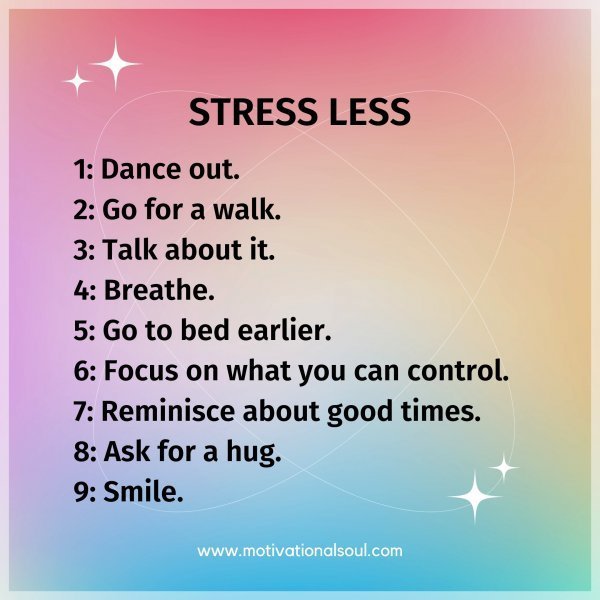
    STRESS LESS
  • Tips to Help You Maintain Balance in Life: Strategies for a Stressed Out World

    Tips to Help You Maintain Balance in Life: Strategies for a Stressed Out World

    It’s no secret that life is stressful.It’s easy to get bogged down by work, family, and social obligations leaving little time for personal care. But maintaining balance in your life is essential for your physical and mental health. In this blog post, we will discuss some tips to help you achieve balance and reduce stress. Follow these simple strategies, and you will be on your way to a more relaxed and balanced lifestyle!

    Maintaining Balance Can be Messy

    The overall balance in our lives is the key to success, but sometimes we get overloaded. In these cases, it’s necessary to pare down what we have so that we can focus on what’s important. However, if paring down isn’t possible right away, don’t worry! You can gradually work toward greater balance in the future.

    For example, try to balance on one foot. Do you find yourself leaning in one direction and, in order not to fall, must right yourself by leaning in the opposite direction? The same is true for our lives. There will be times when we are pulled in different directions and we have to make adjustments in order to maintain balance.

    It’s important to remember that balance is not a static state; it is constantly changing and requires effort to maintain. But the good news is, there are some things you can do to help find and maintain balance in your life.

    Are You Living a Life That is in Balance?

    • You’re always tired
    • You have no time for yourself
    • You’re skipping meals or eating unhealthy foods
    • You’re not exercising
    • You’re not spending time with loved ones
    • You’re constantly stressed

    If you find yourself experiencing any of these symptoms, it’s a good indication that your life is off-balance. But don’t worry, there are steps you can take to get back on track.

    Tips for Maintaining Balance in Your Life

    Take a Break

    One of the most important things you can do for your mental and physical health is to take a break. With the demands of work, family, and social obligations, it can be difficult to find time for yourself. However, making even a small amount of time each day to relax and rejuvenate can make a big difference in your overall well-being.

    Taking a break doesn’t have to mean going on vacation; simply setting aside 15-20 minutes each day to read, take a walk, or just sit quietly can refresh your mind and body. By taking some time each day to recharge, you’ll be better able to handle whatever life throws your way.

    Just Say No

    As anyone who has ever tried to juggle multiple tasks knows, it is all too easy to feel like you are constantly on the verge of burning out. To maintain a healthy balance in your life, it is important to learn to say no. It may seem counterintuitive, but by taking on less, you will actually have more time and energy to devote to the things that are truly important to you.

    Of course, this does not mean that you should say no to every opportunity that comes your way. But it is important to be selective about the commitments you make and to set boundaries in order to protect your time and energy. When you learn to say no, you will find that you have more time for the things you love and that you are better able to meet your obligations without feeling overwhelmed. As a result, you will be happier and more balanced.

    Disconnect to Reconnect

    In our increasingly connected world, it is easy to feel like we are always available. Whether we are checking our email, scrolling through social media, or answering work calls, it seems like there is always something pulling our attention. While staying connected can be helpful in some ways, it can also lead to feelings of anxiety and overwhelm. To achieve balance in your life, it is important to disconnect from technology and spend time connecting with the people and things that are most important to you.

    Turn off your phone, put away your laptop, and take some time to enjoy the company of loved ones, get lost in a good book, or simply be present at the moment. By disconnecting from technology, you will be able to focus on the things that truly matter and recharge your batteries.

    Set Boundaries

    One of the most important things you can do for your mental and emotional health is to set boundaries. Whether it’s setting limits on how much time you spend on work, or setting aside time each day for yourself, it’s important to make sure you aren’t overextending yourself. When you have healthy boundaries, you are more likely to maintain balance in your life. You’ll have more time and energy for the things that are truly important to you, and you’ll be less stressed overall. So if you feel like you’re constantly running on empty, take a step back and reassess your priorities. Then start setting some boundaries. You’ll be glad you did.

    Ask for Help When Needed

    It can be easy to feel like you have to do everything on your own, but one important tip for maintaining balance in your life is to ask for help when you need it. Whether it’s a friend, family member, or professional, there are people who can and want to help you.

    Asking for help shows that you are willing to admit when you need assistance and that you are not afraid to reach out to others. It can also be a sign of strength, not weakness. Asking for help can lead to improved mental and physical health, better relationships, and more balanced life.

    Manage Stress Levels

    We all experience stress in our lives, but it’s important to manage our stress levels so that we can maintain a healthy balance. When we’re feeling overwhelmed or stressed, our body releases the hormone cortisol, which can lead to anxiety, insomnia, and weight gain. By managing our stress levels, we can improve our overall health and well-being.

    Some effective steps include:

    • Taking breaks throughout the day
    • Putting away electronics an hour before bed
    • Practicing meditation or deep breathing
    • Exercising regularly
    • Eating a healthy diet

    Concentrate on What You’re Doing Now

    One of the best pieces of advice for maintaining balance in your life is to concentrate on what you’re doing now. This doesn’t mean that you should never plan for the future or reflect on the past, but it does mean that you shouldn’t let those things dominate your present thoughts and actions. If you’re constantly worrying about what might happen or what could have been, you’ll miss out on the joy of living in the present moment. Instead, focus on what’s happening right now and make the most of it. Enjoy your friends, family, and hobbies, and savor the good moments as they happen. By living in the moment, you’ll be able to create a more balanced and enjoyable life.

    Make Sensible Judgments

    Too often we make choices in life without careful consideration of the consequences. We choose what we want at the moment without a thought about how it will impact our future. This can lead to a spiral of unhealthy choices that throws our lives off balance. If we want to maintain balance in our lives, it is essential that we learn to make sensible judgments. We need to take the time to weigh our options and choose the course of action that is most likely to lead to a positive outcome. When we make choices from a place of wisdom and understanding, we are more likely to create balance in our lives and achieve our goals.

    Understand Your Thresholds

    We all have different thresholds for the amount of stress, work, social interaction, and downtime that we can handle before feeling overwhelmed. For some of us, working long hours comes easily and we feel energized by being around people. Others of us prefer a more relaxed pace and need more time alone to recharge. It’s important to understand your own thresholds in order to maintain a healthy balance in your life. If you’re not sure where your thresholds lie, pay attention to how you feel after different activities.

    Do you feel refreshed or exhausted after a night out with your friends? Do you prefer to work alone or as part of a team? Answering these questions can help you get a better sense of the types of activities that help you feel your best. Once you know your thresholds, you can make sure to include plenty of the things that make you feel good and limit the things that leave you feeling stressed or overwhelmed. By understanding and respecting your own needs, you can create a life that feels both balanced and fulfilling.

    Set Goals

    Having specific goals gives you something to work towards, and it can help to prevent you from feeling overwhelmed by the day-to-day tasks of life. When setting goals, it is important to be realistic and to set a variety of goals that cover different areas of your life. For example, you might set a goal to exercise three times per week, eat more vegetables, and spend more time with family and friends.

    By having a mix of goals, you are more likely to stick with them and feel well-rounded and balanced. Additionally, it is important to review your goals regularly and adjust them as needed. Goals should be dynamic and adaptable to life’s ever-changing circumstances.

    StresS

    Finding a Balance for Everyone’s Individual Requirements

    Teenagers:

    During the teenage years, it is important to find a balance between schoolwork and free time. Too much focus on one area can lead to feelings of frustration and overwhelm. Instead, try to create a schedule that includes time for both academics and fun. Make sure to include plenty of breaks in your day so that you can relax and recharge. Additionally, it is important to spend time with both friends and family. Friends can provide support and understanding, while family can offer guidance and wisdom. By finding a balance between these different areas of your life, you can create a more balanced and enjoyable experience.

    Adults:

    As we get older, it becomes more important to find a balance between work and personal time. If we spend too much time working, we can miss out on important aspects of our lives. On the other hand, if we spend too much time focusing on our personal lives, we can fall behind at work. Try to find a schedule that allows you adequate time for both works and play. Additionally,

    It’s no secret that the world is a stressful place.

    With work, family, and social obligations, it can be difficult to find time for yourself. But maintaining balance in your life is essential for your physical and mental health. In this blog post, we will discuss some tips to help you achieve balance and reduce stress. Follow these simple strategies, and you will be on your way to a more relaxed and balanced lifestyle!

    Older adults:

    For older adults, it is important to find a balance between alone time and social interaction. Too much time spent alone can lead to feelings of loneliness and isolation, while too much time spent with others can be draining. Instead, try to find a happy medium that allows you adequate time for both solo activities and socializing. Additionally, it is important to find a balance between work and leisure. Too much work can lead to burnout, while too much leisure can leave you feeling unfulfilled. Try to find a schedule that allows you time for both so that you can stay productive and enjoy your free time.

    Care for Your Physical Health

    It is important to remember that your physical health plays a role in your overall sense of balance. When you are physically healthy, you have more energy and feel better mentally. Conversely, when you are not feeling well, it can be difficult to focus on anything else. Make sure to schedule regular check-ups with your doctor and take care of yourself when you are feeling under the weather. Additionally, exercise is a great way to reduce stress and improve your physical health. Try to find an activity that you enjoy and make time for it in your schedule. Even a simple walk around the block can do wonders for your mental state!

    By following these simple tips, you can maintain balance in your life and reduce stress. Remember to take things one day at a time and focus on your goals. With a little effort, you can create a more balanced and enjoyable life for yourself!

    Stress
  • Self-Love Tips: How to Love Yourself Unconditionally

    Self-Love Tips: How to Love Yourself Unconditionally

    Do you ever feel like you hate yourself? Like all you do is make mistakes and disappoint yourself? If so, you’re not alone. Many people struggle with self-hatred daily. But there are ways to combat those negative thoughts and start loving yourself again. In this blog post, we will discuss 8 ways to start accepting and loving yourself just the way you are!

    Self-hatred Indicators

    Focus on the negative

    One of the most common indicators of self-hatred is an excessive focus on negative traits and behaviors. Individuals who hate themselves are quick to believe that they are unworthy and incapable of change. As a result, they tend to dwell on their faults and shortcomings, magnifying them out of proportion. This can lead to a negative feedback loop, in which people become trapped in a cycle of self-loathing.

    Inability to accept compliments

    Another common indicator of self-hatred is an inability to accept compliments or praise. People who hate themselves often view compliments as unwarranted and undeserved. They may also believe that others are simply being nice or trying to make them feel better. As a result, they have difficulty hearing and internalizing positive feedback.

    Trying to fit in

    Trying to fit in is often an indicator of self-hatred. People who hate themselves try to become someone they’re not to gain acceptance from others. They may try to change their appearance, personality, or interests to fit in with a particular group or person. This can lead to a sense of emptiness and loneliness, as the person is not being true to themselves. Trying to fit in can also be a sign of low self-esteem. People who dislike themselves may believe that they are not good enough and that they will never be accepted unless they change who they are. This can lead to a cycle of attempts to change, followed by feelings of failure and inadequacy.

    Personalizing criticism

    One of the most common indicators of self-hatred is personalizing criticism. This is when someone takes any form of criticism as a reflection of their entire worth as a person. For example, if a co-worker criticizes a project you completed, instead of taking it as constructive feedback, you might interpret it as a sign that you are not good enough or smart enough. Personalizing criticism can lead to a negative self-image and can prevent you from learning and growing from your mistakes.

    Expecting Perfection

    Expecting perfectionism from yourself is one of the most common indicators of self-hatred. You strive for unattainably high standards, beating yourself up whenever you make a mistake. IYou are never satisfied with your performance.This perfectionism can manifest in different ways, such as obsessively trying to control your weight or never feeling satisfied with your appearance. You may also find yourself constantly comparing yourself to others and feeling like you always come up short.

    Being too harsh on yourself

    If you’re too harsh on yourself, it may be a sign of self-hatred. We all make mistakes and have flaws, but if you can’t forgive yourself for them, it may indicate a deeper issue. If you find yourself constantly putting yourself down, making negative comparisons to others, or engaging in self-sabotage, it’s worth exploring why you have such low self-esteem. Treating yourself with compassion and understanding is an important step in overcoming self-hatred. Try to be gentle with yourself, and remember that everyone makes mistakes. If you work at it, eventually you will develop self-love and acceptance.

    Pessimistic outlook

    Self-hatred is often characterized by a pessimistic outlook. People who hate themselves tend to see the world and their place in it through a dark lens. They may believe that they are unworthy or undeserving of good things and that they will always be failures. As a result, they may adopt a self-defeating attitude, always expecting the worst and never believing that they can succeed. This can lead to a spiral of negative thinking, as self-hatred breeds further negativity and discouragement.

    Self-love is important. Because when you're all alone and it's 3 a.m. and you're crying

    What Causes Self-Hatred?

    Have you been noticing any negative aspects about yourself lately? If that’s the case, you might be wondering why you despise yourself and how to change. Reflect on the following questions and take some time to come up with answers. The list below includes some of the most common reasons.

    Inferior Inner Critic

    One of the primary causes of self-hatred is an inferior inner critic. This is the voice in your head that tells you that you’re not good enough, that you’ll never amount to anything, and that you should just give up. This voice can be incredibly loud and persuasive, making it hard to silence. If you’ve been struggling to love yourself, it’s important to identify your inner critic and start working on silencing it.

    Some common phrases your inner critic says are:

    “You’re not good enough.”

    “You’re not smart enough.”

    “You’ll never be successful.”

    “Nobody will ever love you.”

    “You’re ugly/fat/stupid.”

    These are just some examples, but your inner critic may say other things. Once you identify the voice, you can start to counter it with positive self-talk. For example, instead of listening to your inner critic who tells you “You’re not good enough,”It’s a lot easier to say, “I’m great,” or, simply, “I’m amazing.”

    Past Trauma

    Past trauma can lead to a feeling of self-hatred. When we experience something traumatic, our sense of safety and trust is shattered. We may feel like we are not worthy of love or that we are flawed in some way. This can lead to a deep, abiding hatred of ourselves. Past trauma can also cause us to doubt our worthiness and question our place in the world. We may feel like we don’t deserve happiness or that we are undeserving of love. This can lead to a feeling of self-hatred.

    Lastly, past trauma can cause us to view ourselves through a lens of shame. We may feel like we are not good enough or that we are unworthy of love. This can lead to a deep feeling of self-hatred. If you’ve experienced any of these things, it’s important to seek out help from a therapist or counselor who can help you work through your past trauma and learn to love yourself again.

    Unrealistic Standards

    Unrealistic standards are often the root cause of self-hatred. When we compare ourselves to others, we often focus on our own shortcomings and fail to see our own strengths. We may hold ourselves to unrealistic standards in terms of our looks, our achievements, or our personal relationships. When you feel like you’re not good enough, it can cause feelings of inadequacy and low self-worth. Unrealistic standards can also be the result of comparing ourselves to an idealized version of ourselves. We may have an image in our heads of who we want to be, and when we don’t live up to that image, we may feel like a failure.

    Childhood Experiences

    Childhood experiences are often cited as a major cause of self-hatred. If a child grows up in an environment where they are constantly criticized or made to feel worthless, it’s not surprising that they would develop negative feelings about themselves. Unfortunately, these early experiences can have a lasting impact and can lead to a lifetime of self-doubt and insecurity. In addition, people who suffer from low self-esteem often tend to be their own worst critics. They are quick to point out their own flaws and mistakes, and they seldom give themselves credit for their accomplishments. Over time, this can lead to self-hatred.

    Poor Relationships

    Poor relationships are often at the root of self-hatred. If we feel constantly misunderstood or mistreated by those closest to us, it can lead to feelings of worthlessness and inadequacy. In some cases, self-hatred may be the result of abuse, either emotional or physical. Abuse can shatter our sense of self and make it difficult to see ourselves as anything other than damaged goods.

    Bullying

    Bullying is a major cause of self-hatred. When someone is repeatedly ridiculed, mocked, or otherwise made to feel inferior, it can take a toll on their self-esteem. In some cases, the impact of bullying can be so severe that it leads to depression, anxiety, and other mental health issues. Additionally, people who are Bullied may start to believe that they are worthless and unlovable. As a result, they may start to hate themselves.

    Mental Health Conditions

    Mental health conditions are often accompanied by feelings of self-hatred. This can be due to a number of factors, including negative thought patterns, low self-esteem, and physical appearance. Mental health conditions can cause people to see themselves in a negative light and dwell on their flaws. This can lead to a feeling of worthlessness and despair. Low self-esteem can also cause self-hatred.

    People with low self-esteem often compare themselves to others and feel that they fall short. They may believe that they are not good enough, smart enough, or attractive enough. Physical appearance can also play a role in self-hatred. People who are unhappy with their weight, skin, or hair often feel disgusted with themselves. They may feel that they will never be good enough or that they are unworthy of love and respect.

    The Consequences of Self-Hatred

    • You may give up your efforts because you believe they will only result in failure.
    • Indulging in harmful coping mechanisms like drugs, binge eating, or social withdrawal.
    • You may harm your efforts or neglect yourself.
    • You might unknowingly choose people who are harmful or exploitative, like toxic friends or partners.
    • Suffering from low self-confidence and self-esteem.
    • Trouble making decisions due to indecision.
    • Having a perfectionist attitude that nothing is ever good enough.

    All of these behaviors can have harmful consequences in your life, both physically and mentally.

    How to Love Yourself Again

    How to Love Yourself Again It is not uncommon to lose yourself in the chaos of life. With work, family, and social obligations, it is easy to forget about your own needs and wants. As a result, you may begin to feel disconnected from yourself and spiral into a state of self-doubt and low self-esteem. If you find yourself in this situation, it is important to remember that it is never too late to love yourself again. Below are some tips on how to reconnect with your inner self and rediscover the things that make you happy:

    Take some time for yourself

    In today’s fast-paced society, it might be tough to find time for yourself. However, it is important to carve out some time each day to do things that make you happy. Whether it is reading your favourite book, going for a walk in nature, or taking a yoga class, taking some time for yourself will help you relax and rejuvenate.

    Connect with your passions

    One of the best ways to love yourself again is to connect with your passions. Whether it is painting, hiking, cooking, or gardening, doing things that make you feel alive will help you rediscover your sense of self.

    Be kind to yourself

    It is easy to be hard on ourselves when we make mistakes or fall short of our goals. However, it is important to remember that we are human and imperfections are part of what makes us unique and

    special. Instead of beating yourself up over your flaws, learn to accept them and focus on your positive attributes.

    Spend time with loved ones

    Spending time with those who love and support you can help remind you of your worth. Whether it is family members, close friends, or even pets, surround yourself with people who make you feel good about yourself.

    Do something new

    Trying something new can help you expand your horizons and see life from a different perspective. Stepping outside of your comfort zone can be scary but it can also be exhilarating and empowering. So go ahead and sign up for that pottery class or take a trip to an unfamiliar place-you may just surprise you!

    Conclusion

    Learning to love yourself again is a process that takes time and effort. However, it is worth it to invest in your happiness and well-being. By taking care of yourself emotionally and physically, you will be better equipped to handle the ups and downs of life. So take some time for yourself, connect with your passions, be kind to yourself, spend time with loved ones, and do something new. Before you know it, you will be on your way to a happy and fulfilling life.

    Love yourself first
  • Believing You Can Improve Your Mental Well-Being Gets You a Long Way Forward

    Believing You Can Improve Your Mental Well-Being Gets You a Long Way Forward

    Mental health is something that is often overlooked. We tend to think that if we are physically healthy, then our mental health must be fine as well. However, this is not always the case. In fact, many people suffer from mental health issues without even realizing it. The good news is that there are ways to improve your mental well-being, and one of the simplest methods is to simply believe that you can do it! In this blog post, we will discuss the power of positive thinking and how it can help improve your mental health!

    It is no secret that our thoughts can have a major impact on our mood and overall well-being. If you are constantly thinking negative thoughts, then it is likely that your mental health will suffer as a result. On the other hand, if you believe that you can improve your mental health, then you are much more likely to actually do so. This is because our thoughts can actually influence our actions and behaviors.

    Why is Mental Health Important?

    Your mental health, in addition to your physical well-being, is equally essential. In fact, the two are interconnected. Your mental health affects how you think, feel, and act on a daily basis. It also plays a role in how well you handle stress, relate to others, and make choices.

    Good mental health is more than just the lack of mental illnesses.Rather, it’s the presence of positive attributes and behaviors that contribute to your overall well-being. Just like physical fitness, mental fitness takes effort and practice. And, like physical fitness, there are many benefits to maintaining a healthy state of mind.

    Benefits of Positive Thinking

    • Improves mood
    • Reduces stress and anxiety
    • Increases resilience
    • Lowers risk of depression
    • Boosts immune system
    • Enhances well-being

    As you can see, there are many benefits to thinking positively. And, the good news is, that you don’t have to be a naturally optimistic person to reap the benefits of positive thinking. Just by making a conscious effort to think more positively, you can improve your mental well-being.

    Feeling in Control Is Vital to a Good Mental Health Status

    When it comes to our mental health, feeling like we are in control is essential. If we feel like we are constantly being bombarded by negative thoughts and emotions, then it can be very difficult to maintain a positive outlook on life. However, if we believe that we can control our thoughts and emotions, then we are much more likely to actually do so. This is because believing that we have control over our mental health gives us a sense of empowerment and hope.

    It’s vital to keep in mind that you’re not the only one fighting this war.There are millions of people all over the world who are struggling with their mental health.

    Our beliefs have a strong influence on our actions and behaviors. If we believe that we can

    One of the main reasons why positive thinking is so powerful is because it helps us feel in control. When we believe that we can improve our mental health, we are more likely to take action and make changes in our lives. This, in turn, can lead to better mental health status. Furthermore, feeling like we are in control of our mental health can help reduce stress and anxiety.

    Ways to Take Control of Your Life

    The greatest method to not be despondent is to get up and do something. Don’t wait for good things to happen by chance. You will fill the world with optimism if you go out and make some wonderful things happen, and you will fill yourself with hope

    There are many ways that we can take control of our lives and mental health. Some of them are:

    Have High Ambitions, but Don’t be Unrealistic

    It is important to have high ambitions in life. However, it is also critical to be realistic in terms of what you can accomplish. If you set your sights too high, then you are likely to become disappointed and frustrated when you don’t reach your goals. On the other hand, if you have realistic goals, then you are much more likely to achieve them and feel satisfied with your accomplishments.

    Make a List of Things You Are Grateful for Each Day

    One of the best ways to improve your mental health is to focus on the things you are grateful for. Make a list of everything you are happy about every day. This could be anything from your family and friends to your job or your home. Focusing on the positive things in your life will help you to appreciate what you have and feel more positive about your life in general.

    Take Action towards Your Goals

    You need to actively seek opportunities rather than wait for them to come to you. To reach your objectives, you must act. If you want to improve your mental health, then you need to take action and make changes in your life. This could mean anything from seeking help from a therapist to making lifestyle changes. Taking action towards your goals will help you to feel more in control of your life and give you a sense of purpose.

    Make modest and achievable targets for yourself.

    Making small, achievable goals is a great way to improve your mental health. When you set modest targets for yourself, you are more likely to achieve them and feel good about yourself. Furthermore, making small changes in your life can lead to big changes in your mental health.

    Be honest with yourself

    It is important, to be honest with yourself. It means being honest about your thoughts, feelings, and behaviors.. If you are not honest with yourself, then it will be difficult to make changes in your life. Honesty is a key part of taking control of your life and improving your mental health.

    Take inventory of your thoughts

    Our minds are unique places that have the ability to make our worst nightmares feel like paradise or turn the most beautiful moments into a living hell. In order to change the way you think, you need to become aware of your thoughts. You may begin to challenge your thoughts once you are aware of them. If you find that you are having negative thoughts, ask yourself if there is any evidence to support these thoughts. If there is no evidence, then the thought is likely, not true.

    Change your self-talk

    The way you talk to yourself can have a big impact on your mental health. If you are constantly putting yourself down, then it will be difficult to improve your mental health. However, if you start to talk to yourself in a more positive way, then it will be easier to make changes in your life.Here’s an example. If you catch yourself thinking “I’m such a failure,” try reframing it to something more positive, like “I’m doing my best.”

    Start a gratitude journal

    One of the best ways to improve your mental health is to focus on the things you are grateful for. Make a list of everything you are happy about every day. This could be anything from your family and friends to your job or your home. Focusing on the positive things in your life will help you to appreciate what you have and feel more positive about your life in general.

    Give yourself some credit

    “No matter your age, it’s never too late to set new goals or dream bigger dreams.”

    It is important to give yourself credit for the things you do well. This will help you to feel good about yourself and increase your self-esteem. When you have high self-esteem, it is easier to make positive changes in your life.

    Start today

    It’s never too late to start making positive changes in your life.If you want to improve your mental health, start today. Take the first step towards reaching your goals and believe that you can make a difference. Remember, simply believing you can improve your mental health goes a long way.

    Surround yourself with people who are optimistic and will boost you.

    Find people who will inspire you to be your best self. These people can help you to stay motivated and focused on your goals. Additionally, they can provide you with a sounding board when you need to make decisions about your life. When you have positive people in your life, it is easier to make positive changes.

    Find a role model

    It is helpful to find a role model who has made the changes you want to make in your own life. A role model can show you that it is possible to make positive changes and achieve your goals. Additionally, a role model can provide you with support and encouragement when you need it.

    Be accepting of yourself—flaws and all

    It is important to be accepting of yourself—flaws and all. This means that you need to learn to love and accept yourself for who you are. Once you are able to do this, it will be easier to make positive changes in your life. Additionally, you will be more likely to stick with these changes over the long term.

    Be patient with yourself—change takes time.

    If you want to understand change, get involved with it and go with the flow.

    Change takes time. Be patient with yourself and trust that you can make the changes you want to make. It may take some time to see results, but if you are persistent, eventually you will reach your goals.

    Take care of yourself

    “The mind is everything. What you think you become.” -Buddha

    In order to improve your mental health, it is important to take care of yourself. Your energy level improves when you follow these guidelines: eating a healthy diet, getting enough sleep, and exercising on a regular basis. Additionally, it is important to find time for relaxation and activities that you enjoy. When you take care of yourself, it is easier to make positive changes in your life.

    Cut yourself some slack

    “Don’t be too hard on yourself. You’re doing the best you can with what you’ve got..”

    It is important to cut yourself some slack. Everyone makes mistakes and nobody is perfect. If you are too hard on yourself, it will be difficult to make positive changes in your life. Instead, try to focus on the things you are doing well and believe that you can make a difference.

    Believe in yourself

    It is important to believe in yourself. If you don’t believe that you can make positive changes, it will be difficult to achieve your goals. However, if you have faith in yourself, anything is possible. Remember, simply believing you can improve your mental health goes a long way.

    Conclusion

    Positive thinking is a powerful tool that can help you to improve your mental health. When you believe that you can make a difference, it is easier to take the first step toward change. Additionally, surround yourself with positive people who will support and encourage you. Finally, be accepting of yourself—flaws and all. It takes time to adapt, so be patient with yourself.. If you stick to a program, you will eventually succeed. When you take care of yourself, it is easier to make positive changes in your life. So cut yourself some slack and believe that you can improve your mental health. It all starts with a positive mindset.