
Category: Articles

  • 15 Amazing Benefits Of A Simple Meditation Practice

    15 Amazing Benefits Of A Simple Meditation Practice

    If you’re looking for a way to improve your mental health, boost your productivity, and increase your overall well-being, you should consider practicing meditation. Meditation is a simple technique that can be done anywhere, at any time. And best of all, it comes with a slew of amazing benefits! In this blog post, we will discuss seven benefits of meditation that may surprise you.

    Meditation has been shown to improve mental health, boost productivity, and increase overall well-being. Let’s take a look at seven benefits of meditation that may surprise you:

    1. You will learn to deal with the highs and lows.

    When you meditate, you are training your mind to become more resilient and adaptable. You will learn how to deal with the highs and lows of life with grace and ease.

    This is because meditation helps us become more aware of our thoughts and emotions. We can then manage them better, rather than being controlled by them.

    As we become more mindful, we realize that thoughts and emotions are just passing states of mind that don’t need to control us.

    When we are in control of our thoughts and emotions, we are better able to deal with the highs and lows of life. As a result, we become less reactive to the ups and downs of daily life and more resilient overall. Meditation supports our ability to pay attention, focus, and resist distractions.

    In other words, we become less reactive to the ups and downs of daily life and more resilient overall. This is one of the most surprising benefits of meditation!

    YOU WILL ALWAYS HAVE UPS AND

    2. You’ll discover that little efforts add up to tremendous success.

    You may not notice it at first, but if you stick with it, you will eventually discover that your meditation practice is paying off in big ways. The benefits of meditation accumulate over time, so the more you practice, the greater the rewards. This is because meditation supports our ability to pay attention, focus, and resist distractions.

    The more we practice these skills, the better we become at them. And as we become better at paying attention, focusing, and resisting distractions, every other area of our life improves as well. We become more productive, efficient, and successful as a result of being happier.

    So stick with it! The more frequently you meditate, the wider array of benefits you will experience.

    3. You’ll discover that reaching a goal isn’t always simple.

    The road to success is often bumpy, but meditation can help you journey it with poise.

    Most people think that reaching a goal is a straight line from point A to point B. But the truth is, the path to success is often winding. There are many detours, roadblocks, and dead ends along the way. Meditation can help you navigate this path with grace. When you meditate, you learn how to deal with difficult situations calmly and effectively. You also develop a greater sense of patience and perseverance.

    As a result, you are less likely to give up when things get tough.

    So if you’re working towards a goal, don’t- be discouraged if the path is winding. Meditation will help you stay the course and eventually reach your destination.

    4. You will develop flexibility.

    One of the benefits of meditation is that it helps us become more flexible in our thinking. We learn to see things from different perspectives and to let go of rigid beliefs. This flexibility allows us to adapt to change more easily and to find creative solutions to problems.

    In our fast-paced, ever-changing world, this is a valuable skill to have. When we are flexible in our thinking, we can more easily roll with the punches and find new ways to solve old problems.

    So if you’re looking for a way to become more flexible in your thinking, meditation is a good place to start.

    5. You will persevere through any circumstance.

    No matter what life throws your way, you will be able to handle it with grace and ease if you have ra egular meditation practice. Meditation helps us develop our inner strength and resilience. We learn to deal with difficult situations calmly and effectively. We also develop a greater sense of patience and perseverance. As a result, we are less likely to give up when things get tough.

    So if you’re looking for a way to persevere through any circumstance, meditation is a good place to start.

    6. You will learn to appreciate every beautiful, unique moment.

    When we meditate, we learn to appreciate the present moment for what it is. We become more aware of our thinking processes, emotions, and feelings. We become more attuned to the environment. This increased awareness allows us to savor the good moments and see the beauty in everyday life.

    So if you’re looking for a way to appreciate every beautiful, unique moment, meditation is a good place to start.

    Don't wait for the perfect moment. Take the moment and make it perfect.

    7. You will understand the significance of the journey.

    There is no destination to reach with meditation; it is only about the journey. The more you meditate, the better your chances of understanding the true meaning of life.You will come to realize that everything is connected and that there is no such thing as separation. This understanding can lead to a deep sense of peace and compassion for all beings.

    8. You will find true happiness.

    The goal of meditation is not to become happy, but many people find that it is a by-product of their practice. When you let go of your attachments and stop chasing after things that you think will make you happy, you will start to experience true happiness. This happiness is not based on external conditions; it is a deep inner contentment that comes from understanding the true nature of reality.

    Meditation can be a powerful tool for creating lasting happiness and inner peace. If you’re looking to improve your well-being, consider adding a meditation practice to your daily routine. You may be amazed at how much you can accomplish in such a short time!

    True happiness

    9. You will be more present.

    It’s easy to get caught up in the past or worry about the future, but meditation brings you back to the present moment. This is where true peace and happiness reside. When you are fully present, you can appreciate the beauty of life just as it is. This doesn’t mean that you will never experience negative emotions, but it does mean that you will be better able to handle them when they do arise.

    If you’re looking for a way to live more at the moment, meditation is worth trying. The benefits of regular practice can be life-changing!

    10. You will be less reactive.

    Meditation helps you to become more aware of your thoughts and emotions. As a result, you’re less likely to react to them in negative ways. This can be extremely helpful in difficult situations, such as when you’re dealing with a challenging problem at work or an upsetting situation in your personal life. When you’re less reactive, you’re better able to think clearly and make wise decisions.

    If you tend to react to things without thinking, meditation may be a good way to help you gain more control over your actions. The benefits of regular practice can lead to a calmer and more peaceful life.

    11. You will have more energy.

    “A rich and full life requires boundless energy.”

    When you meditate, you are tapping into a deep well of energy that lies within you. This can help to improve your physical health and give you the strength and stamina to get through your day-to-day activities. Stress and anxiety can be detrimental to your health in many different ways, but meditation may help. It can also aid in boosting your mental clarity and focus, allowing you to be more productive across the board.

    If you’re looking for a way to boost your energy levels, meditation may be just what you need. The benefits of regular practice can lead to a more vibrant and energetic life!
    12. You will feel more connected.

    “Meditation is a way of opening up to our essential nature, which is one of love, compassion, and interconnectedness.”

    When you meditate, you connect with something much larger than yourself. This can help you to feel more connected to the world around you and foster a sense of compassion for all beings. You may also find that your relationships with others improve, as you become more patient and understanding.

    If you’re looking for a way to feel more connected to the world, meditation is worth trying. The benefits of regular practice can lead to a deeper sense of connection and compassion.

    13. You will be more kind.

    “Meditation is a way of softening the heart and opening to our pain and the pain of others.”

    When you meditate, you become more aware of your thoughts and emotions. As a result, you’re less likely to react to them in negative ways. This can be extremely helpful in difficult situations, such as when you’re dealing with a challenging problem at work or an upsetting situation in your personal life. When you’re less reactive, you’re better able to think clearly and make wise decisions.

    If you tend to react to things without thinking, meditation may be a good way to help you gain more control over your actions. The benefits of regular practice can lead to a calmer and more peaceful life.

    14. You will be more forgiving.

    “Meditation is a way of training the mind to let go of grudges and resentments.”

    When you meditate, you learn to let go of the negative thoughts and emotions that can hold you back in life. This can be extremely helpful if you tend to hold onto grudges or resentments. When you let go of these negative feelings, you’ll find it easier to forgive others and move on with your life.

    If you want to find a way to let go of the past and move forward with your life, meditation may be just what you need. Regular practice may lead to a more forgiving and peaceful existence.

    15. You will have more self-compassion

    Through meditation, you become more conscious of your feelings and emotions. As a result, you’re better able to understand and accept yourself. This can be extremely helpful if you tend to be self-critical or have difficulty managing difficult emotions. When you have more self-compassion, you’ll find it easier to be kind to yourself and make wise choices.

    Conclusion

    The benefits of meditation are vast and varied. The above are just a few of the many reasons why you should consider incorporating this simple practice into your life. If you have never tried meditation before, there is no time like the present to start!

    It’s also worth noting that there is no “correct” technique for meditation. Make sure you’re in a comfortable position and can focus on your breath, then close your eyes. Allow yourself to be present at the moment, and let go of all thoughts and worries. The more you practice, the deeper you will journey into the amazing world of meditation. Namaste!


    Meditation... because some questions can't be answered by Google.

    Meditation Guidance

    How To Avoid These Meditation Mistakes And Get The Most Out Of Your Practice

  • Unlock Your Potential: Become Limitless with an “I Can Do Anything” Attitude

    Unlock Your Potential: Become Limitless with an “I Can Do Anything” Attitude

    Unlock Your Potential: Become Limitless with an “I Can Do Anything” Attitude

    When it comes to achieving success in life, you need to have the right mindset. One of the most important mindsets to adopt is the “I can do anything” mindset. With this mentality, you believe that you can achieve anything you set your mind to. You are not limited by your abilities or your circumstances. When you really want something, you’ll always find a solution.

    This mindset is essential for anyone who wants to achieve great things in life.

    The “I can do anything” mindset is not about being cocky or overconfident. Part of success is having confidence in yourself and your skills. It’s all about knowing that you have what it takes to surmount any challenge and accomplish any objective. This mindset is the key to unlocking your full potential.

    you can

    How Does an ‘I Can Do Anything Mindset’ Appear?

    An “I can do anything mindset” is often characterized by a sense of confidence and possibility. People with this mindset believe that they have the ability to achieve their goals, and they are willing to take risks to make their dreams a reality. This positive outlook can be contagious, inspiring others to pursue their own ambitions.

    People with an “I can do anything mindset” often approach life with a growth mindset, believing that they can improve their skills and abilities through effort and practice. This attitude allows them to persevere in the face of challenges and setbacks, as they know that success is within their reach.

    Individuals with an “I can do anything mindset” tend to be creative and resourceful, always searching for new ways to accomplish their objectives. They are open to change and willing to experiment, which helps them to adapt quickly and efficiently to new situations. This flexible approach allows them to seize opportunities as they arise, leading to even greater success.

    you can

    What are the advantages of adopting an ‘I Can Do Anything Mindset’?

    The advantages of developing an “I can do anything attitude” are innumerable.

    The following are some of the most prominent advantages to your overall health and well-being:

    Higher self-esteem

    One of the most important benefits of having an “I can do anything mindset” is that it leads to increased self-esteem. When we believe in ourselves and our abilities, we are more inclined to take chances and put ourselves out there when we feel secure. Setbacks only make us stronger. This increased sense of self-worth can lead to all sorts of positive outcomes, both in our personal and professional lives.

    In fact, studies have shown that people with high self-esteem are more likely to be successful in their careers, be physically healthier, and have happier relationships. So if you’re looking for ways to boost your self-esteem, adopting an “I can do anything mindset” is a great place to start.

    Increased levels of Self-Assurance

    An ‘I Can Do Anything Mindset’ is incredibly beneficial because it leads to increased levels of self-assurance. When we believe in ourselves, we are much more likely to take risks and challenge ourselves. This can lead to personal growth and greater success in life. Furthermore, a positive mindset also attracts other people to us.

    They are drawn to our confidence and optimistic attitude, which creates opportunities for both professional and personal relationships. Finally, our belief in ourselves also inspires those around us. When we show others that anything is possible, they are more likely to believe it themselves. As a result, an ‘I Can Do Anything Mindset’ has the power to transform our lives and the lives of those around us.

    When you believe in yourself
    Believe in yourself

    Increased Motivation

    When we believe in ourselves and our abilities, we are more likely to put forth the effort required to succeed. Whether it is taking on a new project at work or committing to a fitness goal, self-confidence gives us the drive to take action.

    When we doubt ourselves, we are more likely to procrastinate and make excuses. with a fixed mindset, we tend to shy away from challenges, fearing that we will not be able to meet them. On the other hand, having a growth mindset helps us to see obstacles as opportunities for learning and development. As a result, we are more likely to stay motivated and persistent in the face of difficulties.

    MOTIVATION BEGINS WHEN
    MOTIVATION BEGINS WHEN

    Higher Levels of Achievement

    People who have an “I can do anything” mindset set themselves up for success in multiple ways. For one, they tend to achieve more. Why? Because they believe in their ability to do whatever it takes to get the job done – even if it means going above and beyond what is expected. They also foster positive relationships with others, as their can-do attitude is contagious. People are drawn to those who see the glass as half full and who are confident in their own abilities.

    Finally, people with an “I can do anything” mindset tend to be resilient in the face of setbacks. They know that failure is simply a stepping stone on the path to success. So, if you want to achieve more and attract positive relationships, adopt an “I can do anything” mindset. This could be the key to unlocking your full potential.

    Dream high
    Dream high

    A Longer Life Expectancy

    As the saying goes, we become what we believe. If we believe we can do something, we are more likely to be successful in achieving it. On the other hand, if we believe something is beyond our abilities, we are likely to give up before we even try. This is why having a “I can do anything” attitude is so crucial. Believing that we can achieve our goals gives us the motivation to take action and persevere when challenges arise.

    This positive mindset has been linked with increased life satisfaction and happiness, better physical health, and even a longer lifespan. So if you want to live a happy and fulfilling life, remember to think “I can do anything!”

    If You’re a Natural Pessimist, What Then?

    This all sounds great in theory, but what if you’re a natural pessimist? Is it possible to change your mindset? The good news is, it is! It may take some effort and time, but with a little bit of practice, you can train your brain to think more positively. For a head start, here are some tips:

    • Start each day with a positive affirmation

    Something along those lines, such as “I can do anything I set my mind to,” or “I am capable of being happy and successful.”

    Keep track of all your accomplishments, no matter their size. This will help remind you of your capabilities when you’re feeling down.

    • Focus on the present moment

    When you find yourself dwelling on negative thoughts, take a step back and focus on what is happening in the present moment. This will help you to see that your negative thoughts are not accurate reflections of reality.

    Are there any areas in your life where you tend to have a fixed mindset? For example, do you believe that you’re not good at math or that you’re not athletic? Challenge these beliefs by taking on new challenges and pushing yourself out of your comfort zone.

    • Practice gratitude

    Every day, focus on the things you’re grateful for. Eventually, it will become a habit. Your health, family, and friends are all important aspects of your life. Gratitude will help to shift your focus from negative to positive thoughts.

    Developing an “I Can Do Anything” Attitude

    No matter what your natural inclination may be, it is possible to develop an “I can do anything” attitude. It takes time and effort, but it is definitely worth it. When you have this mindset, you open yourself up to limitless possibilities and a world of success. So start today by believing in yourself and your ability to achieve great things!

    Consider the People Around You

    One final thought on this subject is to consider the people around you. Do the people you spend the most time with have a fixed or growth mindset? If they have a fixed mindset, they may be holding you back without even realizing it. Surround yourself with positive, supportive people who believe in your ability to grow and achieve your goals. These people will help to foster a healthy and positive mindset.

    Remember Your Objectives

    One of the best ways to develop a “can-do” attitude is to clearly identify your goals. What is your objective? Once you know what you’re working towards, it becomes much easier to stay motivated and push yourself to achieve it. In addition, it’s important to Surround Yourself With Positive People Who Believe In You. These people will provide encouragement and support when you need it most. Finally, don’t be afraid to Fail. Every successful person has failed at some point; it’s how they learn and grow. Embrace your mistakes and use them as an opportunity to become even better.

    Other Ways to Encourage Yourself

    Here are some other ways that you can encourage yourself:

    Review your accomplishments to date in achieving your goal

    This will help to remind you of your capabilities and give you a confidence boost.

    Create a vision board

    This is a visual representation of your goals and what you want to achieve. Seeing your goals every day will help to keep them at the forefront of your mind and encourage you to take action.

    Make a list of positive affirmations

    Write down a list of positive statements about yourself and your ability to achieve your goals. Read these affirmations aloud to yourself every day.

    Set small, achievable goals

    When you’re feeling overwhelmed, it can be helpful to break your goal down into smaller, more manageable pieces. This will help you to feel more confident and motivated as you accomplish each task.

    Celebrate your success

    Be sure to celebrate each and every accomplishment, no matter how small. This might help you stay motivated and focused on your objective.

    In conclusion, here are some suggestions for fostering an “I can accomplish anything” or positive mentality. This includes ideas previously discussed as well as new ways to incorporate into your daily routine right now:

    • Identify areas of your life where you have a fixed mindset
    • Challenge those beliefs by taking on new tasks or learning opportunities
    • Practice gratitude regularly
    • Surround yourself with positive people
    • Use cognitive reframing to give yourself a new perspective.
    • Plan for the future
    • Visualization is a crucial skill that you should practice.
    CELEBRATE WHAT YOU'VE
    CELEBRATE WHAT YOU’VE

    Conclusion

    Developing an “I can do anything” attitude is a process that takes time and effort.The amount of work may be tough, but it’ll all pay off in the end. When you have this mindset, you open yourself up to limitless possibilities and a world of success. So start today by believing in yourself and your ability to achieve great things!

    Believe you can and you're halfway there.
  • What to Do When You’re Feeling Incompetent

    What to Do When You’re Feeling Incompetent

    Do you ever feel as if you’re always making mistakes? That you’re just not good at anything? This is a common feeling, especially when we’re struggling with something new. It’s easy to feel incompetent and like a failure when we don’t know how to do something. The fact is, everyone has felt this way at some point in their life. The key is learning how to deal with these feelings in a healthy way so that they don’t hold us back from reaching our goals. In this blog post, we will discuss some tips for dealing with feelings of incompetence, and how to get past them so that you can start achieving your goals!

    Do you often feel like no matter what you do, it’s wrong??

    You’re not crazy if you think everything you do is wrong – it’s a common feeling, and here are some of the reasons why.

    Stress

    Have you ever felt like no matter what you do, you can’t seem to do anything right? If so, you’re not alone. This feeling is often caused by stress. Cortisol is a hormone produced by our bodies when we’re anxious. Cortisol helps us to deal with situations that are stressful by giving us an energy boost. However, if cortisol levels stay high for too long, it can have the opposite effect. We may feel tired and unable to concentrate, and our memories may suffer. In addition, stress can cause us to make more mistakes.

    This is because cortisol interferes with the part of the brain that controls logic and reasoning. As a result, we may find it harder to solve problems and make decisions. So if you’ve been feeling like you can’t do anything right, it may be time to take a step back and assess your stress levels.

    Overwhelm

    You’ve been told your whole life that you need to focus on one thing at a time. And for the most part, that’s true. However, there are times when you just can’t seem to get anything done. It feels like everything you try ends in failure and you can’t help but wonder what’s wrong with you. The truth is, there’s nothing wrong with you. You’re just feeling overwhelmed. When you have too much going on, it’s natural to feel scattered and like you can’t do anything right.

    Self-Esteem

    We’ve all had moments where we feel like our best isn’t good enough.Maybe you’ve been passed over for a promotion at work, or your friends seem to be doing better than you. It can be frustrating and even overwhelming to feel like you can’t do anything right.

    One reason this may be happening is because of your self-esteem. If you don’t believe in yourself, it’s going to be hard to accomplish your goals. When you doubt your abilities, you’re more likely to give up when things get tough. Low self-esteem can also lead to anxiety and depression, which can further sabotage your efforts.

    You’re Not Giving Yourself Enough Credit

    One of the reasons you may feel like you can’t do anything right is that you’re not giving yourself enough credit. It’s easy to focus on your mistakes and dwell on them, but it’s important to remember that everyone makes mistakes. Instead of beating yourself up over your faults, consider how you may utilize them to your advantage in the future.

    You’re Comparing Yourself to Others

    Another reason you may feel like you can’t do anything right is that you’re comparing yourself to others. It’s important to remember that everyone is different and that everyone has their own unique strengths and weaknesses. Comparing yourself to others will only make you feel worse about yourself and is not an effective way to gauge your own progress.

    You’re Setting the Bar Too High

    If you’re constantly setting the bar too high for yourself, it’s no wonder you feel like you can’t do anything right. It’s important to set realistic goals for yourself and to celebrate your accomplishments, no matter how small they may be. If you’re always striving for perfection, you’ll never be satisfied with your accomplishments and will always feel like you could have done better.

    You’re Too Hard on Yourself

    Finally, one of the main reasons you may feel like you can’t do anything right is because you’re too hard on yourself. We all make mistakes and none of us are perfect.. If you’re constantly berating yourself for your mistakes, it’s only going to make it harder for you to move on from them. Instead of being hard on yourself, try to be understanding and forgiving.

    Consequences of Feeling Incompetent

    If you’ve been feeling like you can’t do anything right, it’s important to understand the consequences of this mindset. When you feel incompetent, you’re more likely to give up when things get tough. You may also start to doubt your abilities and believe that you’re not good enough. This can lead to anxiety, depression, and a general feeling of dissatisfaction.

    It’s important to understand that everyone makes mistakes and that no one is perfect. If you’re too hard on yourself, you’ll never be able to move on from your mistakes. Instead, try to be understanding and forgiving. Remember that everyone has their own unique strengths and weaknesses, so don’t compare yourself to others.

    How to Deal With Feelings of Incompetence

    Now that we’ve discussed some of the reasons why you may be feeling incompetent, let’s talk about how to deal with these feelings.

    Allow Yourself To Feel This Way

    Whatever the case may be, feelings of incompetence can be tough to shake. However, it’s important to remember that everyone experiences these feelings from time to time. Rather than trying to fight them, allow yourself to feel them. Recognize that they are normal and that they will eventually pass. Once you’ve given yourself permission to feel these feelings, you can start to take steps to move past them.

    For instance, you might reach out to a trusted friend or family member for support, or you might try to reframe your thinking about the situation. Whatever you do, don’t try to bottle up your feelings or pretend they don’t exist. The first step to moving on is to accept them.

    What You’ve Done Right Should be Reviewed to Prove Yourself Wrong

    One way to deal with feelings of incompetence is to focus on your strengths and accomplishments. Make a list of everything you’re proud of, no matter how insignificant it may seem. This can help remind you that you are capable and competent. It’s also important to seek out feedback from others. Ask trusted friends or relatives for their honest assessment. If they believe in you, it can help you start to believe in yourself.

    Revealing that you require assistance demonstrates fortitude rather than fragility. By following these tips, you can start to overcome your feelings of incompetence and reach your full potential.

    Speak to Yourself in the Same Way as You Would to Others

    One of the most difficult things about feeling incompetent is that it can be hard to shake off. Once you start to doubt your abilities, it can be tough to see yourself in a more positive light. However, it is important to remember that everyone feels like this at times.

    The key is to not get too caught up in these feelings. Instead of beating yourself up, try to speak to yourself in the same way as you would to someone else. Be compassionate and understanding. Remember that you are just a person, who is capable of making mistakes. But you are also capable of learning and growing. So don’t be too hard on yourself. Give yourself some grace and space to make mistakes – and to learn from them.

    Exercise

    When you’re feeling incompetent, it’s easy to become overwhelmed and stressed. This can often result in feeling anxious or depressed. To help combat these feelings, it’s important to get some exercise. Exercise releases endorphins, which have mood-boosting effects. So go for a walk or a run – whatever makes you feel good.

    Getting some fresh air and moving your body can help you start to feel better. The greatest thing you can do is go for a walk. Walking has been shown to be an effective way to reduce stress and improve mood. Getting some fresh air and moving your body can help to clear your mind and give you a new perspective.

    Get Support

    When you’re feeling down, it’s important to reach out to your support system. Talk to a friend or family member who makes you feel good about yourself. They can help remind you of your strengths and why they believe in you. Just knowing that someone has your back can make a world of difference. So don’t be afraid to reach out when you need a shoulder to cry on.

    It’s also important to talk to someone who is impartial – someone who can give you an honest opinion. Sometimes, it’s helpful to get a second opinion from someone who knows you well. They can help you see the situation in a different light and offer some helpful advice.

    Practice Self-Care

    When you’re sad, it’s critical to take care of yourself. This means getting enough sleep, eating healthy foods, and spending time on activities that make you happy. It is vital to find methods to relax and de-stress. This might include reading, listening to music, or spending time in nature. Taking care of yourself can help you feel better and start to see the situation in a more positive light.

    Do Something Good for Someone Else

    One of the best ways to feel better about yourself is to do something good for someone else. This can help you see that you are capable of making a difference. It can also make you feel good about yourself, which can boost your confidence. So next time you’re feeling down, try to do something nice for someone else.

    It could be something as simple as smiling at a stranger or holding the door open for someone. Or you could do something more significant, like volunteering your time to a worthy cause. Whatever you do, remember to make a difference.

    Take a Break

    If you’re feeling overwhelmed and like you can’t do anything right, it’s important to take a step back. This doesn’t mean giving up. When things are getting tough, sometimes the best solution is to take a break. Stepping away from a difficult situation can help you clear your head and come back with a fresh perspective. This will give you some time to clear your head and come back with a fresh perspective. Sometimes when we’re feeling overwhelmed, the best thing to do is take a break.. Go for a walk, take a nap, or just step away from the situation for a while. This will help you to come back refreshed and ready to tackle the problem.

    Conclusion

    You may not be able to shake off your feelings of incompetence overnight. But by following these tips, you can start to move past them. Allow yourself to feel what you’re feeling, focus on your strengths, and be gentle with yourself. With time and effort, you will start to feel better about yourself and your abilities.

    Confidence has
  • How Clutter Negatively Impacts Your Mental Health

    How Clutter Negatively Impacts Your Mental Health

    You might not know this, but having a lot of clutter around can actually impact your mental health in a negative way. It’s true! In fact, studies have shown that clutter can lead to anxiety, depression, and other mental health issues. If you’re feeling overwhelmed by the amount of stuff in your life, it’s time to take action. In this blog post, we will discuss the negative effects of clutter and how to get rid of it once and for all!

    What is Clutter?

    Clutter is defined as a collection of things that are in disarray or disorder. In other words, it’s the stuff that you have lying around your house that you don’t need or use. This could be old clothes, books, magazines, toys, electronics, etc. Basically, anything that is taking up space and causing you to feel stressed out can be considered clutter.

    The following questions will help you determine whether or not your home has excessive clutter:

    • Do you have more stuff than you have storage space for?
    • Do you feel like you’re constantly swimming in a sea of stuff?
    • Is your home so cluttered that it’s difficult to move around or even find things?
    • Do you feel embarrassed or ashamed when people come over because of the state of your home?

    If you answered yes to any of these questions, then it’s likely that your home has too much clutter.

    Impact of Clutter on Mental Health

    Now that we’ve defined clutter and discussed how to identify it, let’s talk about the impact it can have on your mental health. As mentioned earlier, studies have shown that clutter can lead to anxiety, depression, and other mental health issues. Here are some of the ways that clutter can negatively impact your mental health:

    Anxiety

    For many people, clutter is a source of anxiety and stress. The thought of having to sort through a pile of paperwork or clothes can be overwhelming, and the constant visual reminder of the mess can trigger feelings of guilt and inadequacy. In extreme cases, people with severe hoarding disorder may be unable to use certain areas of their homes due to the amount of clutter. This can lead to social isolation and further deterioration of mental health. While decluttering may not be a cure-all for mental health issues, it can help to reduce anxiety and create a sense of calm. When our surroundings are orderly, we feel more in control of our lives and our minds.

    Depression

    It’s no secret that mental health and physical clutter are closely linked. A cluttered space can cause feelings of anxiety, frustration, and even depression. And it’s not just the physical act of cleaning up that can be overwhelming; the thought of decluttering can be just as daunting. But there are ways to overcome the negative impact of clutter on your mental health. One way is to take it one step at a time.

    Don’t try to tackle everything at once; instead, focus on one area or one task at a time. Another way to combat the negative effects of clutter is to create a system that works for you. This might mean investing in some storage containers or baskets, or it might mean coming up with a creative way to organize your space. Whatever system you choose, make sure it’s one that you can maintain over time.

    Increased Stress Levels

    The impact of clutter on mental health is often underestimated. A cluttered environment can be a source of increased stress levels, anxiety, and feelings of defeat. For many people, the thought of decluttering their space can feel overwhelming and daunting. This is because they are unsure of where to start and what to keep.

    • The initial step is to recognize the regions of your home that are causing you the most pressure.
    • Once you have identified these areas, set a goal to declutter one area at a time.
    • Start with the easiest area first and work your way up to the more challenging tasks.
    • As you declutter your space, you will likely find that your stress levels decrease, and your overall outlook on life improves.

    Difficulty Focusing

    Studies have shown that clutter can actually have a negative impact on mental health, making it difficult to focus and causing feelings of anxiety and depression. In one study, participants were asked to complete a task in a room that was either cluttered or tidy. Those in the tidy room were able to complete the task more quickly and with less stress than those in the cluttered room. This suggests that clutter not only makes it difficult to focus but also increases levels of stress and anxiety.

    In another study, participants were asked to rate their mood after decluttering their living space. The majority of participants reported feeling happier and less anxious after decluttering, suggesting that getting rid of excess clutter can improve mental well-being.

    Focus on your goals sweetheart
    Focus on your goals sweetheart

    Procrastination

    A messy desk, a cluttered countertop, or a pile of clothes on the floor – we’ve all been there. But what you may not realize is that the physical clutter in your life can also have a serious impact on your mental health. Studies have shown that people who live in cluttered spaces are more likely to feel stressed and anxious.

    The constant mess can also lead to feelings of shame and guilt, as well as a sense of overwhelmingness. And all of these emotions can contribute to procrastination. When you’re faced with a daunting task, it’s easy to put it off when your surroundings are already so chaotic.

    Difficulty With Relationships

    Clutter can have a significant impact on our mental health and well-being. Not only can it make our living spaces feel smaller and more cramped, but it can also lead to feelings of anxiety and stress. In fact, research has shown that clutter can actually affect our ability to form and maintain relationships.

    One study found that couples who had cluttered homes were more likely to report lower levels of satisfaction with their relationship than those who had tidy homes. Furthermore, the same study found that participants who rated their homes as messy were more likely to experience negative emotions such as sadness and anger. These findings suggest that the state of our home can have a direct impact on our personal relationships.

    Difficulty Curbing Spontaneity

    Furthermore, clutter can make it difficult to curb spontaneity, as it can be hard to find things when they are buried under a mess. This can lead to feelings of frustration and agitation. In extreme cases, clutter can even trigger hoarding behaviors. Therefore, it is important to keep your surroundings tidy and organized in order to maintain good mental health.

    Why Do People Have Clutter?

    There are many reasons why people have clutter in their lives:

    • Objects remind them of important things: Clutter can be a way of holding on to memories and sentimental items. For some people, it is difficult to get rid of things that remind them of happy times or loved ones.
    • They have a hard time making decisions: Some people find it difficult to make decisions about what to keep and what to get rid of. This can lead to an accumulation of clutter over time.
    • They are disorganized: Some people are simply more disorganized than others and have a hard time keeping their living space tidy. This can be due to a number of factors, including a busy lifestyle or ADHD.
    • They don’t have enough storage space: A lack of storage space can lead to clutter, as people are forced to keep things out in the open. This is often the case in small homes or apartments.
    • They have a lot of stuff: Some people simply have more stuff than others. This can be due to a number of factors, such as compulsive shopping behaviors or collecting hobbies.
    • They feel safe in their belongings: For some people, their belongings provide a sense of safety and security. This is often the case for people who have experienced trauma or loss.

    What Is Hoarding?

    Hoarding is a serious mental health condition that is characterized by the accumulation of large amounts of clutter. People who hoard often have a difficult time getting rid of things, even if they are no longer useful. This can lead to severe problems in their home, such as fire hazards and rodent infestations. Hoarding can also have a negative impact on the hoarder’s mental health, as it can cause feelings of anxiety and shame.

    Someone with hoarding disorder usually demonstrates some or all of the following behaviors:

    • They have a difficult time getting rid of things, even if they are no longer useful.
    • They feel a need to keep everything they acquire.
    • They have a lot of clutter in their home and it is interfering with their daily life.
    • They are reluctant to let others into their home because of the mess.
    • They feel embarrassed or ashamed about their home.

    Tidying Up: How to Declutter Your Life

    Clutter can have a serious impact on our mental health, but it’s important to remember that we are not powerless against it. If you find yourself struggling with clutter, there are steps you can take to get it under control.

    Dedicate the Time

    If your home is cluttered, it can be difficult to relax and feel at ease. The first step to decluttering your life is to dedicate some time to the task. Set aside an hour or two each week to declutter your living space. As you begin to declutter, you may find that it takes less time than you initially thought. Start with one room at a time and focus on decluttering surfaces first. Once you have cleared off counters, tabletops, and other flat surfaces, move on to decluttering storage spaces such as cabinets, drawers, and closets. Donate or recycle items that you no longer need and put away items that you want to keep but don’t use on a regular basis. A tidy home will help you to feel more relaxed and organized.

    Decrease Items

    It might be tough to let go of things. We often hold on to items because they have sentimental value, or because we think we might need them in the future. However, an overload of stuff can weigh us down both physically and emotionally. If you’re feeling bogged down by clutter, it might be time to declutter your life.

    Make a list of all the things you need to get rid of and categorize them by type. Once you know what you’re dealing with, you can start the process of letting go. For items with sentimental value, try taking pictures instead of keeping the physical object. This way, you can still keep the memories without hanging on to material possessions. For items you think you might need in the future, ask yourself if you’ve used them in the past year. If not, chances are you won’t need them going forward.

    Organize What’s Left

    Once you’ve decluttered your living space, it’s important to maintain a new level of order. To do so, you’ll need to establish some ground rules.

    • First, create a designated place for everything in your home. This will help you to know where things belong and make it easier to put them away when you’re finished using them.
    • Second, make a habit of decluttering on a regular basis. Set aside sometime each week to tidy up your living space and get rid of any clutter that has accumulated.
    • Finally, be aware of the items you allow into your home. When you’re tempted to buy something new, consider if you truly need it. If not, fight the urge to make a purchase.

    Be Kind to Yourself

    Letting go can be hard, but it’s always worth it in the end. If your home is cluttered and you’re feeling overwhelmed, it’s time to declutter.

    • The first step is to figure out what matters most to you. What brings you joy?
    • Once you’ve determined what’s worth keeping, it’s time to let go of the rest. If an object holds no value to you or doesn’t serve a purpose, get rid of it. This can be a difficult process, but it’s important to be gentle with yourself.
    • Remember that decluttering is about making your life simpler and happier, not about getting rid of everything you own. So take your time, be patient, and enjoy the process of creating a more serene and peaceful home.

    Seek Professional Help

    Clutter. It’s everywhere. In our homes, in our lives, on our minds. For some of us, it seems like an insurmountable task to declutter our lives. But it doesn’t have to be. There are professional organizers who can help you declutter your home and your life. They will work with you to create a plan that fits your unique needs and situation. And they will help you to implement that plan, step by step. Professional organizers can make a huge difference in your life, helping you to reduce stress, increase productivity, and create more peace and harmony in your world. If you’re feeling overwhelmed by clutter, seek out the help of a professional organizer today.

    Conclusion

    Clutter can have a serious impact on our mental health, but by taking some simple steps, we can declutter our lives and feel happier and more relaxed. So what are you waiting for? Start decluttering today!

    You Might Also Like

  • Stress-Busting Tips to Help You Handle Any Difficult Situation

    Stress-Busting Tips to Help You Handle Any Difficult Situation

    We all know that feeling – the one where we’re so stressed out that we can’t think straight. We feel overwhelmed and like we’re about to burst. This is not a good place to be in, both mentally and physically. Stress can cause all sorts of health problems, including heart disease, high blood pressure, and even cancer. In this blog post, we will discuss stress-busting tips that will help you handle any difficult situation!

    Determine the Cause of Your Stress

    One of the most important steps in managing stress is identifying its source. What is causing you to feel so stressed out? Is it your job, your family life, or something else entirely? Once you know what is causing your stress, you can begin to work on finding a way to cope with it. For some people, the source of their stress is obvious.

    If you’re constantly worrying about money or your job security, then it’s clear that these are major sources of stress in your life. Other people’s stress may be more subtle. If you find yourself feeling stressed and anxious but you can’t pinpoint the cause, it might be helpful to keep a journal. Write down what you did each day and how you felt afterward. After a week or two, you might start to see patterns emerge. Once you know what is causing your stress, you can begin to work on finding a way to cope with it.

    Learn How to Keep a Stress Journal

    For many people, stress is a daily constant. Chronic stress can lead to a variety of health problems, including high blood pressure, anxiety, and depression. It can also make it difficult to focus or sleep properly. One way to help manage stress is to keep a stress journal. Writing down your thoughts and feelings can help to identify patterns and triggers for stress. It can also be a helpful way to release pent-up emotions.

    When you’re feeling stressed, take a few minutes to write in your journal. Include what happened, how you felt, and what you did in response. Eventually, you will begin to see resemblances.

    Below are some situations which may trigger anxiety, stress, or a feeling of being overwhelmed. Consider how you would feel in each situation:

    • What can I do to avoid or change this situation?
    • What are my options?
    • What is the worst that could happen?
    • How likely is it that the worst-case scenario will actually happen?
    • What are the potential consequences of this scenario?
    • What is the best case scenario?

    Some people find it helpful to make a list of possible solutions and then choose the one that seems the best fit.

    Have the Appropriate Attitude

    One of the best stress-busting tips is to have the right attitude. Of course, it’s easier said than done to remain calm when you’re facing a deadline at work or dealing with a difficult situation at home. However, it’s important to remember that your attitude is a choice. You have the option to concentrate on the bad or good aspects of your life.

    If you find yourself getting overwhelmed by stress, take a step back and try to see the situation from a different perspective. Instead of dwelling on what’s going wrong, focus on what you can do to fix the problem. By changing your attitude, you’ll be better equipped to handle stress in a healthy way.

    Recognize the Importance of Attitude

    A positive attitude is one of the most important things you can bring to any situation, especially when it comes to dealing with stress. It may not seem like much, but your outlook on life can have a surprisingly powerful impact on your stress levels.

    Studies have shown that people who maintain a positive outlook are better able to cope with stress, both in the short-term and the long-term. So next time you’re feeling overwhelmed, take a step back and try to see the situation in a more positive light. It may not make the stress go away completely, but it can help you to feel more capable of dealing with it. And that’s an essential part of maintaining your mental health and well-being.

    Examine Your Thinking Processes

    There’s no doubt about it, stress can be debilitating. It can impact our physical health, our mental well-being, and our overall quality of life. But the good news is that there are things we can do to manage stress and avoid being overwhelmed by it. One of the most effective stress-busting techniques is to examine our thinking processes.

    All too often, we allow our thoughts to run away with us, making us feel anxious and stressed. We ruminate on past events or worry about things that haven’t even happened yet. This only serves to make us feel more stressed and doesn’t do anything to help solve the problem at hand.

    Instead, try to focus on the present moment and what you can do right now to address the situation. Don’t get bogged down in negative thoughts or “what if” scenarios. And most importantly, don’t be too hard on yourself. Be mindful of your thoughts and try to catch yourself when you’re starting to spiral down the rabbit hole of anxiety and stress. By taking a step back and examining your thinking processes, you can help bust stress before it takes over your life.

    Positive Self-Talk

    One of the most effective ways to cope with stress is to practice positive self-talk. When we’re feeling overwhelmed, it’s easy to fall into a negative mindset and focus on all the things that are going wrong. However, research has shown that positive self-talk can help to reduce stress and increase resilience. Instead of dwelling on your problems, try to focus on your strengths and achievements.

    Remind yourself that you have coped with difficult situations in the past and that you have the ability to overcome this challenge. Positive self-talk can help to reframe your thinking, boost your confidence, and give you the motivation you need to face stressful situations.

    Make a Change In your Life

    We all experience stress from time to time, and it can take a toll on our physical and mental health. If you’re looking for a way to reduce stress, one thing you can do is make a change in your life. It doesn’t have to be a big change, but even small steps can make a big difference. Maybe you’ve been wanting to start exercising but haven’t had the time. Or maybe you’ve been meaning to eat healthier but find it hard to stick to a diet.

    Whatever the change may be, making it will help you to feel more in control of your life and less stressed. So if you’re ready to ditch the anxiety and live a happier, healthier life, start by making a change today.

    Solutions-Focused Coping

    For years, scientists have been studying the link between stress and health. They’ve found that chronic stress can take a toll on your body, increasing your risk for a host of ills, from heart disease and depression to sleep problems and memory decline. But it’s not all bad news. Research also shows that there are steps you can take to counter the effects of stress. One particularly effective strategy is known as solution-focused coping.

    When you’re feeling stressed, it’s easy to get caught up in all the things that are going wrong. Solution-focused coping helps you take a different tack. Instead of dwelling on the problem, you focus on finding a solution. Not only does this help you feel better in the moment, but it also empowers you to take control of the situation and make positive changes.

    Here are some examples of how to deal with stress in a solution-focused manner:

    • Identifying your goals and taking steps to achieve them
    • Making a plan of action
    • Setting realistic expectations
    • Breaking down big tasks into smaller, more manageable pieces
    • Source of emotional support.

    Get Rid Of The Things You’re Putting Up With

    You wake up feeling groggy, shower in a rush, gulp down some coffee, and head to a job you’re not particularly thrilled about. Or maybe you’re dealing with a toxic friend or family member. Whatever the case may be, we’ve all found ourselves in situations that cause stress. And while it might seem impossible to eliminate all the sources of stress in our lives, there are some things we can do to make things easier.

    One stress-busting tip is to get rid of the things you’re putting up with. If your job is making you miserable, start looking for a new one. If you have a friend who is always bringing you down, consider distancing yourself or ending the friendship altogether. Sometimes, getting rid of stressful situations is the best solution. But if that’s not possible, try to adopt a more positive outlook or establish better coping mechanisms. With a little effort, you can start reducing the amount of stress in your life.

    Make a New Life Plan

    Everybody knows that stress can be harmful to our physical and mental well-being. If you’re feeling overwhelmed, it may be time to take a step back and reassess your priorities. One of the best ways to do this is to create a New Life Plan.

    This involves taking a close look at your current situation and setting some goals for what you want to achieve in the future. Once you have a plan in place, you’ll be able to take action steps towards reaching your goals. This can help reduce stress by giving you a sense of control over your life. Additionally, setting realistic goals will help you avoid putting unnecessary pressure on yourself. So, if you’re looking for ways to bust stress, try creating a New Life Plan today.

    Build Resilience

    Resilience is the capacity to bounce back after adversity. It’s a key ingredient in stress management because it helps you cope with difficult situations and emerge unscathed. People who are resilient have a few things in common. They’re able to keep things in perspective, maintain a positive outlook, and draw on their inner strength when times get tough. They also have a good support system in place and know how to take care of themselves. If you want to build resilience try this out:

    Self Care

    Every day we are bombarded with demands and deadlines. It is no wonder that so many of us feel stressed out and overwhelmed. The good news is that there are some simple things you can do to help reduce stress and build resilience. One of the best ways to manage stress is to take care of yourself. To stay healthy and function at your best, make sure to get enough sleep, exercise regularly, and eat a nutritious diet.It is also important to take time for your hobbies and interests.

    Doing things you enjoy can help reduce stress and increase your sense of well-being. If you find yourself struggling to cope with stress, it may be helpful to talk to a therapist or counselor. They can provide support and guidance on how to manage your stress in a healthy way. By taking care of yourself and building resilience, you can help reduce the amount of stress in your life.

    DON'T STRESS.

    Exercise

    Exercise is a great way to reduce stress. It gets your endorphins going, which can help to improve your mood and give you more energy. It also helps to relieve tension in your muscles, and it can give you a chance to clear your mind and focus on something other than your stresses. Plus, it’s good for your overall health! So if you’re feeling stressed out, go for a run, take a yoga class, or just get outside and move your body. You’ll feel better in no time.

    Meditation

    For most of us, stress is an unavoidable reality juggling work, family, and social obligations can leave us feeling frazzled and exhausted. However, there are some simple things we can do to help reduce our stress levels. One of the most effective is meditation.

    Meditation helps to clear our minds and focus our thoughts, making it easier to cope with stressful situations. It can also help to improve our sleep quality and increase our energy levels. Best of all, it’s free and easy to do anywhere. So next time you’re feeling overwhelmed, try taking a few minutes to sit quietly and meditate. You might just find that it makes all the difference.

    Wrapping Up

    Stress is a normal part of life, but it does not have to rule your existence.By using these stress-busting tips, you can help reduce your stress levels and improve your overall well-being. So don’t wait – start busting stress today!

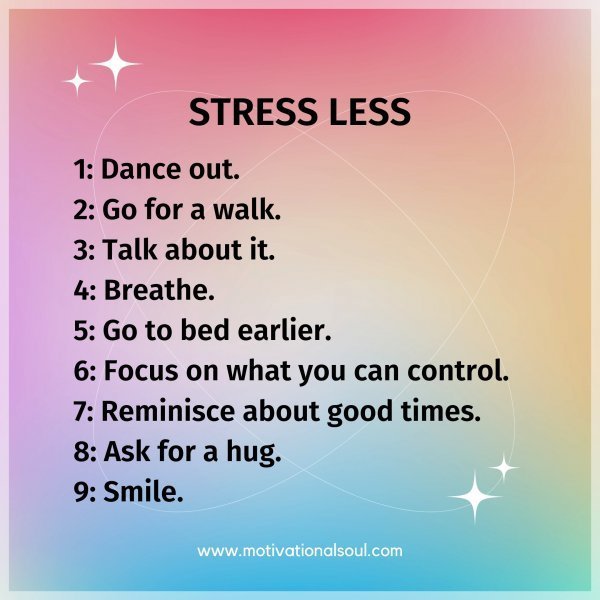
    STRESS LESS
  • Stay Calm With These  Anger Management Strategies

    Stay Calm With These Anger Management Strategies

    Do you ever feel on edge? Are your stress levels through the roof? If so, you’re not alone. Millions of people around the world struggle with anger management issues. Thankfully, there are many strategies that can help you stay calm and in control. In this blog post, we will discuss anger management techniques that have been proven to be effective.

    Why is Managing Anger Important?

    Anger is a normal human emotion, but it can become a problem if it’s not managed in a healthy way. When anger isn’t expressed in an appropriate way, it can lead to problems at home, at work, and in relationships. It can also lead to health problems like high blood pressure, heart disease, and stroke.

    Managing anger doesn’t mean you have to suppress your emotions or hide your anger from others. It means learning how to express your anger in a way that is constructive and doesn’t hurt yourself or other people.

    A moment of patience in a moment of anger saves you a hundred moments of regret.
    A moment of patience in a moment of anger saves you a hundred moments of regret.

    Why is it that I tend to get angry so easily?

    There are many different factors that can contribute to anger problems. Some people have a difficult time managing their emotions because of how they were raised. Others may have experienced trauma or stress in their lives that have made them more reactive. There are also some medical conditions that can make it difficult to control anger. If you find yourself getting angry frequently, it’s important to talk to a doctor or therapist to find out if there is an underlying cause.

    What are some effective anger management strategies?

    There are many different techniques that can help you manage your anger. Some people find that Cognitive Behavioral Therapy (CBT) is helpful in teaching them how to change their thought patterns and reactions. Others find relief through relaxation techniques like yoga or meditation. Some people find it helpful to talk to a friend or counselor about their anger. And for some people, medication may be necessary to help them control their emotions.

    The following are the techniques to employ in your anger management control strategy:

    Identify Triggers

    One of the most effective anger management strategies is to identify your triggers. Everyone has different things that set them off, and it’s important to be aware of what those triggers are. Once you know what sets you off, you can start to develop a plan for how to deal with those triggers. For some people, deep breathing or walking away from the situation may be enough to diffuse their anger. For others, more intensive therapy may be necessary. But the first step is always identifying the triggers so that you can begin to address them.

    There is no enemy outside our soul. The real enemies live inside us. Anger
    There is no enemy outside our soul. The real enemies live inside us. Anger

    Analyze Your Rage

    Managing anger is not easy, but it is important to try. After all, anger is a normal emotion that everyone experiences at one time or another. But when anger isn’t managed effectively, it can lead to problems like relationship conflict, health problems, and legal issues. That’s why it’s so important to find an effective anger management strategy that works for you.

    One effective anger management strategy is to take a step back and analyze your rage. Why are you angry? Is it because of something that happened at work, or is it because of a personal issue? Once you identify the source of your anger, you can start to develop a plan to deal with it. For example, if you’re angry because of a situation at work, you might need to have a conversation with your boss about your concerns. On the other hand, if you’re angry because of a personal issue, you might need to seek counseling to help you deal with the issue. By taking the time to analyze your anger, you can develop an effective strategy for managing it.

    Identify Potential Threats

    Anger is a perfectly natural emotion, but it can easily spiral out of control if we’re not careful. That’s why it’s important to have some effective anger management strategies in place. One key strategy is to identify potential threats. If we know that something is likely to make us angry, we can be on the lookout for it and be prepared to deal with it in a constructive way.

    This might mean avoiding triggers altogether, or it might mean preparing ourselves mentally and emotionally to deal with the situation calmly. Either way, identifying potential threats is a vital part of keeping our anger in check.

    Sometimes
    Sometimes

    Step Away

    When you feel yourself getting angry, it can be helpful to step away from the situation for a moment. This will allow you to settle down and gather your thoughts before making a decision. If possible, go for a walk or take a few deep breaths. If you can’t physically remove yourself from the situation, try to distract yourself by focusing on something else. Once you’ve calmed down, you’ll be better able to deal with the situation in a constructive way.

    Get Advice from a Friend

    When it comes to anger management, it can be helpful to talk to a friend who is levelheaded and understanding. This person can serve as a sounding board, helping you to process your feelings and figure out a constructive way to deal with them. The angrier you become, the more difficult it will be to think clearly and make rational decisions.

    By talking to a friend, you can help keep your emotions in check and prevent yourself from doing or saying something you might regret later. In addition, this person can offer impartial advice and perspective on the situation, which can be invaluable when trying to resolve a conflict. So if you’re struggling to manage your anger, reach out to a friend for support.

    All the advice
    All the advice

    Get Moving

    One effective anger management strategy is to get moving. When you’re feeling angry, your body produces adrenaline, which can lead to a feeling of being amped up. Exercise can help to burn off that excess energy and release endorphins, which can improve your mood. Even a brief walk or a few minutes of jumping on a trampoline can help to diffuse anger. So next time you’re feeling angry, try taking a lap around the block or doing some squats. You may just find that you feel better afterward.

    Control Your Thinking

    It’s impossible to eliminate anger from your life entirely. However, it is possible to manage your anger in a healthy way. One effective anger management strategy is to control your thinking. When you’re feeling angry, take a step back and examine your thoughts. Are you saying things like, “This is unjust” or “I can’t live through this”?

    If so, try to re-frame your thinking. Instead of focusing on the negative, try to find the silver lining. For example, you might tell yourself “this is an opportunity to practice patience” or “this will help me build character.”You can help to diffuse anger before it gets out of control by taking control of your thoughts.

    CONTROL YOUR “ANGER"
    CONTROL YOUR “ANGER”

    Switch Your Focus

    One effective anger management strategy is to change the channel. When you feel yourself getting angry, try to switch your focus to something else. You can do this by focusing on your breathing, listening to music, or thinking about something that makes you happy. This technique can help to redirect your thoughts and prevent you from dwelling on whatever is making you angry. Additionally, it can help to lower your heart rate and calm your nerves.

    If you find yourself getting angry often, experiment with different techniques until you find one that works for you. With a little effort, you can learn to control your anger and maintain a more positive outlook on life.

    The secret of change is to focus all your energy
    The secret of change is to focus all your energy

    Focus on Relaxation

    It’s been said that anger is only one letter away from danger. When we get angry, we can make poor decisions that we later regret. We may say or do things that damage our relationships. We may even act out physically, causing harm to ourselves or others. That’s why it’s so important to have an effective anger management strategy in place. For many people, relaxation is key.

    When we’re feeling angry, our body becomes tense and our heart rate increases. Deep breathing and other relaxation techniques can help to reverse these physical effects and help us to feel calmer and in control. By taking a few minutes to relax, we can avoid making a situation worse and help to prevent future episodes of anger.

    Don't chase
    Don’t chase

    Explore Your Emotions

    Among the most useful anger management strategies is to simply explore your emotions. What are you feeling? What might be causing these feelings? Are they valid? Once you have a better understanding of what you’re feeling, it can be easier to manage your anger in a constructive way. For example, if you’re feeling angry because someone has wronged you, it may help to talk to that person directly about the issue. On the other hand, if you’re feeling angry because of something that’s outside of your control, like traffic or the weather, it may help to take some deep breaths and focus on relaxing your body. In any case, exploring your emotions is a good first step in learning how to manage anger effectively.

    NEVER LET YOUR EMOTIONS
    NEVER LET YOUR EMOTIONS

    Avoid Suppressing Your Anger

    If you’ve been taught to suppress your anger, you may not even be aware of how much anger you actually feel. As a result, you may find yourself exploding over minor Issues. Or, you may find yourself bottling up your anger until it turns into resentment. Learning to express your anger in a healthy way is an important part of anger management.

    One effective anger management strategy is to allow yourself to experience your anger fully and then let it go. When you’re angry, take some time to really feel the emotion. Notice where you feel it in your body and what thoughts are going through your head. Once you’ve given yourself permission to really feel the anger, let it go. Imagine the anger dissipating and flowing out of your body. This technique can help you to release the anger without acting on it in a destructive way.

    Choices made in anger cannot be undone.
    Choices made in anger cannot be undone.

    Create a “Calm Down” Kit

    One effective anger management strategy is to create a “Calm Down” Kit. This can be a physical container, such as a box or a bag, that is filled with items that help you to relax and de-stress. It can be helpful to include both physical and mental items in the kit. For example, you might include a favorite book, a stress ball, and a picture of a loved one.

    The goal is to have a go-to spot for calming down when you start to feel angry. This will help you to avoid making impulsive decisions or acting out in anger. With a little planning, you can set up your own Calm Down Kit and be on your way to better managing your anger.

    Keep calm and be crazy
    Keep calm and be crazy

    Getting Help

    If you find that you’re struggling to control your anger, it may be time to seek out professional help. A therapist can help you to understand the root causes of your anger and develop an effective treatment plan. If you’re not ready to see a therapist, there are also many helpful books and online resources available on anger management. By taking the time to learn more about anger and how to manage it, you can make positive changes in your life and improve your relationships.

    Conclusion

    When it comes to managing anger, there is no one-size-fits-all solution. That is not to say that what works for one person may not work for another. What matters most is that you find a method that works for you and remain consistent with it.

    The above are some of the most effective anger management strategies that can help you to stress less and stay calm. By taking the time to understand your emotions and learn how to manage them effectively, you can make positive changes in your life. If you’re struggling to control your anger, don’t hesitate to seek out professional help. With a little effort, you can learn to manage your anger in a constructive way.

    A moment of patience in a moment of anger saves you a hundred moments of regret.  Type "Yes" if you agree.

    You Might Also Like

  • Tips to Help You Maintain Balance in Life: Strategies for a Stressed Out World

    Tips to Help You Maintain Balance in Life: Strategies for a Stressed Out World

    It’s no secret that life is stressful.It’s easy to get bogged down by work, family, and social obligations leaving little time for personal care. But maintaining balance in your life is essential for your physical and mental health. In this blog post, we will discuss some tips to help you achieve balance and reduce stress. Follow these simple strategies, and you will be on your way to a more relaxed and balanced lifestyle!

    Maintaining Balance Can be Messy

    The overall balance in our lives is the key to success, but sometimes we get overloaded. In these cases, it’s necessary to pare down what we have so that we can focus on what’s important. However, if paring down isn’t possible right away, don’t worry! You can gradually work toward greater balance in the future.

    For example, try to balance on one foot. Do you find yourself leaning in one direction and, in order not to fall, must right yourself by leaning in the opposite direction? The same is true for our lives. There will be times when we are pulled in different directions and we have to make adjustments in order to maintain balance.

    It’s important to remember that balance is not a static state; it is constantly changing and requires effort to maintain. But the good news is, there are some things you can do to help find and maintain balance in your life.

    Are You Living a Life That is in Balance?

    • You’re always tired
    • You have no time for yourself
    • You’re skipping meals or eating unhealthy foods
    • You’re not exercising
    • You’re not spending time with loved ones
    • You’re constantly stressed

    If you find yourself experiencing any of these symptoms, it’s a good indication that your life is off-balance. But don’t worry, there are steps you can take to get back on track.

    Tips for Maintaining Balance in Your Life

    Take a Break

    One of the most important things you can do for your mental and physical health is to take a break. With the demands of work, family, and social obligations, it can be difficult to find time for yourself. However, making even a small amount of time each day to relax and rejuvenate can make a big difference in your overall well-being.

    Taking a break doesn’t have to mean going on vacation; simply setting aside 15-20 minutes each day to read, take a walk, or just sit quietly can refresh your mind and body. By taking some time each day to recharge, you’ll be better able to handle whatever life throws your way.

    Just Say No

    As anyone who has ever tried to juggle multiple tasks knows, it is all too easy to feel like you are constantly on the verge of burning out. To maintain a healthy balance in your life, it is important to learn to say no. It may seem counterintuitive, but by taking on less, you will actually have more time and energy to devote to the things that are truly important to you.

    Of course, this does not mean that you should say no to every opportunity that comes your way. But it is important to be selective about the commitments you make and to set boundaries in order to protect your time and energy. When you learn to say no, you will find that you have more time for the things you love and that you are better able to meet your obligations without feeling overwhelmed. As a result, you will be happier and more balanced.

    Disconnect to Reconnect

    In our increasingly connected world, it is easy to feel like we are always available. Whether we are checking our email, scrolling through social media, or answering work calls, it seems like there is always something pulling our attention. While staying connected can be helpful in some ways, it can also lead to feelings of anxiety and overwhelm. To achieve balance in your life, it is important to disconnect from technology and spend time connecting with the people and things that are most important to you.

    Turn off your phone, put away your laptop, and take some time to enjoy the company of loved ones, get lost in a good book, or simply be present at the moment. By disconnecting from technology, you will be able to focus on the things that truly matter and recharge your batteries.

    Set Boundaries

    One of the most important things you can do for your mental and emotional health is to set boundaries. Whether it’s setting limits on how much time you spend on work, or setting aside time each day for yourself, it’s important to make sure you aren’t overextending yourself. When you have healthy boundaries, you are more likely to maintain balance in your life. You’ll have more time and energy for the things that are truly important to you, and you’ll be less stressed overall. So if you feel like you’re constantly running on empty, take a step back and reassess your priorities. Then start setting some boundaries. You’ll be glad you did.

    Ask for Help When Needed

    It can be easy to feel like you have to do everything on your own, but one important tip for maintaining balance in your life is to ask for help when you need it. Whether it’s a friend, family member, or professional, there are people who can and want to help you.

    Asking for help shows that you are willing to admit when you need assistance and that you are not afraid to reach out to others. It can also be a sign of strength, not weakness. Asking for help can lead to improved mental and physical health, better relationships, and more balanced life.

    Manage Stress Levels

    We all experience stress in our lives, but it’s important to manage our stress levels so that we can maintain a healthy balance. When we’re feeling overwhelmed or stressed, our body releases the hormone cortisol, which can lead to anxiety, insomnia, and weight gain. By managing our stress levels, we can improve our overall health and well-being.

    Some effective steps include:

    • Taking breaks throughout the day
    • Putting away electronics an hour before bed
    • Practicing meditation or deep breathing
    • Exercising regularly
    • Eating a healthy diet

    Concentrate on What You’re Doing Now

    One of the best pieces of advice for maintaining balance in your life is to concentrate on what you’re doing now. This doesn’t mean that you should never plan for the future or reflect on the past, but it does mean that you shouldn’t let those things dominate your present thoughts and actions. If you’re constantly worrying about what might happen or what could have been, you’ll miss out on the joy of living in the present moment. Instead, focus on what’s happening right now and make the most of it. Enjoy your friends, family, and hobbies, and savor the good moments as they happen. By living in the moment, you’ll be able to create a more balanced and enjoyable life.

    Make Sensible Judgments

    Too often we make choices in life without careful consideration of the consequences. We choose what we want at the moment without a thought about how it will impact our future. This can lead to a spiral of unhealthy choices that throws our lives off balance. If we want to maintain balance in our lives, it is essential that we learn to make sensible judgments. We need to take the time to weigh our options and choose the course of action that is most likely to lead to a positive outcome. When we make choices from a place of wisdom and understanding, we are more likely to create balance in our lives and achieve our goals.

    Understand Your Thresholds

    We all have different thresholds for the amount of stress, work, social interaction, and downtime that we can handle before feeling overwhelmed. For some of us, working long hours comes easily and we feel energized by being around people. Others of us prefer a more relaxed pace and need more time alone to recharge. It’s important to understand your own thresholds in order to maintain a healthy balance in your life. If you’re not sure where your thresholds lie, pay attention to how you feel after different activities.

    Do you feel refreshed or exhausted after a night out with your friends? Do you prefer to work alone or as part of a team? Answering these questions can help you get a better sense of the types of activities that help you feel your best. Once you know your thresholds, you can make sure to include plenty of the things that make you feel good and limit the things that leave you feeling stressed or overwhelmed. By understanding and respecting your own needs, you can create a life that feels both balanced and fulfilling.

    Set Goals

    Having specific goals gives you something to work towards, and it can help to prevent you from feeling overwhelmed by the day-to-day tasks of life. When setting goals, it is important to be realistic and to set a variety of goals that cover different areas of your life. For example, you might set a goal to exercise three times per week, eat more vegetables, and spend more time with family and friends.

    By having a mix of goals, you are more likely to stick with them and feel well-rounded and balanced. Additionally, it is important to review your goals regularly and adjust them as needed. Goals should be dynamic and adaptable to life’s ever-changing circumstances.

    StresS

    Finding a Balance for Everyone’s Individual Requirements

    Teenagers:

    During the teenage years, it is important to find a balance between schoolwork and free time. Too much focus on one area can lead to feelings of frustration and overwhelm. Instead, try to create a schedule that includes time for both academics and fun. Make sure to include plenty of breaks in your day so that you can relax and recharge. Additionally, it is important to spend time with both friends and family. Friends can provide support and understanding, while family can offer guidance and wisdom. By finding a balance between these different areas of your life, you can create a more balanced and enjoyable experience.

    Adults:

    As we get older, it becomes more important to find a balance between work and personal time. If we spend too much time working, we can miss out on important aspects of our lives. On the other hand, if we spend too much time focusing on our personal lives, we can fall behind at work. Try to find a schedule that allows you adequate time for both works and play. Additionally,

    It’s no secret that the world is a stressful place.

    With work, family, and social obligations, it can be difficult to find time for yourself. But maintaining balance in your life is essential for your physical and mental health. In this blog post, we will discuss some tips to help you achieve balance and reduce stress. Follow these simple strategies, and you will be on your way to a more relaxed and balanced lifestyle!

    Older adults:

    For older adults, it is important to find a balance between alone time and social interaction. Too much time spent alone can lead to feelings of loneliness and isolation, while too much time spent with others can be draining. Instead, try to find a happy medium that allows you adequate time for both solo activities and socializing. Additionally, it is important to find a balance between work and leisure. Too much work can lead to burnout, while too much leisure can leave you feeling unfulfilled. Try to find a schedule that allows you time for both so that you can stay productive and enjoy your free time.

    Care for Your Physical Health

    It is important to remember that your physical health plays a role in your overall sense of balance. When you are physically healthy, you have more energy and feel better mentally. Conversely, when you are not feeling well, it can be difficult to focus on anything else. Make sure to schedule regular check-ups with your doctor and take care of yourself when you are feeling under the weather. Additionally, exercise is a great way to reduce stress and improve your physical health. Try to find an activity that you enjoy and make time for it in your schedule. Even a simple walk around the block can do wonders for your mental state!

    By following these simple tips, you can maintain balance in your life and reduce stress. Remember to take things one day at a time and focus on your goals. With a little effort, you can create a more balanced and enjoyable life for yourself!

    Stress
  • Self-Love Tips: How to Love Yourself Unconditionally

    Self-Love Tips: How to Love Yourself Unconditionally

    Do you ever feel like you hate yourself? Like all you do is make mistakes and disappoint yourself? If so, you’re not alone. Many people struggle with self-hatred daily. But there are ways to combat those negative thoughts and start loving yourself again. In this blog post, we will discuss 8 ways to start accepting and loving yourself just the way you are!

    Self-hatred Indicators

    Focus on the negative

    One of the most common indicators of self-hatred is an excessive focus on negative traits and behaviors. Individuals who hate themselves are quick to believe that they are unworthy and incapable of change. As a result, they tend to dwell on their faults and shortcomings, magnifying them out of proportion. This can lead to a negative feedback loop, in which people become trapped in a cycle of self-loathing.

    Inability to accept compliments

    Another common indicator of self-hatred is an inability to accept compliments or praise. People who hate themselves often view compliments as unwarranted and undeserved. They may also believe that others are simply being nice or trying to make them feel better. As a result, they have difficulty hearing and internalizing positive feedback.

    Trying to fit in

    Trying to fit in is often an indicator of self-hatred. People who hate themselves try to become someone they’re not to gain acceptance from others. They may try to change their appearance, personality, or interests to fit in with a particular group or person. This can lead to a sense of emptiness and loneliness, as the person is not being true to themselves. Trying to fit in can also be a sign of low self-esteem. People who dislike themselves may believe that they are not good enough and that they will never be accepted unless they change who they are. This can lead to a cycle of attempts to change, followed by feelings of failure and inadequacy.

    Personalizing criticism

    One of the most common indicators of self-hatred is personalizing criticism. This is when someone takes any form of criticism as a reflection of their entire worth as a person. For example, if a co-worker criticizes a project you completed, instead of taking it as constructive feedback, you might interpret it as a sign that you are not good enough or smart enough. Personalizing criticism can lead to a negative self-image and can prevent you from learning and growing from your mistakes.

    Expecting Perfection

    Expecting perfectionism from yourself is one of the most common indicators of self-hatred. You strive for unattainably high standards, beating yourself up whenever you make a mistake. IYou are never satisfied with your performance.This perfectionism can manifest in different ways, such as obsessively trying to control your weight or never feeling satisfied with your appearance. You may also find yourself constantly comparing yourself to others and feeling like you always come up short.

    Being too harsh on yourself

    If you’re too harsh on yourself, it may be a sign of self-hatred. We all make mistakes and have flaws, but if you can’t forgive yourself for them, it may indicate a deeper issue. If you find yourself constantly putting yourself down, making negative comparisons to others, or engaging in self-sabotage, it’s worth exploring why you have such low self-esteem. Treating yourself with compassion and understanding is an important step in overcoming self-hatred. Try to be gentle with yourself, and remember that everyone makes mistakes. If you work at it, eventually you will develop self-love and acceptance.

    Pessimistic outlook

    Self-hatred is often characterized by a pessimistic outlook. People who hate themselves tend to see the world and their place in it through a dark lens. They may believe that they are unworthy or undeserving of good things and that they will always be failures. As a result, they may adopt a self-defeating attitude, always expecting the worst and never believing that they can succeed. This can lead to a spiral of negative thinking, as self-hatred breeds further negativity and discouragement.

    Self-love is important. Because when you're all alone and it's 3 a.m. and you're crying

    What Causes Self-Hatred?

    Have you been noticing any negative aspects about yourself lately? If that’s the case, you might be wondering why you despise yourself and how to change. Reflect on the following questions and take some time to come up with answers. The list below includes some of the most common reasons.

    Inferior Inner Critic

    One of the primary causes of self-hatred is an inferior inner critic. This is the voice in your head that tells you that you’re not good enough, that you’ll never amount to anything, and that you should just give up. This voice can be incredibly loud and persuasive, making it hard to silence. If you’ve been struggling to love yourself, it’s important to identify your inner critic and start working on silencing it.

    Some common phrases your inner critic says are:

    “You’re not good enough.”

    “You’re not smart enough.”

    “You’ll never be successful.”

    “Nobody will ever love you.”

    “You’re ugly/fat/stupid.”

    These are just some examples, but your inner critic may say other things. Once you identify the voice, you can start to counter it with positive self-talk. For example, instead of listening to your inner critic who tells you “You’re not good enough,”It’s a lot easier to say, “I’m great,” or, simply, “I’m amazing.”

    Past Trauma

    Past trauma can lead to a feeling of self-hatred. When we experience something traumatic, our sense of safety and trust is shattered. We may feel like we are not worthy of love or that we are flawed in some way. This can lead to a deep, abiding hatred of ourselves. Past trauma can also cause us to doubt our worthiness and question our place in the world. We may feel like we don’t deserve happiness or that we are undeserving of love. This can lead to a feeling of self-hatred.

    Lastly, past trauma can cause us to view ourselves through a lens of shame. We may feel like we are not good enough or that we are unworthy of love. This can lead to a deep feeling of self-hatred. If you’ve experienced any of these things, it’s important to seek out help from a therapist or counselor who can help you work through your past trauma and learn to love yourself again.

    Unrealistic Standards

    Unrealistic standards are often the root cause of self-hatred. When we compare ourselves to others, we often focus on our own shortcomings and fail to see our own strengths. We may hold ourselves to unrealistic standards in terms of our looks, our achievements, or our personal relationships. When you feel like you’re not good enough, it can cause feelings of inadequacy and low self-worth. Unrealistic standards can also be the result of comparing ourselves to an idealized version of ourselves. We may have an image in our heads of who we want to be, and when we don’t live up to that image, we may feel like a failure.

    Childhood Experiences

    Childhood experiences are often cited as a major cause of self-hatred. If a child grows up in an environment where they are constantly criticized or made to feel worthless, it’s not surprising that they would develop negative feelings about themselves. Unfortunately, these early experiences can have a lasting impact and can lead to a lifetime of self-doubt and insecurity. In addition, people who suffer from low self-esteem often tend to be their own worst critics. They are quick to point out their own flaws and mistakes, and they seldom give themselves credit for their accomplishments. Over time, this can lead to self-hatred.

    Poor Relationships

    Poor relationships are often at the root of self-hatred. If we feel constantly misunderstood or mistreated by those closest to us, it can lead to feelings of worthlessness and inadequacy. In some cases, self-hatred may be the result of abuse, either emotional or physical. Abuse can shatter our sense of self and make it difficult to see ourselves as anything other than damaged goods.

    Bullying

    Bullying is a major cause of self-hatred. When someone is repeatedly ridiculed, mocked, or otherwise made to feel inferior, it can take a toll on their self-esteem. In some cases, the impact of bullying can be so severe that it leads to depression, anxiety, and other mental health issues. Additionally, people who are Bullied may start to believe that they are worthless and unlovable. As a result, they may start to hate themselves.

    Mental Health Conditions

    Mental health conditions are often accompanied by feelings of self-hatred. This can be due to a number of factors, including negative thought patterns, low self-esteem, and physical appearance. Mental health conditions can cause people to see themselves in a negative light and dwell on their flaws. This can lead to a feeling of worthlessness and despair. Low self-esteem can also cause self-hatred.

    People with low self-esteem often compare themselves to others and feel that they fall short. They may believe that they are not good enough, smart enough, or attractive enough. Physical appearance can also play a role in self-hatred. People who are unhappy with their weight, skin, or hair often feel disgusted with themselves. They may feel that they will never be good enough or that they are unworthy of love and respect.

    The Consequences of Self-Hatred

    • You may give up your efforts because you believe they will only result in failure.
    • Indulging in harmful coping mechanisms like drugs, binge eating, or social withdrawal.
    • You may harm your efforts or neglect yourself.
    • You might unknowingly choose people who are harmful or exploitative, like toxic friends or partners.
    • Suffering from low self-confidence and self-esteem.
    • Trouble making decisions due to indecision.
    • Having a perfectionist attitude that nothing is ever good enough.

    All of these behaviors can have harmful consequences in your life, both physically and mentally.

    How to Love Yourself Again

    How to Love Yourself Again It is not uncommon to lose yourself in the chaos of life. With work, family, and social obligations, it is easy to forget about your own needs and wants. As a result, you may begin to feel disconnected from yourself and spiral into a state of self-doubt and low self-esteem. If you find yourself in this situation, it is important to remember that it is never too late to love yourself again. Below are some tips on how to reconnect with your inner self and rediscover the things that make you happy:

    Take some time for yourself

    In today’s fast-paced society, it might be tough to find time for yourself. However, it is important to carve out some time each day to do things that make you happy. Whether it is reading your favourite book, going for a walk in nature, or taking a yoga class, taking some time for yourself will help you relax and rejuvenate.

    Connect with your passions

    One of the best ways to love yourself again is to connect with your passions. Whether it is painting, hiking, cooking, or gardening, doing things that make you feel alive will help you rediscover your sense of self.

    Be kind to yourself

    It is easy to be hard on ourselves when we make mistakes or fall short of our goals. However, it is important to remember that we are human and imperfections are part of what makes us unique and

    special. Instead of beating yourself up over your flaws, learn to accept them and focus on your positive attributes.

    Spend time with loved ones

    Spending time with those who love and support you can help remind you of your worth. Whether it is family members, close friends, or even pets, surround yourself with people who make you feel good about yourself.

    Do something new

    Trying something new can help you expand your horizons and see life from a different perspective. Stepping outside of your comfort zone can be scary but it can also be exhilarating and empowering. So go ahead and sign up for that pottery class or take a trip to an unfamiliar place-you may just surprise you!

    Conclusion

    Learning to love yourself again is a process that takes time and effort. However, it is worth it to invest in your happiness and well-being. By taking care of yourself emotionally and physically, you will be better equipped to handle the ups and downs of life. So take some time for yourself, connect with your passions, be kind to yourself, spend time with loved ones, and do something new. Before you know it, you will be on your way to a happy and fulfilling life.

    Love yourself first
  • Believing You Can Improve Your Mental Well-Being Gets You a Long Way Forward

    Believing You Can Improve Your Mental Well-Being Gets You a Long Way Forward

    Mental health is something that is often overlooked. We tend to think that if we are physically healthy, then our mental health must be fine as well. However, this is not always the case. In fact, many people suffer from mental health issues without even realizing it. The good news is that there are ways to improve your mental well-being, and one of the simplest methods is to simply believe that you can do it! In this blog post, we will discuss the power of positive thinking and how it can help improve your mental health!

    It is no secret that our thoughts can have a major impact on our mood and overall well-being. If you are constantly thinking negative thoughts, then it is likely that your mental health will suffer as a result. On the other hand, if you believe that you can improve your mental health, then you are much more likely to actually do so. This is because our thoughts can actually influence our actions and behaviors.

    Why is Mental Health Important?

    Your mental health, in addition to your physical well-being, is equally essential. In fact, the two are interconnected. Your mental health affects how you think, feel, and act on a daily basis. It also plays a role in how well you handle stress, relate to others, and make choices.

    Good mental health is more than just the lack of mental illnesses.Rather, it’s the presence of positive attributes and behaviors that contribute to your overall well-being. Just like physical fitness, mental fitness takes effort and practice. And, like physical fitness, there are many benefits to maintaining a healthy state of mind.

    Benefits of Positive Thinking

    • Improves mood
    • Reduces stress and anxiety
    • Increases resilience
    • Lowers risk of depression
    • Boosts immune system
    • Enhances well-being

    As you can see, there are many benefits to thinking positively. And, the good news is, that you don’t have to be a naturally optimistic person to reap the benefits of positive thinking. Just by making a conscious effort to think more positively, you can improve your mental well-being.

    Feeling in Control Is Vital to a Good Mental Health Status

    When it comes to our mental health, feeling like we are in control is essential. If we feel like we are constantly being bombarded by negative thoughts and emotions, then it can be very difficult to maintain a positive outlook on life. However, if we believe that we can control our thoughts and emotions, then we are much more likely to actually do so. This is because believing that we have control over our mental health gives us a sense of empowerment and hope.

    It’s vital to keep in mind that you’re not the only one fighting this war.There are millions of people all over the world who are struggling with their mental health.

    Our beliefs have a strong influence on our actions and behaviors. If we believe that we can

    One of the main reasons why positive thinking is so powerful is because it helps us feel in control. When we believe that we can improve our mental health, we are more likely to take action and make changes in our lives. This, in turn, can lead to better mental health status. Furthermore, feeling like we are in control of our mental health can help reduce stress and anxiety.

    Ways to Take Control of Your Life

    The greatest method to not be despondent is to get up and do something. Don’t wait for good things to happen by chance. You will fill the world with optimism if you go out and make some wonderful things happen, and you will fill yourself with hope

    There are many ways that we can take control of our lives and mental health. Some of them are:

    Have High Ambitions, but Don’t be Unrealistic

    It is important to have high ambitions in life. However, it is also critical to be realistic in terms of what you can accomplish. If you set your sights too high, then you are likely to become disappointed and frustrated when you don’t reach your goals. On the other hand, if you have realistic goals, then you are much more likely to achieve them and feel satisfied with your accomplishments.

    Make a List of Things You Are Grateful for Each Day

    One of the best ways to improve your mental health is to focus on the things you are grateful for. Make a list of everything you are happy about every day. This could be anything from your family and friends to your job or your home. Focusing on the positive things in your life will help you to appreciate what you have and feel more positive about your life in general.

    Take Action towards Your Goals

    You need to actively seek opportunities rather than wait for them to come to you. To reach your objectives, you must act. If you want to improve your mental health, then you need to take action and make changes in your life. This could mean anything from seeking help from a therapist to making lifestyle changes. Taking action towards your goals will help you to feel more in control of your life and give you a sense of purpose.

    Make modest and achievable targets for yourself.

    Making small, achievable goals is a great way to improve your mental health. When you set modest targets for yourself, you are more likely to achieve them and feel good about yourself. Furthermore, making small changes in your life can lead to big changes in your mental health.

    Be honest with yourself

    It is important, to be honest with yourself. It means being honest about your thoughts, feelings, and behaviors.. If you are not honest with yourself, then it will be difficult to make changes in your life. Honesty is a key part of taking control of your life and improving your mental health.

    Take inventory of your thoughts

    Our minds are unique places that have the ability to make our worst nightmares feel like paradise or turn the most beautiful moments into a living hell. In order to change the way you think, you need to become aware of your thoughts. You may begin to challenge your thoughts once you are aware of them. If you find that you are having negative thoughts, ask yourself if there is any evidence to support these thoughts. If there is no evidence, then the thought is likely, not true.

    Change your self-talk

    The way you talk to yourself can have a big impact on your mental health. If you are constantly putting yourself down, then it will be difficult to improve your mental health. However, if you start to talk to yourself in a more positive way, then it will be easier to make changes in your life.Here’s an example. If you catch yourself thinking “I’m such a failure,” try reframing it to something more positive, like “I’m doing my best.”

    Start a gratitude journal

    One of the best ways to improve your mental health is to focus on the things you are grateful for. Make a list of everything you are happy about every day. This could be anything from your family and friends to your job or your home. Focusing on the positive things in your life will help you to appreciate what you have and feel more positive about your life in general.

    Give yourself some credit

    “No matter your age, it’s never too late to set new goals or dream bigger dreams.”

    It is important to give yourself credit for the things you do well. This will help you to feel good about yourself and increase your self-esteem. When you have high self-esteem, it is easier to make positive changes in your life.

    Start today

    It’s never too late to start making positive changes in your life.If you want to improve your mental health, start today. Take the first step towards reaching your goals and believe that you can make a difference. Remember, simply believing you can improve your mental health goes a long way.

    Surround yourself with people who are optimistic and will boost you.

    Find people who will inspire you to be your best self. These people can help you to stay motivated and focused on your goals. Additionally, they can provide you with a sounding board when you need to make decisions about your life. When you have positive people in your life, it is easier to make positive changes.

    Find a role model

    It is helpful to find a role model who has made the changes you want to make in your own life. A role model can show you that it is possible to make positive changes and achieve your goals. Additionally, a role model can provide you with support and encouragement when you need it.

    Be accepting of yourself—flaws and all

    It is important to be accepting of yourself—flaws and all. This means that you need to learn to love and accept yourself for who you are. Once you are able to do this, it will be easier to make positive changes in your life. Additionally, you will be more likely to stick with these changes over the long term.

    Be patient with yourself—change takes time.

    If you want to understand change, get involved with it and go with the flow.

    Change takes time. Be patient with yourself and trust that you can make the changes you want to make. It may take some time to see results, but if you are persistent, eventually you will reach your goals.

    Take care of yourself

    “The mind is everything. What you think you become.” -Buddha

    In order to improve your mental health, it is important to take care of yourself. Your energy level improves when you follow these guidelines: eating a healthy diet, getting enough sleep, and exercising on a regular basis. Additionally, it is important to find time for relaxation and activities that you enjoy. When you take care of yourself, it is easier to make positive changes in your life.

    Cut yourself some slack

    “Don’t be too hard on yourself. You’re doing the best you can with what you’ve got..”

    It is important to cut yourself some slack. Everyone makes mistakes and nobody is perfect. If you are too hard on yourself, it will be difficult to make positive changes in your life. Instead, try to focus on the things you are doing well and believe that you can make a difference.

    Believe in yourself

    It is important to believe in yourself. If you don’t believe that you can make positive changes, it will be difficult to achieve your goals. However, if you have faith in yourself, anything is possible. Remember, simply believing you can improve your mental health goes a long way.

    Conclusion

    Positive thinking is a powerful tool that can help you to improve your mental health. When you believe that you can make a difference, it is easier to take the first step toward change. Additionally, surround yourself with positive people who will support and encourage you. Finally, be accepting of yourself—flaws and all. It takes time to adapt, so be patient with yourself.. If you stick to a program, you will eventually succeed. When you take care of yourself, it is easier to make positive changes in your life. So cut yourself some slack and believe that you can improve your mental health. It all starts with a positive mindset.

  • Conquer Your Fear of the Unknown: How to Take Risks and Succeed

    Conquer Your Fear of the Unknown: How to Take Risks and Succeed

    Fear is an emotion that often holds people back from achieving their goals. Fear of the unknown doesn’t have to stop you from living your life. In this blog post, we will discuss how to cope with fear and conquer your fears. We will also provide some tips for overcoming the fear of the unknown. So if you’re ready to take on your fears and start living a more fulfilling life, keep reading!

    Do you ever find yourself avoiding new opportunities because you’re afraid of the unknown? Or maybe you’ve been putting off making a change in your life because you’re not sure what will happen? If so, you’re not alone. Fear of the unknown is a common fear that can hold us back from living our best lives.

    What Causes People to Fear the Unknown?

    One of the most universal human experiences is fear. Everyone feels it at some point, and it serves an important purpose: to keep us safe from harm. Fear is usually triggered by something that we perceive as a threat, and it prompts us to take action to avoid or escape the danger. However, sometimes we can find ourselves feeling afraid even when there is no apparent threat.

    This usually happens when we encounter something new or unfamiliar. Our brains are wired to be cautious of things that we don’t know because they could potentially be dangerous. That’s why people often feel more comfortable sticking to what they know and avoiding anything that seems different or strange.

    When Your Fear of the Unknown Becomes Damaging

    While a healthy level of caution can keep us safe, an excessive fear of the unknown can become damaging. When we’re excessively afraid of something that poses no real threat, we’re said to have a phobia. Phobias are irrational fears that can cause tremendous anxiety and interfere with our daily lives.

    People who suffer from phobias will frequently go to great lengths to avoid the things they are terrified of. For example, someone with a fear of flying may not take vacations or miss out on important business opportunities rather than getting on a plane. Or, someone with a fear of heights may avoid tall buildings and never experience the breathtaking views from the top of a skyscraper.

    In some cases, the fear of the unknown can become so debilitating that it significantly impairs a person’s quality of life.

    If left unmanaged, potential complications may include:

    • Anxiety and depression
    • social isolation
    • Substance abuse
    • Poor job performance or unemployment
    • Relationship difficulties.

    How to Recognize a Fear of the Unknown

    What are the signs that you may be afraid of change? The fear of change can present itself in many different ways in someone’s day-to-day life. Here are some of the most common warning indicators:

    • You might avoid new experiences altogether.
    • You may resist change, even minor changes.
    • You could have a strong dislike for anything unfamiliar.
    • You might feel anxious or stressed when confronted with the unknown.
    • You may experience physical symptoms like a racing heart, sweating, or shaking when faced with change.
    • You’re extremely anxious about what will happen in your future.
    • Despite wanting to leave a bad relationship, you stay in it.
    • You’re trapped or unhappy in a circumstance, yet you avoid making positive changes.
    • The thought of change gives you heart palpitations

    If you find yourself exhibiting any of these behaviours, you may have a fear of the unknown. But don’t worry, there are ways to conquer this fear and start living a fuller life!

    Risk is the deposit

    Tips for Overcoming the Fear of the Unknown

    Here are a few tips to help you face your fear of the unknown and start living a more fulfilling life:

    Identify Your Triggers

    Triggers are one of the first things to consider.. What is it about new situations that make you feel anxious? Is it the feeling of not being in control? Or perhaps it’s the fear of failure or not knowing what to expect. Once you’ve identified your triggers, you can start to address them head-on.

    If your trigger is the feeling of not being in control, try to develop a plan ahead of time. When you know what to expect, you’ll feel more prepared and confident facing the unknown. If your trigger is the fear of failure, remind yourself that everyone experiences setbacks at some point in their lives. Failure is not permanent and should not stop you from pursuing your goals. Finally, if your trigger is simply not knowing what to expect, try to embrace the unknown with an open mind. Be curious and excited about all the possibilities that await you. With these tips in mind, you’ll be better equipped to handle whatever life throws your way.

    FEAR

    Challenge Your Beliefs

    One of the main reasons we’re afraid of the unknown is because we don’t know what to expect. But instead of avoiding new experiences because we’re afraid of what might happen, try to challenge your beliefs about them. When you’re faced with a new situation, ask yourself what the worst possible outcome could be. Then, remind yourself that it’s highly unlikely that this will happen. Oftentimes, our fears are much worse than reality.

    Take baby steps

    When facing something new, it’s normal to feel a little bit of apprehension. After all, the unknown can be pretty scary. But rather than letting your fear hold you back, why not try to embrace it? After all, there’s no better way to conquer your fears than by facing them head-on.

    One of the best ways to overcome your fear of the unknown is to take things one step at a time. Rather than diving in head first, try easing into things gradually. This will give you a chance to acclimate to your new surroundings and build up your confidence along the way. Additionally, it’s important to remember that everyone feels scared at times. Rather than seeing your fear as a weakness, try to view it as a natural and normal part of life. By accepting your fear, you’ll be one step closer to conquering it.

    Find a support system

    One of the best ways to overcome a fear of the unknown is to find a support system. Talking to friends, family, or a therapist can help you to understand your fears and develop a plan for dealing with them. You may also want to consider joining a support group for people with similar fears. By sharing your experiences and learning from others, you can develop a better sense of control and start to view the unknown as an opportunity rather than a threat.

    Make a Vision Board

    The fear of the unknown is a very real and powerful emotion. It can prevent us from taking risks, exploring new opportunities, and achieving our full potential. But by taking some time to get to know ourselves and what we want out of life, we can start to overcome this fear. A vision board is a way to help you focus on your goals.. This is a collage of images, words, and affirmations that represent our goals and dreams. It’s a tool that can help us focus on what we want to achieve and start taking steps towards it. By taking the time to get to know ourselves and what we want out of life, we can start to overcome the fear of the unknown.

    Journal

    Journaling is one way to help you overcome the fear of the unknown. It can be used as a tool to reflect on your day, process your thoughts and feelings, and gain clarity and insight. By taking the time to write out your fears, you can begin to understand them better and see them in a new light. Journaling can also help you to track your progress as you work to overcome your fears. As you journal, you may find that your fear of the unknown begins to lessen over time. You may also discover new things about yourself and the world around you that you never knew before. Journaling can be a helpful and enlightening way to explore the unknown and confront your fears head-on.

    Meditate

    Meditation is another tool that can be used to overcome the fear of the unknown. It’s a practice that can help us to focus and connect with our inner thoughts and feelings. When we meditate, we’re able to quiet the noise of the world around us and get in touch with our true selves. This can be a very powerful experience, especially when we’re facing something new and unknown. By taking the time to meditate, we can start to see the unknown in a new light and develop a greater sense of peace and calm. Meditation can also help to increase our self-awareness and understanding, which can be helpful when dealing with fear. If you’re interested in learning more about meditation, there are plenty of resources to get you started.

    Don’t duck away from your responsibilities.

    Overcoming the fear of the unknown is something that we all face at some point in our lives. Whether it’s starting a new job, going on a first date, or moving to a new city, change can be scary. But it’s also essential for personal growth. When we step out of our comfort zones and into the unknown, we open ourselves up to new experiences and ways of thinking. By learning more about ourselves and those around us, we can better understand our capabilities.So don’t duck away from your responsibilities when change comes knocking. Embrace the unknown and see what you’re capable of.

    Treatment

    If the fear of the unknown is impacting your everyday life, it may be time to seek professional help. There are many treatment options available, such as therapy, medication, and exposure therapy. Exposure therapy is a type of treatment that involves gradually exposing yourself to the thing you’re afraid of. This can help you to overcome your fear by facing it head-on. If you’re interested in exploring treatment options, speak with your doctor or mental health professional. They can help you to find the right type of treatment for your needs.

    Conclusion

    The fear of the unknown is a very real and powerful emotion. It can prevent us from taking risks, exploring new opportunities, and achieving our full potential. We don’t have to let it control our lives.By taking some time to get to know ourselves and what we want out of life, we can start to overcome this fear. Journaling, meditating, and seeking professional help are all great ways to begin this journey.

    If you’re struggling with the fear of the unknown, know that you’re not alone. Many people face this fear every day. But there are ways to overcome it. By taking some time to get to know yourself and what you want out of life, you can start to conquer your fear of the unknown. So don’t be afraid to take the first step. Embrace the unknown and see what you’re capable of.

    Do you have a fear of the unknown? What steps have you taken to overcome it? Share your story in the comments below.

    What a terrible waste of a life it is