
Category: Mindfulness

  • The Power of Silence: How to Use the Quiet Time to Boost Your Motivation

    The Power of Silence: How to Use the Quiet Time to Boost Your Motivation

    Silence is a
    Silence is strength.

    There is a lot of power in silence. When you are able to quiet your mind, you will find that you have a lot more inner power and motivation. In this blog post, we will discuss how to use the power of silence to improve your life. We will also explore the benefits of taking time for yourself each day to be still and silent. If you are ready to learn more about the power of silence, then keep reading!

    How many times have you told yourself that you’re going to start working on that project, get in shape, or finally finish that book…tomorrow? We all have good intentions, but somehow the busyness of life always seems to get in the way. If you’re feeling stuck and need a boost of motivation, it might be time to try something different – silence.

    That’s right, sometimes the key to getting motivated is taking some time for yourself and being silent. Whether it’s sitting in nature, listening to calming music, or simply closing your eyes and focusing on your breath, giving yourself some quiet time can do wonders for your motivation levels. And the best part is, it’s completely free! So if you’re looking for a low-cost way to give your motivation a boost, consider giving silence a try. You might be surprised at how powerful it can be.

    Silence
    Silence is a language.

    The power of silence is often underestimated – but it can be a very effective tool in boosting motivation

    Silence is a powerful thing. For many, it can seem like an inconvenience or even a punishment. But if we take the time to appreciateWhat it can give us, silence can actually be a strong ally in helping us become more motivated. It’s an opportunity to focus on our goals and reflect on how we can achieve them. When we remove external distractions and simply listen to ourselves, a clearer path towards success becomes visible.

    Taking some quiet time to breathe and refocus gives us the mental clarity needed to push forward and reach our goals with renewed motivation. Leveraging the power of silence isn’t limited to individual success either – it is possible to encourage others by using a thoughtful pause. A momentary absence of sound may be just as powerful as words – or even more so- in motivating those around you to greatness.

    Work hard in silence; let your success be the noise.
    Work hard in silence; let your success be the noise.

    When you take the time to be silent, you’re giving yourself a chance to reflect on what’s important to you

    Taking the time to be silent is a powerful act. Not only are you giving yourself a quiet setting to think and ruminate, but you’re giving yourself an opportunity to focus on the things that matter most. Whether it’s stopping to appreciate your accomplishments or reexamining your priorities, embracing silence gives us the space we need to realize what really matters in our lives. The best part? We get to choose how we spend our silence; it can be as long or short, relaxing or reflective as we need.

    Embracing moments of peace and quiet can help us move closer towards living a life of purpose and fulfillment. So, don’t underestimate the power of silencing your world — it may just redefine yours!

    Life's so ironic. It takes sadness to know happiness
    Life’s so ironic. It takes sadness to know happiness.

    In silence, you can connect with your innermost thoughts and feelings, which can help guide you towards your goals

    Life can be full of distractions, but we need to remember that taking the time to be still and silent is vital for reconnecting with our own inner wisdom. When you are alone in silence, away from noise, stress and expectations of others, you can reflect on your thoughts and feelings and determine what your goals should be.

    This connection with yourself helps clarify what matters most to you and allows you to focus on the important objectives in your life. Silence can truly help provide renewed energy and direction – so why not take a step back and embrace those moments for yourself?

    WORK HARD IN SILENCE
    WORK HARD IN SILENCE

    If you find yourself struggling to motivate yourself, try spending some time in silence – it could make all the difference!

    Sometimes life can take its toll and we can find it difficult to stay motivated. But don’t worry- spending some time in silence is a great way to reset, refocus and gain back your motivation. When quiet, you can assess where you are and clear your head so that it’s easier to come up with a solution to whatever challenge you’re facing.

    Silence has the power to inspire us and give us clarity on our goals, helping us create the often needed mental shift required for moving forward. Embrace silence in times of difficulty; allow yourself the space without distraction or interruptions – this can be just what you need to get yourself motivated again!

    NEVER ANNOUNCE YOUR MOVES BEFORE YOU MAKE THEM. MOVE-IN SILENCE AND SHOCK THEM WITH YOUR SUCCESS.
    NEVER ANNOUNCE YOUR MOVES BEFORE YOU MAKE THEM. MOVE-IN SILENCE AND SHOCK THEM WITH YOUR SUCCESS.

    The next time you find yourself struggling to motivate yourself, try spending some time in silence – it could make all the difference. Reflect on what’s important to you, and connect with your innermost thoughts and feelings. Doing this can help guide you towards your goals. Silence is a powerful tool that is often underestimated – but it can be hugely beneficial in boosting motivation. So give it a go, and see how it works for you!


    You Might Also Like

  • How to Celebrate Life Every Day Regardless of Your Circumstances

    How to Celebrate Life Every Day Regardless of Your Circumstances

    We all have different lives and circumstances. Some days are great and some days are not so great. But no matter what our circumstances are, we can choose to celebrate life every day. Here are some tips on how to do that:

    Tip 1: Wake up each day and be grateful for something. It could be something as simple as the sun shining.

    Tip 2: Take time each day to connect with nature, even if it’s just for a few minutes. Go for a walk outside, sit in the park, or simply look out the window at the trees and sky.

    Tip 3: Make time each day to connect with loved ones, either in person or through technology. Let them know you appreciate them and why they are important to you.

    Tip 4: Do something each day that brings you joy, whether it’s reading your favorite book, listening to music, watching a movie, or cooking your favorite meal.

    Tip 5: Be mindful of your thoughts and focus on positive things. When negative thoughts come into your mind, let them go and replaced them with positive ones.”Life is full of wonderful moments – cherish them!”

    Celebrate good things in life.

    Acknowledge the good in your life, no matter how small it may seem.

    No matter how tough life can get and how hard it can be to celebrate sometimes, always remember to take note of the small things and to recognize the good. Even when it feels like everything is going wrong and life is too overwhelming, pausing to acknowledge the positive helps you shift your mindset and find gratitude in even the most difficult of moments.

    From enjoying that first cup of coffee in the morning to recognizing the little victories throughout our days, these blessings allow us to stay mindful no matter what we might be struggling with. Acknowledge the small wins, appreciate what you do have, and always look for ways to improve – this will make celebrating life a daily practice.

    Find something to look forward to each day, even if it’s just a cup of coffee in the morning

    Celebrating life every day doesn’t have to involve expensive treats or luxurious activities – it can be as simple and accessible as looking forward to just one thing each day. No matter what your circumstances are, you can always find something that excites you whether it’s listening to a new album, meeting up with a friend, or even just enjoying a cup of coffee in the morning.

    Just the thought of it can offer solace and comfort, providing us with renewed motivation to keep going no matter what obstacles we face. It’s not about having grandiose expectations for oneself but rather encourging yourself by recognizing that small moments of delight still hold tremendous value. This way every day will be an opportunity for joy!

    Coffee in one hand. Confidence in other.
    Coffee in one hand. Confidence in other.

    Make time for activities that make you happy, even if it’s just 10 minutes out of your day

    It can be hard to make time for yourself when life gets hectic, but it is essential for your mental and emotional wellbeing. Taking just 10 minutes out of your day to engage in an activity that you love can do wonders for your outlook. This could be anything from dancing around the house with your favorite songs playing, going on a walk outside, or indulging yourself in your favorite fashion magazine while sipping on a cup of tea.

    Whatever it is, make sure to take the time and make the effort to give yourself an enjoyable break every single day–no excuses! You deserve it and you’ll thank yourself later. Make celebrating life part of your regular routine and watch how much brighter each day becomes!

    Music
    Music is Life

    Be grateful for what you have, even when things are tough

    No matter what your circumstances are, you always have something to be grateful for. Taking time to appreciate the good things that you do have can lift your spirits and give you a newfound appreciation for life. Even when times are tough, take the opportunity to focus on what’s positive in your life—it could be friends, health, spare time, meaningful experiences etc.—and be thankful.

    Reflecting on the blessings we can all claim will not only inspire us but motivate us to strive harder and reach our highest potential. Celebrating life every day is possible regardless of your circumstances – start by reflecting on what you already have!

    It costs $0.00 to be grateful for what you have.
    It costs $0.00 to be grateful for what you have.

    Surround yourself with positive people who will boost you up

    Nothing has a greater impact on our lives than the people we choose to surround ourselves with, and it is essential to focus on surrounding yourself with those who will lift you up and celebrate life. Who your friends are has a direct connection to how happy you see each day — their positivity and excitement can have a powerful effect in encouraging us to keep going even during difficult times. It’s important not to underestimate the support of those who are already cheering us along and give us an extra boost of motivation when we need it the most.

    Take some time to recognize these valuable relationships, appreciate them and find ways to strengthen them. When we do this, it gives us more courage and strength to overcome life’s challenges and make the most out of every moment.

    I don't want to be around drama
    I don’t want to be around drama

    Live in the present moment and enjoy every second

    Life can often slip away in the blink of an eye. Each and every day is filled with moments to be cherished and enjoyed, and it’s essential to be mindful of this fact. In order to celebrate life every day, whatever our circumstances may be, we need to focus on living in the present moment and appreciating the beauty and joy available to us right now.

    By intentionally taking time each day to savor the little things – a stunning sunset, a delicious cup of coffee, the laughter of children playing – we remind ourselves that life is made up of small moments that, when woven together, create something truly beautiful. So enjoy every second that you’re given and make your days a celebration!

    LEARN TO LIVE IN THE PRESENT
    LEARN TO LIVE IN THE PRESENT

    Though it may be tough to find the positives in life sometimes, it’s important to celebrate every day and find things to look forward to. No matter what your circumstances are, you can always find something to make you happy. Be grateful for what you have, surround yourself with positive people, and live in the present moment. Enjoy every second of your life!

    You Might Also Like

  • How To Forgive Someone When It’s Hard

    How To Forgive Someone When It’s Hard

    I forgive others
    I forgive others

    Forgiveness is an important part of being human. It allows us to move forward from difficult situations and create a more peaceful world for ourselves and those around us. Without forgiveness, we can become stuck in resentment, bitterness, and even hate. Practicing forgiveness also helps us to restore relationships with those we have hurt or been hurt by in the past, allowing us to grow and learn from our mistakes. Furthermore, it can help to reduce stress levels, allowing us to lead healthier lives. Forgiveness takes practice but the rewards are worth it – it can bring peace of mind, improved relationships and greater joy into our lives.

    Life is very short
    Life is very short

    Some tips to forgive someone when it’s really hard.

    • Acknowledge you’re feeling hurt: Don’t ignore or repress your emotions as it can come back to haunt you in the future. Instead, acknowledge that you’re feeling hurt and try to figure out why.
    • Accept that forgiveness is a process: Forgiveness is not an immediate occurrence – it’s a process, and one that will take time. Allow yourself the time required to work through what needs to be processed in order for healing and forgiveness to occur.
    • Practice self-compassion: Recognize that forgiving someone doesn’t mean what happened was acceptable or fair – it just means that you are choosing not to remain angry and resentful towards them anymore, thus allowing yourself peace of mind.
    I forgive people. It does not mean I accept their behavior or trust them. It means I forgive them for me
    I forgive people. It does not mean I accept their behavior or trust them. It means I forgive them for me
    • Reach out if appropriate: If possible, consider reaching out to the person and having an honest conversation about what happened, expressing how their actions made you feel, and then working through whether or not further action is necessary if any feelings still remain unresolved afterwards .
    • Consider the other person’s perspective : It can be valuable to understand why things may have gone wrong even though it might be difficult , so taking a step back , analyzing other perspectives helps us understand this could’ve been a misunderstanding on both sides or even something we’ve caused ourselves .
    • Remind yourself of why letting go can be beneficial : We carry baggage from situations like these which weigh us down & cloud our vision it takes lot energy focus thinking letting go benefits outweigh carrying burden reminding ourselves of why let go situation enables move forward more efficiently .
    • Make efforts forgive, but don’t force it if not ready yet : There’s no timeline when comes forgiving someone pressure forcing only makes matters worse instead allow feelings come naturally if happens fast great but also ok take longer as long we eventually gave opportunity do .
    Forgiveness
    Forgiveness
    • Talk somebody trusted about experience seeking advice needed : Talking close friend family member familiar with scenario opens room discuss honestly moments pain providing listening ear help sort thoughts knowing somebody else understands offers sense comfort guidance allows recognize mistakes made slowly start heal .
    • Take responsibility own part events let blame game aside once done : Taking ownership our roles shows maturity irrespective situations apology isn’t necessarily needed however admitting fault reduce conflict & tension between parties involved embracing responsibility act support restoration relationship altogether .
    • Find positives outcome replace negative thought processes leads healthier outcomes : Rather concentrate wrongdoings people positive gains take away since everything happens reason beneath trauma surface find silver lining hindsight initially difficult remember every experience teaches valuable lesson end they are never wasted keep mind work progress.

      Forgiveness is more than just an act of grace – it is an inner healing process. It enables us to move forward from any pain, hurt or anger we have been carrying around with us. Forgiving someone does not mean that you condone the behaviour that has caused you hurt, but it does mean that you choose to no longer stay stuck in the situation and instead allow yourself peace of mind. The healing process can be difficult, but once achieved can result in a new outlook on life and relationships with those who we may have wronged before. It is essential not to rush this process as it takes time and self-compassion to move on and ultimately lead a healthier life filled with peace and happiness.
    Forgiveness actually is giving peace to yourself.
    Forgiveness actually is giving peace to yourself.

    We hope this article has helped to provide some insight into the importance of forgiveness and how it can be an inner healing process. Forgiveness takes courage, but ultimately it is worth the effort, allowing us to move forward from negative situations and restore relationships with those we have hurt in the past. We encourage you to take your time and practice self-compassion when going through the process of forgiving someone or something.

    You Might Also Like

  • How to Create To-Do List for Motivated People

    How to Create To-Do List for Motivated People

    For motivated individuals, creating a to-do list is an invaluable tool in achieving your goals. It helps you to stay organized and focused on the tasks that need to be done in order to achieve success. A to-do list allows you to prioritize tasks so that more important tasks are completed first, while less important tasks can be saved for later.

    Additionally, seeing all of your tasks written out can provide motivation and drive as it gives you a reminder of why you’re working hard and how each task contributes toward your overall goal or project. Ultimately, by making a detailed to-do list and following through with it, motivated people can use it as a way to track their progress, keep their momentum going strong, and ensure that they reach their goals in an efficient manner.

    • Start by creating a list of all the tasks and goals you want to accomplish: Take some time to think about everything that you need to get done and all the projects or goals you want to achieve, then make a comprehensive list.
    • Prioritize items on your list: Once you have your list, go through it and prioritize the items in order of importance or urgency.
    • Break big tasks into smaller, achievable steps: Looking at a large project can be daunting and overwhelming, so breaking it down into smaller tasks makes it easier to manage and gets rid of any overwhelm.
    • Set deadlines for each task : It’s important to give yourself an idea of when each task should be completed in order to stay on track with your goals and not let tasks slip through the cracks.
    • Put aside time each day to work on different items: Allocate specific days or times during the day when you work on a particular item from your list so that all your tasks are getting attention throughout the week, rather than leaving things until last minute.⏳
    • Create reward systems for completing difficult tasks: Rewarding yourself for completing difficult or tedious tasks helps keep motivation high and generates momentum for do more challenging tasks on your list without feeling overwhelmed by them.
    • Delegate tasks whenever possible : If anything is taking too long or is outside of your skillset, consider delegating it to someone else who can complete it quicker or better than you can .
    • Identify and eliminate distractions : Distractions can easily derail our productivity so try to figure out what these distractions are for you , whether it’s checking emails every 10 minutes or going down an internet rabbit hole , and focus energy on eliminating them
    • Be flexible with changes : As life changes , our lists need adjusting accordingly – if something comes up that needs immediate attention then don’t be afraid to adjust & shift priorities as needed.
    • Don’t wait until everything is perfect before launching an idea/project : Perfectionism can often paralysis progress when there’s no deadline looming – instead create mini-deadlines within larger projects so we take action towards our ideas & improve upon them bit by bit.
    • Schedule breaks between tasks : Working straight through without taking mental breaks can lead us burnt out quickly – include regular breaks throughout day even if only 15 minutes here & there just take time away from screen .
    • Celebrate accomplishments no matter how small they may seem : Sometimes we tend put more emphasis over what still needs doing rather than give ourselves credit for achievements made along way which makes process more intense – taking moment appreciate successes reminds us why put effort in first place & keeps motivation going strong .
    • Know when enough is enough & switch off after reaching certain point : Recognizing limitations prevents exhaustion setting due piles unseen of unfinished business around us instead practicing self care supplies headspace needed maintaining optimal performance thereby resulting being able accomplish same amount but over longer duration .
    • Reset mindset regularly during longer projects allowing refocus energies: Refresh attitude sometimes necessary because staring same project too long might bring lack or clarity therefore beneficial separating work into distinct phases improving problem solving skills while enabling revisit objectives frequently albeit different angles potentially .
    • Create actionable lists with tangible outcomes meeting set requirements: Making useful lists providing clear instructions alongside measurable outcomes avoids confusion spreading further improves process completion allowing track progress faster understand overall workload thus permitting managed approach versus disorganized mess.
    • Use tools such as audio/visual reminders cut pressure off during crunch times: Utilizing helpful tools supporting daily routines lessens stress levels usually incurred staying organized particularly during critical moments establishing memory triggers using audible tones allows notifications surface timely based prompts helping handle tough situations effectively.
    • Automate processes save time attending duties needing now attention.: Using automation permits personal time saved take care other activities simultaneously hence slowly reduce manual actions dependant upon technology although requires research development onto specifics lengthily depending type task at hand yet proves effective cost saving method especially repetitive actions.
    • Reevaluate methods either review establish systems functioning optimally.: Evaluating techniques employed leads greater knowledge understanding variables affecting results subsequently revamping system increasing efficiency reaping rewards greatly also helps identify areas needing continual improvement ensures operations run smoothly consistently long their lifespan.
    • Monitor progress making adjustments required meet challenges appropriately.: Monitoring progress during journey enables course corrections become easier since now aware direction moving towards seeing bigger picture assists decisions regarding various options available while at same time having real-time insight towards obstacles encountered en route helping maximize efforts best possible rate.
    • Focus energies concentrating completions opposed starting new endeavors.: Focusing energy concentrating finishing items already existing backlog saves resources prevents scattering strengths leading nowhere eliminate extra work stacking piling up dragging momentum while bringing sense pride accomplishment alongside giving space aiming higher targets afterwards
    Focus on your goals sweetheart
    Focus on your goals sweetheart
  • Growth Mindset

    Growth Mindset

    A growth mindset is an attitude towards life and learning that encourages one to believe that their abilities are not fixed, but can be developed over time through hard work, dedication and effort. People with a growth mindset understand that success comes from taking risks and challenging themselves, while being resilient in the face of adversity. They actively seek feedback from others to identify areas for improvement and strive for long-term goals rather than short-term rewards. By embracing challenges, learning from mistakes, recognizing achievements and respecting diverse perspectives, those with a growth mindset have the potential to grow both professionally and personally.

    Your problems aren't problems. They are the weak points of your mindset.
    • Acknowledging mistakes and failures: A growth mindset acknowledges mistakes and failures as opportunities for learning rather than signs of failure or discouragement.
    • Embracing challenges: People with a growth mindset understand that success comes from taking risks and challenging themselves to grow and develop their skills further.
    • Increased curiosity: Those with a growth mindset are curious to learn more, they seek out information, feedback and criticism in order to better understand themselves and the world around them.
    • Openness to criticism: People with a growth mindset are open to constructive criticism since they see it as an opportunity to improve their skills or knowledge.
    • Taking ownership of their learning: Those with a growth mindset take responsibility for their own learning by setting goals for themselves, devising strategies for achieving those goals and actively seeking feedback from others in order to identify areas where improvement is needed.
    • Seeing obstacles as opportunities: Growth-minded individuals see obstacles or difficulties as opportunities for personal growth, not as impenetrable barriers that prevent progress.
    • Ability to adapt quickly: Growth-minded individuals are able to quickly adapt to changes in the environment, be it new technology trends or changing market conditions, due to their openness and willingness to embrace uncertainty and experimentation.
    • Ability to give praise freely: Recognition of the achievements of others is important for people with a growth mindset since it helps foster collaboration between team members which can ultimately lead to both individual and organizational success.
    • Confidence in their abilities: Growth-minded individuals have faith in their abilities; even when faced with challenges, they believe that if they put in enough effort anything is possible .
    • Resilience in the face of adversity : Having a growth-mindset allows one handle adversities efficiently & draw wisdom from them , not letting small problems have permanent effect though continuously being aware what’s causing stress & adapting accordingly .
    • Working towards meaningful goals : Setting & striving strategically towards meaningful objectives geared towards personal career & self-development instead of focusing just on monetary rewards empowers one drive leading onto successful outcomes .
    • Appreciation of diverse perspectives : Expanding horizon by implementing different opinions therefore promoting understanding amongst teams while displaying understanding by employing empathy , enables cooperating seamlessly instead working separately .
    • Exploration outside comfort zone : Exploration beyond preestablished comforts zones encourages growing onto newer states enabling ones who do especially discover more options previously unknown increasing horizons gradually while making approach spontaneous .
    • Experimentation without expectations : Trying different paths without worries over outcomes allowing tracking progress while building character through emotional resilience enabling greater control over situations aside from garnering additional experience valuable towards future events .
    • Desire towards constant improvement :Cultivating desire upon improving self constantly allows enhancement be it educationally , physically or even financially although possibly tedious at times due deliberations required yet provides advantage taking on different life challenges.
    • Readiness toward failure : Turning negative thoughts into learning experiences helps face challenges thus embracing failure keeps fuelling onward attempts , eventually coming ever closer onto succeeding fostering organic ambitions too furthermore being realistic about limitations .
    • Reflection over decision making processes : Retrospecting upon every step taken requires maturation but bears fruits once mastered because now thoroughly examined decisions enable making wise choices down road avoiding oversights previously committed while gathering lessons learned so far .
    • Active listening before responding : Listening attentively towards others first before responding reduces misunderstandings that stem mere assumptions hence improving communication channels tremendously due patience applied regarding each situation strengthening relationships tending trust amongst everyone .
    • Aiming higher with clear objectives set : Focusing on bigger picture sets ambition upon higher standing because short term difficulties mean nothing once long term aspirations established particularly if milestones created , monitored & achieved ensuring steady advance even during occasional setbacks .
  • Anger Management: 20 Tips and Techniques

    Anger Management: 20 Tips and Techniques

    Anger is a normal and healthy emotion, however, it can become overwhelming and lead to destructive behavior if it isn’t managed properly. Learning effective strategies for anger management is essential in order to help prevent negative outcomes. These strategies include recognizing triggers that bring on an outburst of anger, developing relaxation techniques such as deep breathing or counting to ten and learning how to express your feelings in a positive way. It’s important to keep in mind that we can’t always control the situations or people around us but we can control our reactions by practicing self-control, empathy, assertiveness and problem-solving skills. With dedication and practice, you can learn how to manage your anger in a healthy way.

    Anger
    • Take a few deep breaths: Taking slow, deep breaths helps to reduce your heart rate and can create a sense of calm.
    • Identify the emotion: Before you attempt to manage the emotion, first identify what it is and why it has been triggered.
    • Challenge negative thoughts: Reframing our thinking from negative to positive is helpful in managing our emotions better.
    • Think of distractions: Focusing on something else for a few moments can help take your mind off the angry feeling so that you can approach the issue more calmly.
    • Make a plan of action: When an emotion overwhelms us, we tend to react without taking enough time to think about our choices. Establishing an action plan keeps rational thought at hand when dealing with difficult emotions.
    • Practice mindful meditation: Mindful meditation helps you become aware of any thoughts or feelings that may be causing your anger or frustration, enabling you to control your response better under such circumstances.
    • Exercise regularly: Exercise releases endorphins which are hormones associated with happiness as well as serotonin which aids in regulating moods and calming emotions effectively.
    • Find humor in the situation: Laughing at yourself or finding humor in any difficult situation helps to lighten up your mood and bring some perspective back into focus apart from reducing stress levels significantly too..
    • Listen to music: Music has been known to modulate different brain wave patterns thereby improving moods since it triggers powerful emotional responses within us that aren’t usually accessible through everyday activities .
    • Apologize if necessary : An appropriate apology though counterintuitive can be beneficial because it diffuses tension & demonstrates that one is mature & understanding towards others especially when faced with highly charged situations .
    • Let go of grudges : Holding onto grudges leads only onto rumination & deterrence from resolution therefore forgive but don’t forget so that we don’t repeat mistakes due from lack of knowledge on previous occurrences .
    • Make amends (if applicable) : Making amends enables us gain closure for both ourselves & others especially when their hurt was accountable by us thus tending it gives them comfort showing care , respect & understanding regarding their situation.
    • Write down worries and concerns : Writing down current stresses related towards events allows them essential objectification through steering clear of exaggerations while creating an opportunity for reflection thus enabling assuaging one’s rage by practising detachment .
    • Distance yourself : Withdrawal even temporarily allows cooling off period wherein upon reevaluating matters then, tends understandings instead of escalating disputes after all constructive dialogue happens only when everyone involved is calm anyway .
    • Count until 10 before responding : Counting (or alternatively repeating mantras) up till 10 , gives sufficient breathing space for assessing possible outcomes before responding because sometimes further premeditation averts potential disasters altogether .
    • Speak slowly : Speaking slowly & calmly makes sure words are communicated properly , avoiding misunderstanding due its tone allowing emotions being transmitted clearly thereby giving any argument seriousness over rashness .
    • Change where you are located : Moving away from noise or a chaotic environment lessens temptation allowing introspection not only providing clarity but also preventing things spiraling outta control sometimes even restoring peace between individuals too .
    • Seek support from family / friends if needed : Family members & friends offer more maturity due their living wisdom thus helping gain empathy for anyone else’s point of view sharing experiences brings understanding amongst everyone hence helping elevating tensions almost immediately .
    • Write a letter (even if not sending) : Writing letter’s with no concern over perfection provides outlet towards expressing one’s anger regardless whether they’re received or not since words have power especially when written existentially instead privately therefore empower yourself by writing often .
    • Recognize destructive behavior patterns : Self-awareness prevents recurrent outbursts since now better equipped dealing with multiple issues going forward utilizing previously made mistakes into learning passages while striving onwards towards true enlightenment ultimately the goal here ..
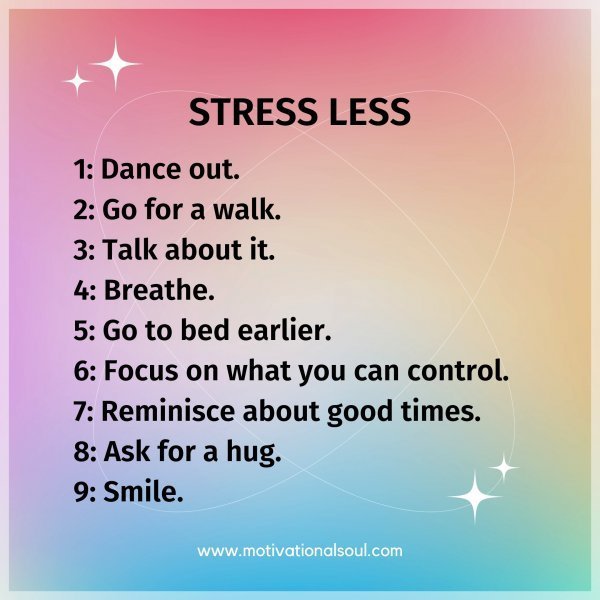
    STRESS LESS

    Stepping Away From Stress

  • Remove Stress with Positive Thinking

    Remove Stress with Positive Thinking

    Stop Over Reacting !

    Positive thinking isn’t always easy. Negative thoughts can be loud and intrusive, especially when you’re under stress. But if you’re struggling to stay positive, there are some things you can do to help silence the negative voice in your head. Try these tips for keeping your thoughts positive and managing stress.

    Stop stressing.
    Stop stressing.

    Define stress and rage

    When it comes to managing our emotions, understanding the difference between stress and rage is essential. Stress is a product of modern life – it’s an intuitive response to feeling overwhelmed or overworked, that can manifest in physical symptoms such as headaches and upset stomachs. However, whereas stress requires us to take a step back from the situation and reflect on what needs to be done, rage is an emotional reaction that often pushes us further into confrontation and chaos. An excessive emotion that has its roots in unresolved hurt or fear, rage triggers the fight-or-flight impulse and urges us to take impulsive action. When we’re able to experience these emotions in healthy ways through meditation or talk therapy – or by finding the courage to ask for help – we can make conscious decisions on how to improve our lives.

    The effects of stress and rage

    Stress and rage are both powerful emotions that can have an immense impact on our mental and physical wellbeing. It’s important to note, however, that just because these feelings arise, it doesn’t mean they must take control of us. The key is to learn how to manage stress and rage the right way so they don’t consume us. It takes work, but the outcome of not letting it define who we are is worth every effort we put in. Regularly practicing simple methods like mindful breathing can make a huge difference in allowing us to lead happier, less-stressed lives. Taking actions like these will help reclaim our equilibrium and bring vital balance back into our lives.

    I want to live a simple life without stress or worry. I don't need a lot of stuff. I just want to be happy.

    How positive thinking can help alleviate stress and rage

    Everyone can benefit from a positive outlook on life, especially when it comes to challenging and stressful situations. Practicing positive thinking helps us to proactively manage our emotions and reactions in difficult moments, significantly reducing the effects of stress and resentment. Positive thinking practices, such as meditation or visualization, help us re-center ourselves and stay focused during tough times. We can use simple affirmations to remind ourselves of our good qualities and strengths when we’re feeling overwhelmed or angry.

    Ultimately, choosing to think positively will not only make notoriously difficult situations more comfortable but also lead to improved mental health in the long run. Start taking the steps towards positive thinking today!

    Tips to take to start thinking more positively

    Are you looking to start thinking more positively and setting yourself up for a more successful life? It is never too late to start making a change for the better!

    Here are some tips to help you develop a positive mindset and boost your mental wellbeing.

    First, take time daily to recognize and appreciate the good in your life – whether it be big or small victories. Acknowledge that even the most seemingly insignificant moments of joy can be immensely valuable.

    Secondly, practice gratitude and express it outwardly. Expressing thankfulness helps us recognize our blessings, which promotes contentment in our lives.

    Last but not least, replace toxic thoughts with affirmations. Not only does this build your confidence, but it also helps you keep moving forward on a journey of self-discovery and growth. With these few steps you WILL be able to transform yourself into a more positive person!

    Never let a bad situation bring out the worst in you. Choose to stay positive and be the strong person that God created you to be.

    Benefits of positive thinking

    Positive thinking can have a tremendously positive impact on our lives. It can empower us to be the best version of ourselves, reaching levels of success both personal and professional that we never thought possible. When practiced regularly, it can be truly life-changing. By re framing our thoughts to more constructive and optimistic perspectives, we can reap profound benefits across many aspects of our lives. These benefits include improved self-esteem, emotional resilience when faced with challenges, greater drive and clarity when setting goals and more energy and enthusiasm for activities we’d usually delay or procrastinate on – just to name a few! In short, if you want to make a real transformation in your day-to-day experience then committing to positive thought patterns is a smart choice.

    So, there you have it. Defining stress and rage and understanding their effects is the first step to mitigating them. From there, practicing positive thinking with intention can lead to a decrease in stress and rage levels– promoting better physical health and improved relationships. Specialized techniques like journaling or visualization may help some people get started on their journey to positivity. And finally, reaping the benefits of positive thinking will provide motivation for making this change. Give yourself permission to think positively today!

    Effective ways for calming your furious emotions

  • Benefits Of Journaling

    Benefits Of Journaling

    • Increases self-awareness and understanding of personal thoughts and feelings
    • Helps identify and work through personal challenges and barriers
    • Aids in setting and achieving goals
    • Facilitates personal growth and development
    • Encourages self-reflection and introspection
    • Enhances problem-solving and decision-making skills
    • Promotes positive thinking and gratitude
    • Helps to track progress and measure success
    • Encourages mindfulness and presence
    • Provides an outlet for creativity and self-expression
    • Helps to clarify and organize thoughts
    • Increases focus and productivity
    • Enhances communication and relationships
    • Provides a sense of accomplishment and satisfaction
    • Creates a sense of accountability and responsibility
    • Offers a form of self-care and self-compassion
    • Helps to process and cope with difficult emotions
    • Facilitates stress management
    • Enhances memory and recall
    • Offers a safe space for exploring and experimenting with new ideas and perspectives.

    See more Journaling Benefits posts

  • Start Journaling Today and Watch Your Self Improvement Soar!

    Start Journaling Today and Watch Your Self Improvement Soar!

    Hey there! If you’re like me, you’re always looking for ways to improve yourself. Well, I’ve got some great news: journaling can help you do just that!

    Keep reading to learn more about the benefits of journaling and how to get started. Trust me, your future self will thank you!

    Why journaling is good for you

    Starting a journaling practice can be incredibly beneficial for your self improvement. Writing down our fears, worries and concerns can help to put things into perspective and prioritize the problems that really need to be solved. It’s also useful to take notes on ideas, as well as positive events that have happened during the day, allowing us to better process our feelings. As you start keeping records of your life experiences and thought patterns, you will begin to spot patterns in your behavior and find solutions for more effectively managing them. Journaling is an invaluable tool for growth, and encourages greater clarity, increase in self-awareness and improved emotional wellbeing. So don’t hesitate – start up your own journaling practice today!

    How to get started with journaling

    Journaling is an empowering way to track your progress, explore creative ideas and gain personal insights. It’s so much more than just writing down your thoughts – it can help you grow and evolve in amazing ways. But how do you get started? Find the journaling techniques that work for you.

    Don’t be afraid to experiment – use different mediums like drawing, creating collages or adding photos – and let go of judgments (write for your eyes only!). Keep expectations realistic: you don’t need a full page every day – even five minutes here and there can be really helpful. Finally create a writing routine: maybe once a week or before bedtime – whatever works for you. And remember: it’s all about self-acceptance and owning your journey!

    What to write about in your journal

    Writing in a journal is an incredibly simple and effective way to become more mindful and improve your personal well-being. Take some time out of each day to put your thoughts down on paper and make yourself accountable to goals you want to achieve. Write down your short and long term goals, and keep track of your progress as you go.

    Journaling can also be used a great coping mechanism; if you’re facing stress or hardship, capturing it in words is the perfect way to work through problems and come up with strategies for overcoming them. It’s also important to not just focus on negatives – expressing gratitude daily is key for positivity. Write three things you are grateful for every day, and end each one with REASON, to really get into why those things have impacted you in a positive way.

    Ultimately, journaling allows us to look inwardly at others – take some time out of each day to think about what the best thing that happened today was – writing it down will help reinforce those moments!

    How often to journal for maximum benefits

    Journaling is becoming more and more popular as a self-improvement tool, and it’s no wonder why – it really works! Researchers have found that by journaling for at least 15 minutes a day, three to five times a week you can reap huge benefits. Not only will your confidence levels skyrocket, but you’ll find yourself feeling better in all aspects of life. Starting a journaling practice today doesn’t have to be daunting; it can be the positive boost you need to level up your well being. Just remember, set aside those 15 minutes every couple of days and watch the improvement happen!

    Tips for making journaling a habit write in points

    Journaling is an extraordinarily powerful self-improvement tool and one of the best ways to take stock of who you are and what you want out of life. To get the most out of journaling, it’s important to make it a habit. Find the techniques that help you write and stick with them – whether you prefer free writing or lists, poetry or prose – then let go of any expectations for perfection and just write for yourself.

    Find prompts that work for you, and if your thoughts feel scattered, start with writing down whatever comes to mind: one thing can spark another idea and suddenly you have much more content on the page than you anticipated! Get creative – add photos, drawings or maybe even try turning your journal into a scrapbook or art project. Whatever approach works best for you, find a way to make it enjoyable and stick with it, because the personal growth potential offered by journaling is truly amazing.

    How to stick with journaling even when you don’t feel like it

    Journaling is a great way to track personal growth and improvement, but getting into a consistent habit of writing can be more challenging than it may seem- especially when you don’t feel like it.

    Try setting aside a few minutes every day, even if you don’t think you have something “important” to write about.

    Try keeping your pen and paper close by so that you can quickly jot down any thoughts or ideas as they come to you. Remember that there is no right or wrong way when it comes to journaling- it can look however you want it to!

    Try experimenting with different formats, prompts, and layouts until you find something that works for you- then stick with it!. This will help keep your interest level high and make journaling into an enjoyable part of your daily routine!

    Now that you know all the benefits of journaling and how to get started, what are you waiting for? Pick up a notebook and start writing today! Remember, there is no wrong way to journal. Just write about whatever is on your mind and let the words flow. If you stick with it, you’ll soon be reaping the rewards of this incredible self-improvement tool!

    20 points on how journaling helps in self improvement

  • Time Management Tips for a More Productive You

    Time Management Tips for a More Productive You

    Time is Life. To waste your time is to waste your life. – Merrill Douglass

    If you’re like most people, you’re always looking for ways to be more productive. Whether you’re a busy mom trying to juggle work and family obligations, or a marketer tasked with meeting deadlines, time management is essential.

    There are a lot of different time management tips out there, but which ones actually work? In this blog post, we’ll share 10 tried-and-true tips that will help you make the most of your time. From setting priorities to delegating tasks, these tips will help you get more done in less time. So if you’re ready to boost your productivity, read on!

    Set a daily or weekly goal to focus on and work towards it

    Achieving success doesn’t have to be overwhelming; with a few simple tips and tricks it can be easy and enjoyable. One of the best ways to stay focused on achieving your goals is to set a daily or weekly goal to focus on. Concentrate hard on that one goal and work towards it, taking smaller steps if it helps. By breaking down bigger goals into smaller tasks, you’ll be able to move steadily closer towards your goal and make sure there’s something positive in each day enabling you to stay motivated and on track. Just make sure that your goals are realistic; that way, when you reach them, your sense of pride and accomplishment will keep you inspired!

    Make a list of things you need to do each day and prioritize them

    It’s important to create a list of tasks you need to do every day – they don’t have to be big or complicated tasks, just the items that will help make your day more productive. Once you have your list ready, take some time to think about which tasks are the most important and move them up in the priority list. This will help prevent you from getting overwhelmed when you may feel there is too much on your plate. Organizing daily lists and figuring out what is most urgent allows for better focus and, ultimately, higher productivity.

    Be picky with who you invest your time in

    Set aside specific times for working on tasks and stick to them

    You know how it goes: at the start of the day, you lay out a plan with all the things you want to accomplish. But at the end of the day, your tasks are left unfinished and you feel worse than when you started. Well, friend, this is where investing in setting specific times for getting your work done might help. These times act like boundary lines and give you a healthy structure to work within. It can also help put you into a productive headspace whenever that timer starts ticking away so that way, you’ll be able to focus on completing (or even surpassing!) what’s on your list without feeling so frazzled afterwards. Whether it’s working from 9am-noon or 2-5pm–as long as it’s mappable and doable–you will now have more time for leisurely activities or for just doing nothing!

    Take breaks when you feel overwhelmed or stressed – but don’t get too comfortable!

    Taking a break when you feel overwhelmed or stressed can be incredibly beneficial because it gives your mind and body the time and space it needs to refresh. Breaks don’t need to be long; simply taking five minutes away from whatever task you have been working on can help you look at the situation with a fresh pair of eyes. That said, don’t get too comfortable during your break. Sitting in an uncomfortable position or listening to upbeat music can stimulate your senses and help transition your mindset back into work mode. If possible, use breaks as an opportunity to incorporate some fitness into your schedule – even just a few minutes of stretching can rejuvenate both your body and mind.

    Keep track of how much time you spend on each task so you can identify areas where you need to improve

    It’s easy to feel overwhelmed when we’re trying to manage multiple tasks. But keeping track of your time can help you stay on track and identify areas where you need to improve. You don’t need an expensive piece of software or app – depending on how simple or complicated you want to get, you can use a timer, a spreadsheet, a tracking app or good old pen and paper. Even if it seems tedious at first, once you’ve got the hang of it, taking the time to keep track of how much time you spend on each task can give you clarity about what works for your working style and what doesn’t – so that you can make changes where necessary.

    Make a list of things that make you happy. Make a list of things you do every day. Compare the results. Adjust accordingly.

    Delegate tasks to others if possible, or outsource them altogether

    There’s no denying that multitasking can be incredibly helpful, especially when it comes to increasing productivity. However, sometimes it can also lead to overwhelm. Outsourcing and delegating tasks can be a great way to support yourself while still getting things done. Of course, it might cost more upfront but consider if the time saved is worth the money spent – chances are it is! Delegation doesn’t have to mean completely offloading work either – for instance, delegate smaller parts of a project or most basic duties instead to save you time without breaking the budget. Don’t be afraid to reach out for help – sometimes we just need someone else’s support and expertise in order to get things done correctly and efficiently.

    Time Saving Techniques of motivated people:-

    • Make a to-do list for each day and prioritize tasks by importance.
    • Break down large tasks into smaller, manageable pieces.
    • Set short breaks throughout the day to refresh your mind and body.
    • Utilize ‘batching’ techniques to quickly finish identical tasks in one go.
    • Automate tasks that repeat regularly, such as paying bills or filing expenses.
    • Learn keyboard shortcuts for the tools you use most often to save time when typing or navigating menus.
    • Set deadlines well ahead of your actual goal date and work backwards from there with smaller intermediate goals.
    • Use task management apps, like Trello or Asana, to organize your thoughts and keep track of progress on projects.
    • Stop multitasking and focus on one task at a time instead of switching between multiple activities simultaneously.
    • Timebox activities: set a specific duration for each task so it does not become too much of a distraction from other tasks.

    Hopefully these tips will help you be more productive and get better results from your work. If you find that you’re still struggling, don’t give up – keep on reading and trying different tactics until you find a system that works for you. What have you found to be the most effective way to stay productive? Let us know in the comments below!